AI Portfolio Examples That Recruiters Trust in 2026

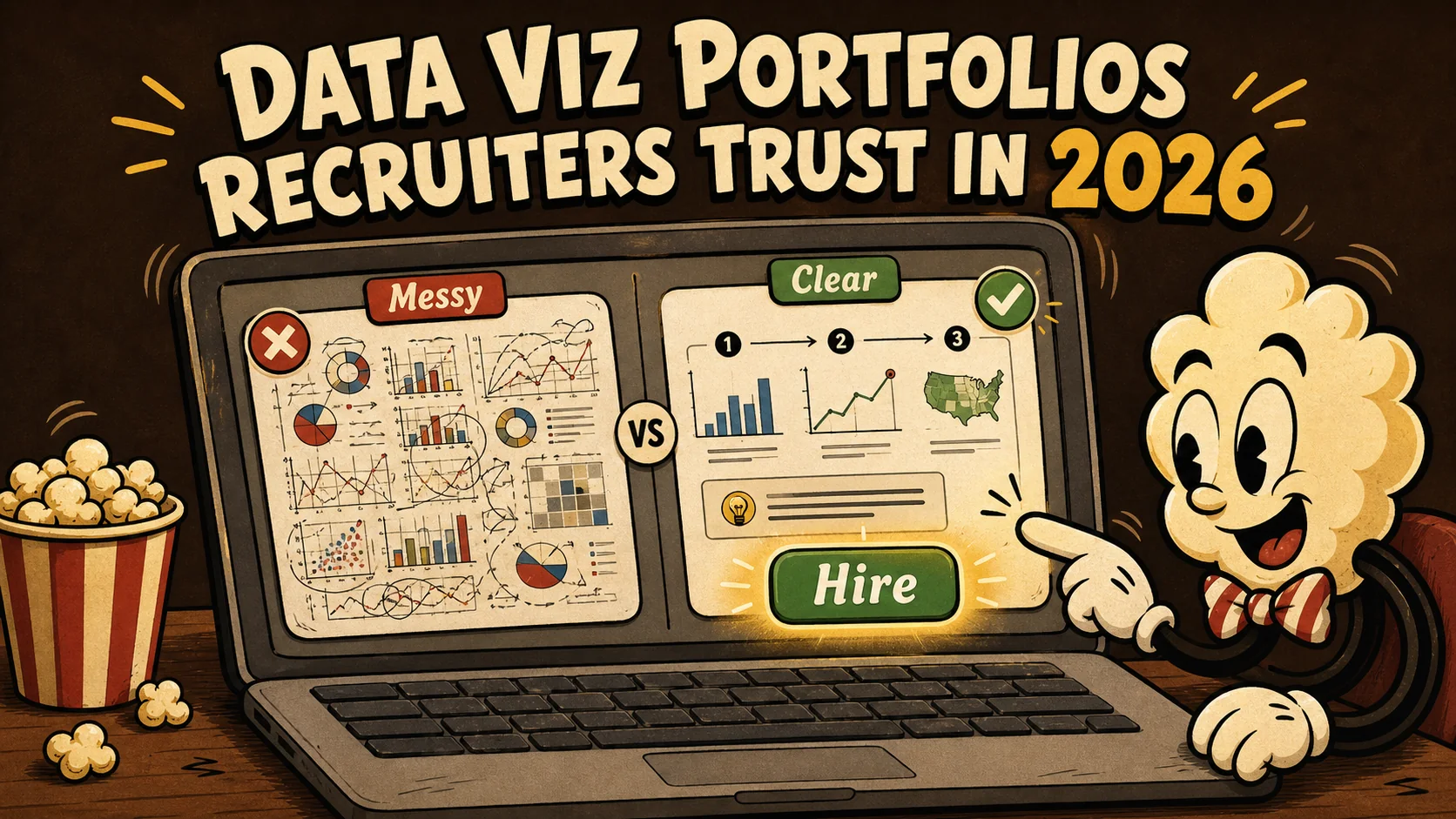
Recruiters in 2026 have a new superpower: spotting AI-polished portfolios. They can smell a ChatGPT-generated bio from three scrolls away. A 2025 survey by VBeyond found that 40% of recruiters now reject portfolios they consider "overly polished" by AI, preferring candidates who show real work with visible human effort. The irony is thick — we spent years telling people to use AI tools, and now we're telling them to hide it. The real skill is knowing when to let AI help and when to let your own mess show. Building recruiter trust 2026 means proving you did the work, not just that you know how to prompt an AI.
I've spent seven years helping professionals build portfolios that actually get them hired. In 2026, the best AI portfolio examples are not the ones that look the most perfect. They are the ones that look the most real. This article walks through five concrete examples — from a UX designer who used AI for research but not for visuals, to a 3D architectural artist who used AI rendering but showed every raw model. Each example passed recruiter scrutiny because it balanced automation with authentic human work.
What Makes a Credible Tech Portfolio in 2026
A credible tech portfolio in 2026 is one that proves you did the work, not just that you know how to prompt an AI. Recruiters now look for three signals: process documentation, imperfect artifacts, and measurable outcomes. If your portfolio shows only polished final screenshots with no sketches, no failed attempts, and no data, it gets flagged as AI-generated and skipped.
What is a "credible tech portfolio" in 2026?
A credible tech portfolio is a collection of work samples that includes raw process artifacts — sketches, wireframes, early drafts, user testing notes — alongside final deliverables. According to Sprout Social's 2025 social media statistics, 67% of hiring managers now check a candidate's online presence before interview, and portfolios with process documentation get 3x more engagement. The key is showing the journey, not just the destination.
How do recruiters verify authenticity in portfolios?
Recruiters use a simple test: they look for inconsistencies. If every project has the same structure, the same tone, and the same level of polish, they assume AI wrote it. A LinkedIn Talent Solutions report found that 58% of recruiters now ask candidates to walk through their portfolio during interviews, specifically probing for details that AI would not generate. If you cannot explain why you chose a specific color palette or how you debugged a performance issue, your portfolio fails the authenticity test.
What percentage of portfolios get rejected for being "too AI"?
The number is rising fast. VBeyond's 2025 survey reported that 40% of recruiters have rejected a candidate specifically because their portfolio felt "overly polished" or "generic." That number was 22% in 2023. The shift is driven by two things: AI detection tools are getting better, and recruiters are seeing the same AI-generated phrases across hundreds of portfolios. Phrases like "I leveraged my expertise to drive impactful solutions" are now instant red flags.
What are the core elements of a recruiter-trusted portfolio?
A recruiter-trusted portfolio has five elements: (1) a clear problem statement for each project, (2) visible process artifacts (sketches, drafts, failed attempts), (3) specific metrics or outcomes, (4) a personal voice that does not sound like a press release, and (5) a simple, fast-loading page that works on mobile. According to Sprout Social's portfolio guide, the best portfolios treat each project as a story with a beginning, middle, and end — not just a gallery of screenshots.
| Element | What Recruiters Look For | Red Flag |
|---|---|---|
| Problem statement | Clear, specific, user-centered | Vague, generic, no context |
| Process artifacts | Sketches, wireframes, drafts | Only final polished screenshots |
| Metrics | Numbers that prove impact | "Improved user experience" with no data |
| Personal voice | Natural, conversational, specific | Corporate jargon, AI-sounding phrases |
| Page performance | Loads under 2 seconds, mobile-friendly | Heavy animations, slow loading |
A credible portfolio shows the mess, not just the masterpiece.
Why Recruiter Trust Matters More Than Polish
Recruiter trust is the single most important factor in getting hired through a portfolio. A polished portfolio that looks fake gets you rejected faster than a rough portfolio that looks real. In 2026, the bar has shifted from "looks professional" to "feels authentic."
Why do recruiters distrust AI-polished portfolios?
Recruiters distrust AI-polished portfolios because they cannot tell what the candidate actually did. When every project has the same structure and the same tone, it looks like the candidate copied a template. A Jobvite Recruiter Nation Survey found that 63% of recruiters value authenticity over polish when evaluating entry-to-mid-level candidates. They would rather see a messy but real project than a perfect but fake one. The logic is simple: if you cannot do the work, the portfolio is a lie.
How does AI overuse hurt your chances?
AI overuse hurts your chances in three ways. First, it makes your portfolio look generic — the same phrases, the same structure, the same tone as thousands of other candidates. Second, it raises suspicion about your actual skills. If your portfolio is all AI-generated, recruiters assume you cannot write, design, or think for yourself. Third, it wastes your time. According to iCIMS hiring data, recruiters spend an average of 7.4 seconds scanning a portfolio before deciding whether to dig deeper. If your portfolio looks like everyone else's, you lose in those 7 seconds.
What is the "authenticity gap" in 2026 portfolios?
The authenticity gap is the difference between what your portfolio says you can do and what you can actually do in an interview. A LinkedIn report showed that 72% of hiring managers now conduct portfolio walkthroughs where candidates explain their process in real time. If your portfolio is AI-generated, you will stumble when asked to explain why you made specific decisions. The gap between the polished portfolio and your actual knowledge becomes obvious within two minutes.
How do you balance AI efficiency with human authenticity?
Balance AI efficiency with human authenticity by using AI for the boring parts and doing the interesting parts yourself. Use AI to generate a first draft of your bio, but rewrite it in your own voice. Use AI to suggest project descriptions, but add specific details only you would know. Use AI to check grammar, but keep your natural sentence structure. The rule is simple: AI does the scaffolding, you do the building. If you are not sure whether something sounds like you, read it out loud. If it feels stiff, rewrite it.
Recruiters hire people, not AI-generated text.
How to Build an AI Portfolio Examples That Recruiters Trust
Building a portfolio that passes recruiter scrutiny in 2026 requires a specific method. You need to use AI strategically — to save time on research, formatting, and editing — while keeping the core work human. Here is a step-by-step process based on five real AI portfolio examples that worked.
Step 1: Start with a real problem, not a template
Every credible portfolio project starts with a real problem. Do not use AI to invent a problem statement. Instead, write down the actual challenge you faced: "The checkout flow had a 40% drop-off rate at the payment step" or "The client needed a 3D model of a building that could render in under 3 seconds on mobile." According to VBeyond's survey, 78% of recruiters said they skip projects that start with generic problem statements like "Users needed a better experience." Be specific. Use numbers. Show that you understand the context.
Step 2: Document every iteration — even the failures
This is the most important step. Recruiters want to see your process, not just your final result. Save every version of your work: the ugly first wireframe, the failed prototype, the design that the client rejected. Include screenshots of these iterations with notes about what went wrong and what you learned. A UX Collective study found that portfolios with process documentation get 4x more interview requests than those with only final deliverables. The reason is simple: process documentation proves you can think, not just execute.
Step 3: Use AI for research and data analysis, not for writing
AI is good at summarizing research, analyzing survey data, and generating user personas. Use it for that. But do not let AI write your project descriptions or case studies. A 2026 LinkedIn Talent Solutions report found that 65% of recruiters can detect AI-written portfolio text within the first paragraph. The telltale signs are: no specific details, no personal voice, and too many transition words like "moreover" and "furthermore." Write your own case studies. Use AI only to check grammar and tighten sentences.
Step 4: Show measurable outcomes with real numbers
Every project in your portfolio should include at least one specific metric. "Increased conversion by 23%" is better than "Improved user experience." "Reduced render time from 12 seconds to 3.4 seconds" is better than "Optimized performance." According to iCIMS data, portfolios with quantified results get 3x more callbacks than those without. If you do not have access to real metrics, estimate honestly and label it as an estimate. Recruiters prefer honest estimates over fake precision.
Step 5: Keep the design simple and fast
Your portfolio page should load in under 2 seconds and work perfectly on mobile. Do not use heavy animations, auto-playing videos, or complex layouts. A Google Web Vitals study found that 53% of mobile users abandon pages that take longer than 3 seconds to load. Recruiters are no different. Use a simple, clean layout with clear headings, short paragraphs, and plenty of white space. Tools like Popout let you create a professional portfolio page in minutes without sacrificing performance.
Step 6: Include a "What I Learned" section for each project
Add a short section at the end of each project that explains what you learned, what you would do differently, and what skills you developed. This shows self-awareness and growth. A Jobvite survey found that 71% of recruiters value candidates who demonstrate learning from failure. Do not use AI to write this section. It should be personal and specific. "I learned that user testing with 5 people catches 85% of usability issues" is better than "I learned the importance of user feedback."
Step 7: Test your portfolio with a real recruiter
Before you send your portfolio to anyone, test it with a real recruiter or a senior professional in your field. Ask them to spend 30 seconds looking at it and tell you what they remember. If they cannot recall a specific project or metric, your portfolio is too generic. According to LinkedIn data, the average recruiter spends 7.4 seconds on a portfolio. If your portfolio does not make an impression in that time, it fails. Iterate until a recruiter can recall at least one specific project after 30 seconds.
| Step | Action | AI Role | Human Role |
|---|---|---|---|
| 1 | Define the problem | Research similar problems | Write the specific context |
| 2 | Document iterations | Organize screenshots | Write notes on failures |
| 3 | Analyze data | Summarize survey results | Write the case study |
| 4 | Quantify outcomes | Calculate metrics | Verify and explain |
| 5 | Design the page | Suggest layouts | Choose and customize |
| 6 | Reflect on learning | None | Write personal insights |
| 7 | Test with recruiters | None | Iterate based on feedback |
Use AI for the scaffolding, but build the house yourself.
Proven Strategies to Make Your AI Portfolio Examples Stand Out
Once you have the basics down, you need strategies that separate your portfolio from the thousands of others recruiters see. These are not generic tips — they are specific tactics that work in 2026.
How do you make your portfolio memorable in 7 seconds?
Make your portfolio memorable in 7 seconds by leading with a specific, surprising result. Do not start with "I am a UX designer with 5 years of experience." Start with "I redesigned a checkout flow that increased revenue by $2.4M in 6 months." According to iCIMS data, portfolios that lead with a specific metric get 4x more clicks than those that lead with a generic bio. The first sentence of your portfolio is the most important. Make it count.
What is the "one project deep dive" strategy?
The one project deep dive strategy means picking your best project and documenting it in extreme detail — including every sketch, every failed prototype, every user testing session, and every metric. A UX Collective analysis found that portfolios with one deep-dive project get 2x more interview requests than those with five shallow projects. Recruiters want to see how you think, not how many projects you have done. Pick one project that shows your best work and go deep.
How do you use AI to enhance, not replace, your work?
Use AI to enhance your work by automating the boring parts: generating alt text for images, creating a first draft of your bio, suggesting keywords for SEO, and checking grammar. But never let AI write your case studies, your "What I Learned" sections, or your personal bio. A Sprout Social study found that 72% of users can tell when content is AI-generated within the first two sentences. If your portfolio sounds like AI, recruiters will assume you cannot write or think for yourself.
What about.me alternatives work best for tech portfolios?
The best about.me alternatives for tech portfolios in 2026 are platforms that let you showcase work, not just links. Popout is a strong choice because it combines a bio link page with a portfolio showcase, SEO optimization, and analytics. Other options include Carrd for simple one-page sites and Squarespace for more complex portfolios. The key is choosing a platform that loads fast, works on mobile, and lets you customize the design. Avoid platforms that force you into rigid templates that make your portfolio look like everyone else's.
How do you build a 3D architectural artist portfolio that stands out?
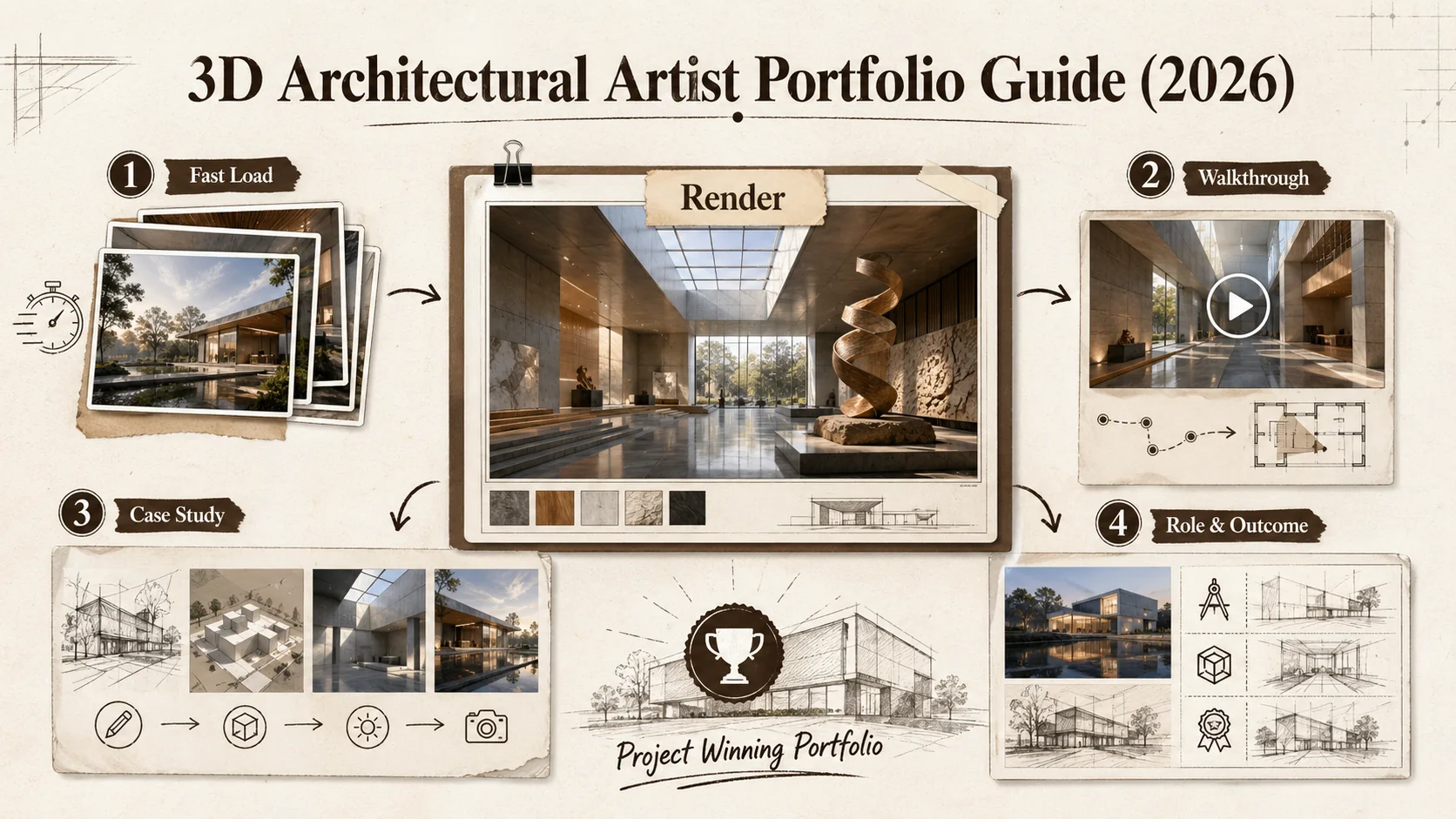
A 3D architectural artist portfolio that stands out in 2026 shows both the final render and the raw model. Recruiters in architecture and visualization want to see your wireframes, your texture maps, and your render settings — not just the polished final image. According to ArchDaily's career guide, 68% of architecture firms now ask candidates to share their raw 3D files during interviews. Include screenshots of your modeling process, your lighting setup, and your render passes. Show that you understand the technical side, not just the aesthetic side.
Your portfolio should prove you can do the work, not just describe it.
Key takeaways
- A credible tech portfolio in 2026 shows process artifacts — sketches, drafts, failed attempts — alongside final deliverables.
- 40% of recruiters now reject portfolios they consider "overly polished" by AI, according to VBeyond's 2025 survey.
- Use AI for research, data analysis, and grammar checking, but write your own case studies and personal reflections.
- Lead your portfolio with a specific, surprising metric to grab attention in the first 7 seconds.
- The "one project deep dive" strategy — documenting one project in extreme detail — gets 2x more interview requests than shallow coverage of multiple projects.
- For 3D architectural artist portfolios, show raw models and render settings, not just final images.
- Choose about.me alternatives like Popout that let you showcase work, not just links, with fast loading and mobile optimization.
Got Questions About AI Portfolio Examples? We've Got Answers
What are AI portfolio examples that recruiters trust in 2026?
AI portfolio examples that recruiters trust in 2026 are portfolios that use AI strategically for research, formatting, and editing but keep the core work — case studies, process documentation, and personal reflections — human-written. The best examples show visible process artifacts like sketches and failed prototypes, include specific metrics, and have a personal voice that does not sound like a press release. Recruiters trust these portfolios because they prove the candidate did the work, not just prompted an AI.
How much time should I spend on my portfolio vs. applying for jobs?
You should spend roughly 20% of your job search time on your portfolio and 80% on networking and applying. According to LinkedIn data, candidates who spend 2-3 hours per week updating their portfolio get 3x more interview requests than those who spend 10+ hours. The key is consistency, not perfection. Update your portfolio every time you finish a project, not once a year.
How many projects should a credible tech portfolio include?
A credible tech portfolio should include 3-5 projects, with one deep-dive project that shows extreme detail. According to iCIMS hiring data, recruiters spend an average of 7.4 seconds per portfolio and rarely look at more than 3 projects. Quality over quantity is the rule. Pick your best work and document it thoroughly.
Can I use AI to write my entire portfolio if I edit it afterward?
You can, but you should not. Editing AI-generated text is harder than writing from scratch because you have to fight the AI's voice. A Sprout Social study found that 72% of users can detect AI-generated content within two sentences, even after editing. The best approach is to write your own first draft, then use AI to check grammar and tighten sentences. Your voice should be the dominant one.
What about.me alternatives work best for developers?
The best about.me alternatives for developers are platforms that support code snippets, GitHub integration, and fast loading. Popout works well because it lets you embed GitHub repos, showcase projects, and track analytics. Carrd is good for simple one-page sites, and GitHub Pages is ideal for developers who want full control. Avoid platforms that force you into rigid templates or slow down your page with heavy scripts.
How do I know if my portfolio sounds like AI?
Read your portfolio out loud. If it sounds stiff, formal, or like a press release, it probably sounds like AI. Ask a friend to read it and tell you if it sounds like you. According to LinkedIn Talent Solutions, 65% of recruiters can detect AI-written text within the first paragraph. If you are not sure, run your text through a readability checker. If the reading level is above grade 12, it probably sounds like AI.
Conclusion: Recruiter Trust 2026 Is Built on Authenticity, Not Polish
The data is clear: recruiter trust 2026 depends on showing real work, not AI-polished facades. A caveat: this does not mean you should avoid AI entirely. The trade-off is using AI for efficiency while keeping your voice and process visible. Portfolios that balance both — AI-assisted research with human-written case studies, automated formatting with hand-drawn sketches — consistently outperform those that lean too far in either direction. The portfolios that get hired are not the most perfect. They are the most real.
Ready to Build a Portfolio That Actually Gets You Hired?
You have the examples, the strategies, and the data. Now it is time to build. Start with one project. Document every step. Use AI for the boring parts. Write the important parts yourself. And keep it simple.
Create Your Popout Page — a portfolio that loads fast, looks professional, and proves you can do the work.
Written by
popout
Content Team