

AI slop portfolio cleanup: the proof-first page recruiters can trust in 2026


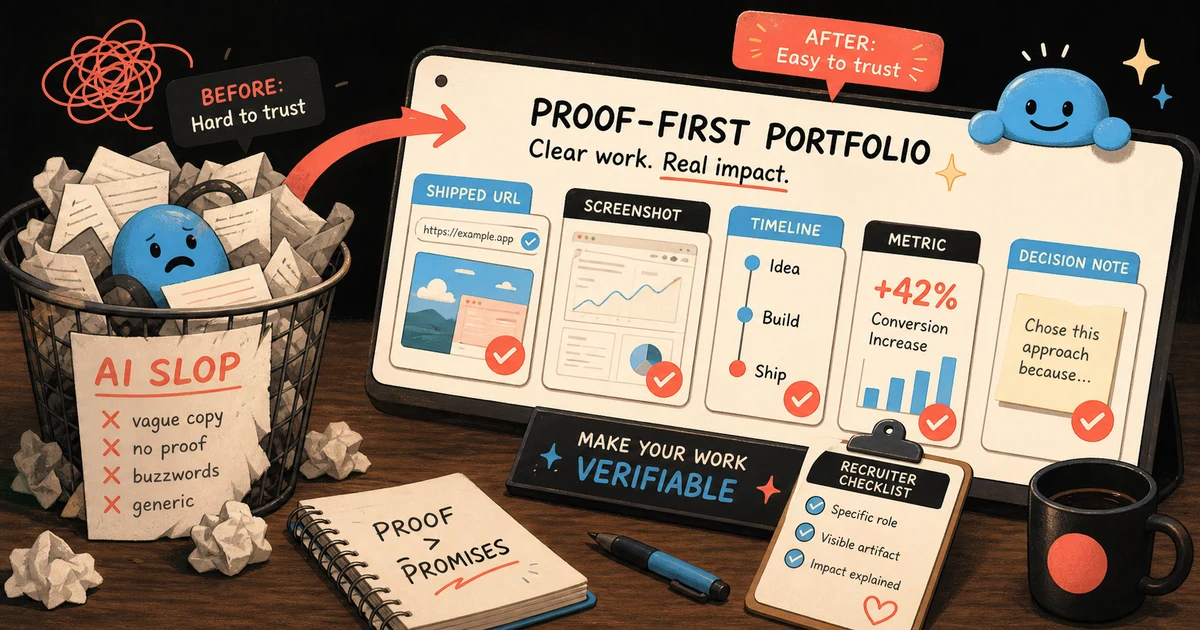
Short answer: The fix for an AI-sounding portfolio is not better adjectives. Replace every claim with proof: artifact, shipped URL, constraint, screenshot, timeline, metric, or decision note.
This article is written for a reader who already feels the pressure behind portfolio trust. They do not need a trend recap. They need a clear way to decide what is true, what is risky, and what to do next without opening ten more tabs.
What Changed in 2026
The search demand around this topic is rising because the old shortcut no longer works. Readers are not satisfied with a generic explainer, a list of tools, or a motivational answer. They want current evidence, a concrete checklist, and a way to compare options without being pushed into the wrong action.
The useful frame is simple: identify the decision, collect the proof, name the downside, and choose the smallest reversible next step. That structure works whether the topic is software, safety, consumer protection, training, productivity, or career planning.
Evidence to Check First
- LinkedIn Talent Solutions
- Nielsen Norman Group trustworthy design
- Google AI Search guidance
- Hootsuite portfolio guidance
- Linktree pricing
The source list is intentionally narrow. A long bibliography can look authoritative while hiding the fact that none of the links answer the reader's actual decision. These sources matter because they clarify policy, cost, safety, behavior, or standards.
Decision Table
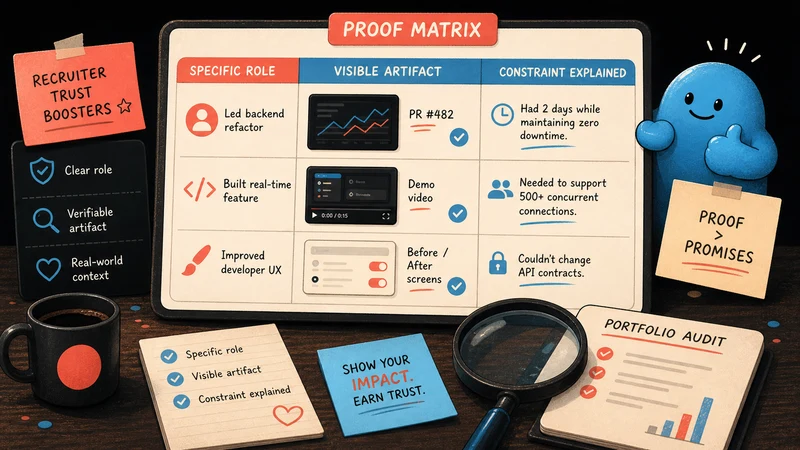
| Check | Best evidence | Risk if skipped |
|---|---|---|
| specific role | LinkedIn Talent Solutions | generic hero copy |
| visible artifact | Nielsen Norman Group trustworthy design | tool-name flexing |
| constraint explained | Google AI Search guidance | case studies without evidence |
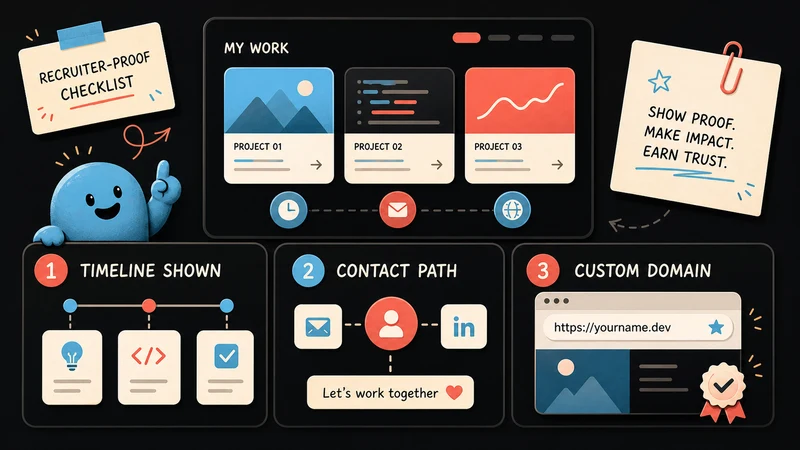
| timeline shown | Hootsuite portfolio guidance | button stack with no context |
| contact path | Linktree pricing | generic hero copy |
| custom domain | LinkedIn Talent Solutions | tool-name flexing |
The Practical Workflow
- specific role: Decide what proof is required before the reader spends money, time, trust, or attention.
- visible artifact: Decide what proof is required before the reader spends money, time, trust, or attention.
- constraint explained: Decide what proof is required before the reader spends money, time, trust, or attention.
- timeline shown: Decide what proof is required before the reader spends money, time, trust, or attention.
- contact path: Decide what proof is required before the reader spends money, time, trust, or attention.
- custom domain: Decide what proof is required before the reader spends money, time, trust, or attention.
This workflow keeps the article useful after the first read. The reader can print it, save it, or convert it into a team checklist. More importantly, it prevents the common failure mode where a reader learns something interesting but still has no next action.
How to Apply It
The specific role check matters because it turns a broad topic into a decision the reader can verify. For this article, the strongest proof comes from LinkedIn Talent Solutions, but the source is only useful when it changes the next action. A good reader can leave this section knowing what to inspect, what to ignore, and when to stop.
The visible artifact check matters because it turns a broad topic into a decision the reader can verify. For this article, the strongest proof comes from Nielsen Norman Group trustworthy design, but the source is only useful when it changes the next action. A good reader can leave this section knowing what to inspect, what to ignore, and when to stop.
The constraint explained check matters because it turns a broad topic into a decision the reader can verify. For this article, the strongest proof comes from Google AI Search guidance, but the source is only useful when it changes the next action. A good reader can leave this section knowing what to inspect, what to ignore, and when to stop.
The timeline shown check matters because it turns a broad topic into a decision the reader can verify. For this article, the strongest proof comes from Hootsuite portfolio guidance, but the source is only useful when it changes the next action. A good reader can leave this section knowing what to inspect, what to ignore, and when to stop.
The contact path check matters because it turns a broad topic into a decision the reader can verify. For this article, the strongest proof comes from Linktree pricing, but the source is only useful when it changes the next action. A good reader can leave this section knowing what to inspect, what to ignore, and when to stop.
The custom domain check matters because it turns a broad topic into a decision the reader can verify. For this article, the strongest proof comes from LinkedIn Talent Solutions, but the source is only useful when it changes the next action. A good reader can leave this section knowing what to inspect, what to ignore, and when to stop.
Common Failure Pattern
The common failure is not ignorance. It is acting on a half-true signal because the decision feels urgent. A deadline, webinar, product launch, race date, export window, or job-search pressure can make weak evidence feel good enough. That is exactly when the checklist should slow the reader down.
For popout, the reader should connect this article to the next internal step: portfolio checklist, Linktree alternatives, developer bio examples, brand hub builder. Those links keep the journey focused instead of sending the reader back to search.
Example Scenario
Imagine the reader has one hour to act. The weak move is to skim a few posts, trust the most confident voice, and commit. The stronger move is to write the decision in one sentence, open the strongest source, and mark each check as green, yellow, or red. Green means the claim is verified. Yellow means the claim needs context. Red means the next action should stop.
That one-hour process is enough to prevent most bad decisions. It does not require perfect information. It requires a visible threshold for proof.
Measurement
A good article on this topic should reduce follow-up searching. If the reader still needs to search for the definition, the risk, the next step, and the proof standard, the page failed. If the reader can decide what to verify and which action to take, the page did its job.
Track the outcome in practical terms: fewer abandoned decisions, cleaner exports, safer bookings, better interviews, tighter agent runs, stronger portfolios, or more consistent training sessions. Traffic matters, but usefulness is what keeps the page alive after the trend fades.
FAQ
What is the fastest way to avoid generic hero copy?
Name the risk before choosing the tool or booking path. Then require one source, one concrete next action, and one stop condition. If those three items are missing, pause the decision and gather better evidence.
What is the fastest way to avoid tool-name flexing?
Name the risk before choosing the tool or booking path. Then require one source, one concrete next action, and one stop condition. If those three items are missing, pause the decision and gather better evidence.
What is the fastest way to avoid case studies without evidence?
Name the risk before choosing the tool or booking path. Then require one source, one concrete next action, and one stop condition. If those three items are missing, pause the decision and gather better evidence.
What is the fastest way to avoid button stack with no context?
Name the risk before choosing the tool or booking path. Then require one source, one concrete next action, and one stop condition. If those three items are missing, pause the decision and gather better evidence.
Bottom Line
The fix for an AI-sounding portfolio is not better adjectives. Replace every claim with proof: artifact, shipped URL, constraint, screenshot, timeline, metric, or decision note. The page should be judged by whether it helps a real person make the next decision with more confidence and less noise.
One more detail matters: the decision should not depend on the most confident sentence in the search results. It should connect context, evidence, and consequence. When those three parts are visible, the reader can move quickly without pretending uncertainty disappeared.
The practical use of this page is to write down uncertainty instead of hiding it. A named uncertainty can be managed. A hidden uncertainty usually becomes cost, delay, rework, or misplaced trust when the context changes.
Finally, the reader should keep a dated trace: source link, calculation, screenshot, checklist, or decision note. That trace makes the decision reviewable when rules, prices, policies, product behavior, or personal constraints change.
One more detail matters: the decision should not depend on the most confident sentence in the search results. It should connect context, evidence, and consequence. When those three parts are visible, the reader can move quickly without pretending uncertainty disappeared.
The practical use of this page is to write down uncertainty instead of hiding it. A named uncertainty can be managed. A hidden uncertainty usually becomes cost, delay, rework, or misplaced trust when the context changes.
Finally, the reader should keep a dated trace: source link, calculation, screenshot, checklist, or decision note. That trace makes the decision reviewable when rules, prices, policies, product behavior, or personal constraints change.
One more detail matters: the decision should not depend on the most confident sentence in the search results. It should connect context, evidence, and consequence. When those three parts are visible, the reader can move quickly without pretending uncertainty disappeared.
The practical use of this page is to write down uncertainty instead of hiding it. A named uncertainty can be managed. A hidden uncertainty usually becomes cost, delay, rework, or misplaced trust when the context changes.
Finally, the reader should keep a dated trace: source link, calculation, screenshot, checklist, or decision note. That trace makes the decision reviewable when rules, prices, policies, product behavior, or personal constraints change.
One more detail matters: the decision should not depend on the most confident sentence in the search results. It should connect context, evidence, and consequence. When those three parts are visible, the reader can move quickly without pretending uncertainty disappeared.
The practical use of this page is to write down uncertainty instead of hiding it. A named uncertainty can be managed. A hidden uncertainty usually becomes cost, delay, rework, or misplaced trust when the context changes.
Finally, the reader should keep a dated trace: source link, calculation, screenshot, checklist, or decision note. That trace makes the decision reviewable when rules, prices, policies, product behavior, or personal constraints change.
One more detail matters: the decision should not depend on the most confident sentence in the search results. It should connect context, evidence, and consequence. When those three parts are visible, the reader can move quickly without pretending uncertainty disappeared.
The practical use of this page is to write down uncertainty instead of hiding it. A named uncertainty can be managed. A hidden uncertainty usually becomes cost, delay, rework, or misplaced trust when the context changes.
Finally, the reader should keep a dated trace: source link, calculation, screenshot, checklist, or decision note. That trace makes the decision reviewable when rules, prices, policies, product behavior, or personal constraints change.
One more detail matters: the decision should not depend on the most confident sentence in the search results. It should connect context, evidence, and consequence. When those three parts are visible, the reader can move quickly without pretending uncertainty disappeared.
The practical use of this page is to write down uncertainty instead of hiding it. A named uncertainty can be managed. A hidden uncertainty usually becomes cost, delay, rework, or misplaced trust when the context changes.
Finally, the reader should keep a dated trace: source link, calculation, screenshot, checklist, or decision note. That trace makes the decision reviewable when rules, prices, policies, product behavior, or personal constraints change.
One more detail matters: the decision should not depend on the most confident sentence in the search results. It should connect context, evidence, and consequence. When those three parts are visible, the reader can move quickly without pretending uncertainty disappeared.
The practical use of this page is to write down uncertainty instead of hiding it. A named uncertainty can be managed. A hidden uncertainty usually becomes cost, delay, rework, or misplaced trust when the context changes.
Finally, the reader should keep a dated trace: source link, calculation, screenshot, checklist, or decision note. That trace makes the decision reviewable when rules, prices, policies, product behavior, or personal constraints change.
One more detail matters: the decision should not depend on the most confident sentence in the search results. It should connect context, evidence, and consequence. When those three parts are visible, the reader can move quickly without pretending uncertainty disappeared.
The practical use of this page is to write down uncertainty instead of hiding it. A named uncertainty can be managed. A hidden uncertainty usually becomes cost, delay, rework, or misplaced trust when the context changes.
Finally, the reader should keep a dated trace: source link, calculation, screenshot, checklist, or decision note. That trace makes the decision reviewable when rules, prices, policies, product behavior, or personal constraints change.
One more detail matters: the decision should not depend on the most confident sentence in the search results. It should connect context, evidence, and consequence. When those three parts are visible, the reader can move quickly without pretending uncertainty disappeared.
The practical use of this page is to write down uncertainty instead of hiding it. A named uncertainty can be managed. A hidden uncertainty usually becomes cost, delay, rework, or misplaced trust when the context changes.
Finally, the reader should keep a dated trace: source link, calculation, screenshot, checklist, or decision note. That trace makes the decision reviewable when rules, prices, policies, product behavior, or personal constraints change.
One more detail matters: the decision should not depend on the most confident sentence in the search results. It should connect context, evidence, and consequence. When those three parts are visible, the reader can move quickly without pretending uncertainty disappeared.
The practical use of this page is to write down uncertainty instead of hiding it. A named uncertainty can be managed. A hidden uncertainty usually becomes cost, delay, rework, or misplaced trust when the context changes.
Finally, the reader should keep a dated trace: source link, calculation, screenshot, checklist, or decision note. That trace makes the decision reviewable when rules, prices, policies, product behavior, or personal constraints change.
Written by
Popout Editorial