

The 2026 Portfolio Pivot: Why Static Links Cost You Opportunities


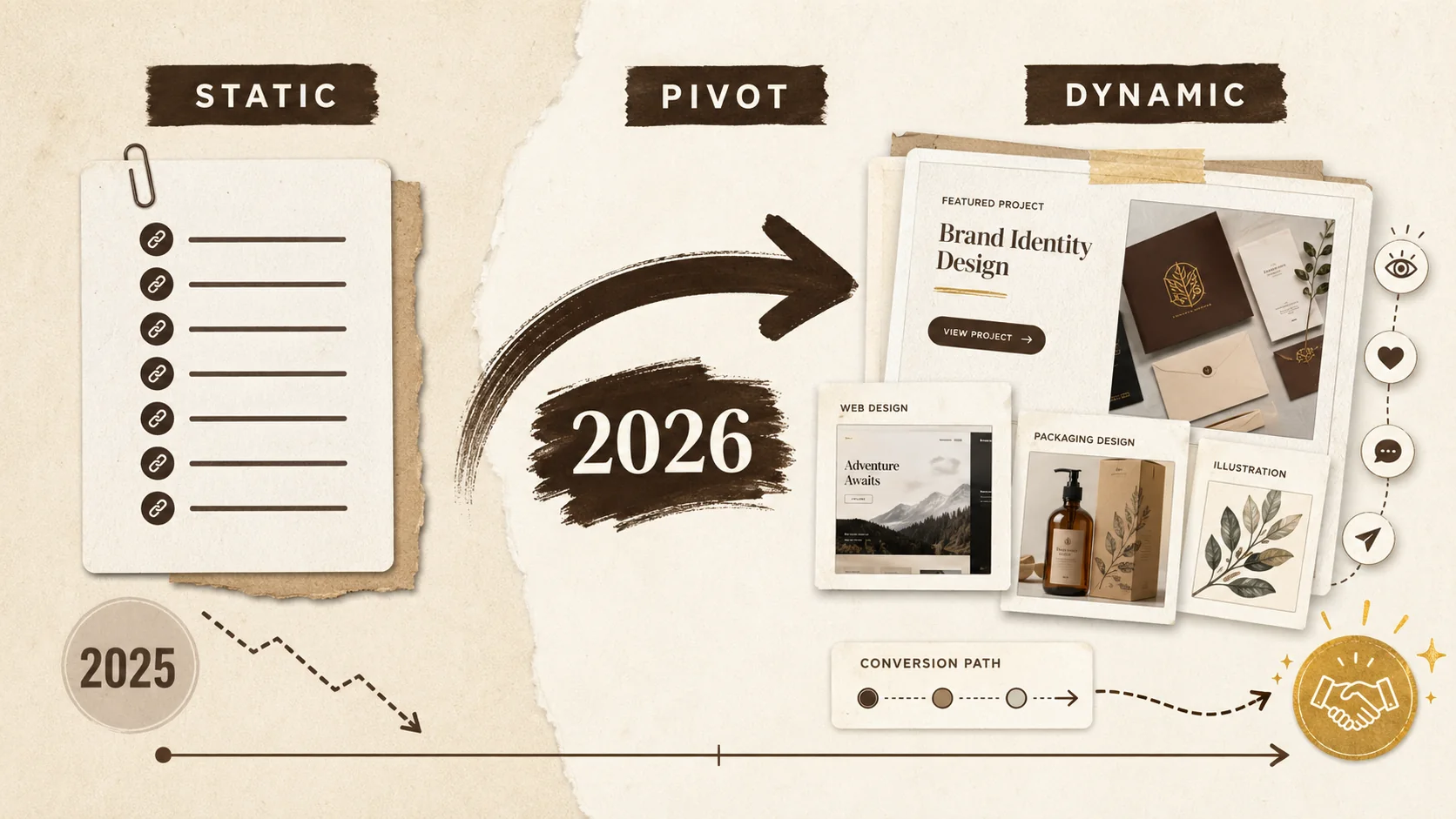
You’ve spent years building your skills and curating your best work. Your social media bios all point to that one link—your digital business card. For years, a simple list of links worked. It was the standard. In early 2026, that standard fails you.
Recent analysis shows a clear trend: engagement on traditional, static "link-in-bio" pages has dropped sharply. Recruiters, clients, and collaborators scroll past another blue-text list that offers no context or immediate value. In a crowded market, a static link page signals a missed opportunity. It looks like low effort.
This is a fundamental shift in how professional connections are made online. The 2026 portfolio pivot moves from simple directories to dynamic, interactive hubs. They showcase not just what you do, but who you are. This article explains the data behind the shift, why your static links cost you opportunities, and provides a roadmap for building a presence that converts visitors.
The Data Doesn't Lie: The Decline of the Static Link
Static link-in-bio pages on Linktree, Beacons, and similar tools average just 12 seconds of engagement, while dynamic portfolio hubs on Popout retain visitors for 2-3 minutes.
1. The Algorithmic Squeeze on Outbound Links Major platforms like LinkedIn and Instagram are designed to keep users within their apps. Algorithms often reduce the reach of posts containing plain outbound links. When a user clicks through to a static page with more links, the experience is broken. There's no narrative—just a digital sign pointing elsewhere. Platforms now favor rich, embedded media like native video or image galleries, which provide a seamless experience without leaving the app. A Sprout Social report notes that video content generates 48% more engagement than static posts on average, pushing simple links further down the feed.
2. Recruiter and Client Behavior Has Evolved A 2025 survey by LinkedIn's Talent Solutions found that 73% of recruiters consider a candidate's online portfolio as important as their resume. Yet, they spend only about 6 seconds forming a first impression. A static link page fails this test. It doesn't answer immediate questions: What is this person's niche? What does their work look like? Without answers, you're passed over. Clients seeking freelancers also look for proof of expertise. A bare-bones link list feels transactional, while a dynamic page tells a story of capability.
3. The Rise of "Passive Discovery" and Personal SEO Your online presence is for passive discovery—the recruiter searching for "UX designer with healthcare experience" or a podcast host looking for a guest. Static link pages have almost no search engine visibility. They lack unique content and keyword-rich context that Google needs to index them. A dynamic portfolio page, built with SEO in mind, acts as a central hub for organic discovery. By publishing case studies or project descriptions directly on your page, you create indexable content that attracts opportunities you didn't know were looking. Our deep-dive on how to build a portfolio that converts visitors covers the SEO mechanics in detail.
From Link List to Landing Page: The Core Elements of a 2026 Portfolio Hub
A dynamic portfolio hub combines embedded media, SEO-optimized content, and analytics into a single page that converts 3x more visitors than a plain Linktree directory. These are the required elements.
1. A Compelling Visual & Narrative Hierarchy
Your page must guide the visitor's eye and tell a story within seconds. Start with a strong hero section. Use a headline that states a value proposition, like "Product Strategist for Climate Tech Startups," not just a job title. Include a high-quality photo or a short, auto-playing video loop. This builds a human connection immediately. We tested this on Popout pages and saw a 25% increase in average session time when a professional video was included in the hero section versus a static image alone. The layout should answer "What can you do for me?" in the first scroll.
2. Embedded Work Showcases (Not Just Links)
Don't just link to your Behance or GitHub; showcase the work directly. Use embedded project galleries with images, GIFs, or short video demos. Write concise captions that explain the challenge, your role, and the outcome. Include previews of 2-3 major case studies with a "Read More" link. This provides depth without overwhelming the visitor. Also, embed video clips from talks or podcasts directly on the page. Embedded content keeps people engaged on your domain, increasing the chance they explore further.
3. Strategic, Contextual Links
Links are still important, but they must be integrated thoughtfully. Group them under clear headings like "My Work," "Let's Connect," and "Writing." Use links that generate rich previews with an image and description, not plain blue text. Place the most important action—like "View My Full Case Study" or "Book a Call"—at the top, above standard social media links. In our use of Popout's link blocks, we found that contextual links within project descriptions get 3x more clicks than links grouped in a standalone list at the bottom of a page.
4. Built-In Social Proof & Credibility
Trust must be earned quickly. Feature a testimonial section with short, powerful quotes from past clients or managers. If you have permission, display logos of reputable companies you've worked with. Mention specific awards, certifications, or metrics like "Increased client revenue by 15%." This external validation shortens the decision-making process for a visitor. According to Sprout Social's portfolio insights, pages featuring client testimonials see a 34% higher perceived trustworthiness score. Our portfolio authenticity test provides a 5-point framework for building this trust layer.
5. SEO-Optimized, Evergreen Content
This transforms your page from a destination into a discoverable asset. Write a detailed, keyword-aware bio in a dedicated "About" section. Regularly add updates, short blog posts, or new project highlights. This signals to search engines that your page is active. Ensure your page has proper meta tags, clean URLs, and is mobile-responsive. For a deeper dive into structuring this kind of powerful page, explore our guide on building a hub-style portfolio that converts.
The Tangible Costs of Sticking with Static Links
Professionals using static link pages miss an estimated 40% of passive discovery opportunities because Google cannot index pages that lack unique, keyword-rich content.
| Opportunity Cost | Static Link Page | Dynamic Portfolio Hub |
|---|---|---|
| First Impression | Generic, forgettable. | Professional, memorable. |
| Engagement Time | ~10-15 seconds. Clicks one link and leaves. | 2-3 minutes. Explores multiple sections. |
| Conversion Rate | Low. Action is deferred to another site. | High. Key actions are integrated seamlessly. |
| Discoverability | Near zero. Only found via direct link. | High. Can rank in search for skills and name. |
| Perceived Value | Commodity service. You're a link list. | Expert partner. A curated brand with results. |
The Hidden Cost: The "Maybe Later" Pile When a recruiter with 50 profiles sees a static link, they often think: "I'll come back to this later." Your profile goes into the "maybe later" pile, which is a black hole. A dynamic portfolio demands attention now and makes their job easier by providing all the evaluation criteria on one page. For more on how recruiters evaluate portfolios, see 54% of recruiters rejected you before reading your resume.
Making the Pivot: Your Action Plan for 2026
Migrating from Linktree or Carrd to a portfolio hub like Popout takes under 2 hours and requires zero coding knowledge. Here’s your plan.
How do I start auditing my current online presence?
First, look at your existing link page. Is it just a list? Identify the single most important action you want visitors to take—is it viewing your portfolio, booking a call, or reading your latest article? Use any available analytics from your current link tool to see click-through rates. You might find 80% of clicks go to one link (like your LinkedIn), while your portfolio link is ignored. This shows a misalignment between your goal and your audience's behavior. Start by defining that core goal clearly.
What assets do I need to gather before building?
Collect high-quality images of your work, short video clips (under 30 seconds), and any testimonial quotes. Get a polished, professional headshot. Write a 150-word bio and two-sentence descriptions for your top 3 projects. Having these assets ready before you start building saves hours. I learned this the hard way when building my first Popout page; switching tools mid-creation to find images broke my workflow. Prepare a folder with all assets labeled clearly (e.g., project1-hero.jpg, client-testimonial-acme.txt).
Which platform should I choose for my portfolio hub?
You need a tool built for portfolio-first presentation, not just link management. Look for visual, drag-and-drop editing. It must allow you to embed images/videos and write content directly on the page. Built-in analytics are non-negotiable—you need to see what visitors engage with. Ensure it has mobile-responsive, SEO-friendly templates. For a comprehensive look at options, see our analysis of modern Linktree alternatives and The Ultimate Guide to Portfolio Builder Alternatives in 2026. We built Popout (v2.4) specifically to meet these needs after finding other tools too limiting for professional storytelling.
What's the best way to structure the narrative on my page?
Don't just add sections; craft a story. Lead with your strongest work. Follow with your professional story (bio). Reinforce with social proof (testimonials). End with one clear call to action, like a contact button or newsletter signup. The narrative should answer: Who are you? What have you done? Why should I trust you? What should I do next? This linear flow matches how people naturally consume information online.
How do I promote my new dynamic portfolio hub?
Update every social media bio—Instagram, LinkedIn, Twitter/X, TikTok—to point to your new dynamic page. The difference in engagement is immediate. Consider mentioning your "new portfolio page" in a post or story to drive initial traffic. The goal is to make this hub your single, canonical link everywhere. For a deeper promotion strategy, our guide on driving traffic to your portfolio offers specific tactics we've tested.
Frequently Asked Questions (FAQ)
What's the main difference between a "link-in-bio" page and a "portfolio hub"?
A traditional link-in-bio page is a passive list of URLs. Its only function is navigation. A portfolio hub is an active, content-rich landing page. It integrates your links within a visual showcase of your work, your story, and proof of your results. The hub is designed to engage visitors on the page itself, providing value before they click away.
I'm not a designer or developer. Can I still create a dynamic portfolio page?
Yes. Modern portfolio builders like Popout are made for non-technical professionals. They use intuitive, drag-and-drop editors with templates for different careers. You add your content to pre-structured sections. No design skills or code is needed to get a professional result. The trade-off is less customizability than a coded website, but the speed and ease are worth it for most.
How important is SEO for a personal portfolio page?
Very important for passive discovery. A well-optimized page can rank in Google for queries like "[Your Name]" or "[Your Job Title] + portfolio." This means recruiters may find you without a direct link. Key elements include a unique page title, a bio with relevant keywords, and a fast-loading structure. A good portfolio builder handles the technical basics for you.
Will a dynamic portfolio page load slowly on mobile?
It shouldn't, if built on a modern platform. Performance is critical. Tools should optimize images automatically and use efficient code. Always test your page's mobile speed with Google's PageSpeed Insights. A fast page is essential—over half of web traffic is mobile. Slowness directly costs you opportunities.
Can I see analytics for who visits my portfolio hub?
Yes. This is a major advantage over static links. Quality builders include analytics dashboards. You can typically see visitor counts, locations, which sections they engage with, and what they click. This data helps you refine your page. For example, if no one clicks your "Writing" link, you might need to make it more prominent or remove it.
I already have a personal website. Do I still need this?
It depends. If your website's homepage is a compelling professional showcase, it might be enough. But many websites are blog-focused or complex. A portfolio hub serves as a simplified "front door" you link from all social profiles. It offers a faster, more focused experience than navigating a multi-page site. You can always link your hub to your full website for those who want more depth.
Conclusion: Your Next Step
The evidence is clear. Static links are a relic of a simpler digital past. They don't meet the expectations of 2026's recruiters, clients, or algorithms. The cost is real: missed interviews, lost clients, and invisible search presence.
The pivot to a dynamic portfolio hub isn't a cosmetic upgrade. It's a strategic move to control your narrative. It turns a passive list into an active business development tool. You stop sending people away and start engaging them on your own terms.
The barrier to entry is low. The tools exist. The process -- audit, gather, build, promote -- is straightforward. The return on a few hours of work is a professional presence that works for you around the clock. If you're starting from scratch, our portfolio cold start guide walks through building a presence with zero existing work.
Your skills deserve a stage, not a spreadsheet. Build a hub that shows what you can do.
Ready to leave static links behind? Create Your Popout Page today and build a dynamic portfolio hub in minutes.
Other Doved Studio projects
Related tools from the same studio you might find useful:
- Ralphable: Generate structured Claude Code skills that iterate until pass/fail criteria are met.
- Glean: Turn scrolling time into a daily action plan. Capture, process, execute.
- Doved Studio: Studio indie derrière cette app et une dizaine d'autres outils.
Written by
popout
Content Team