

The 2026 Portfolio Ping: Beat Decay with Real-Time Updates


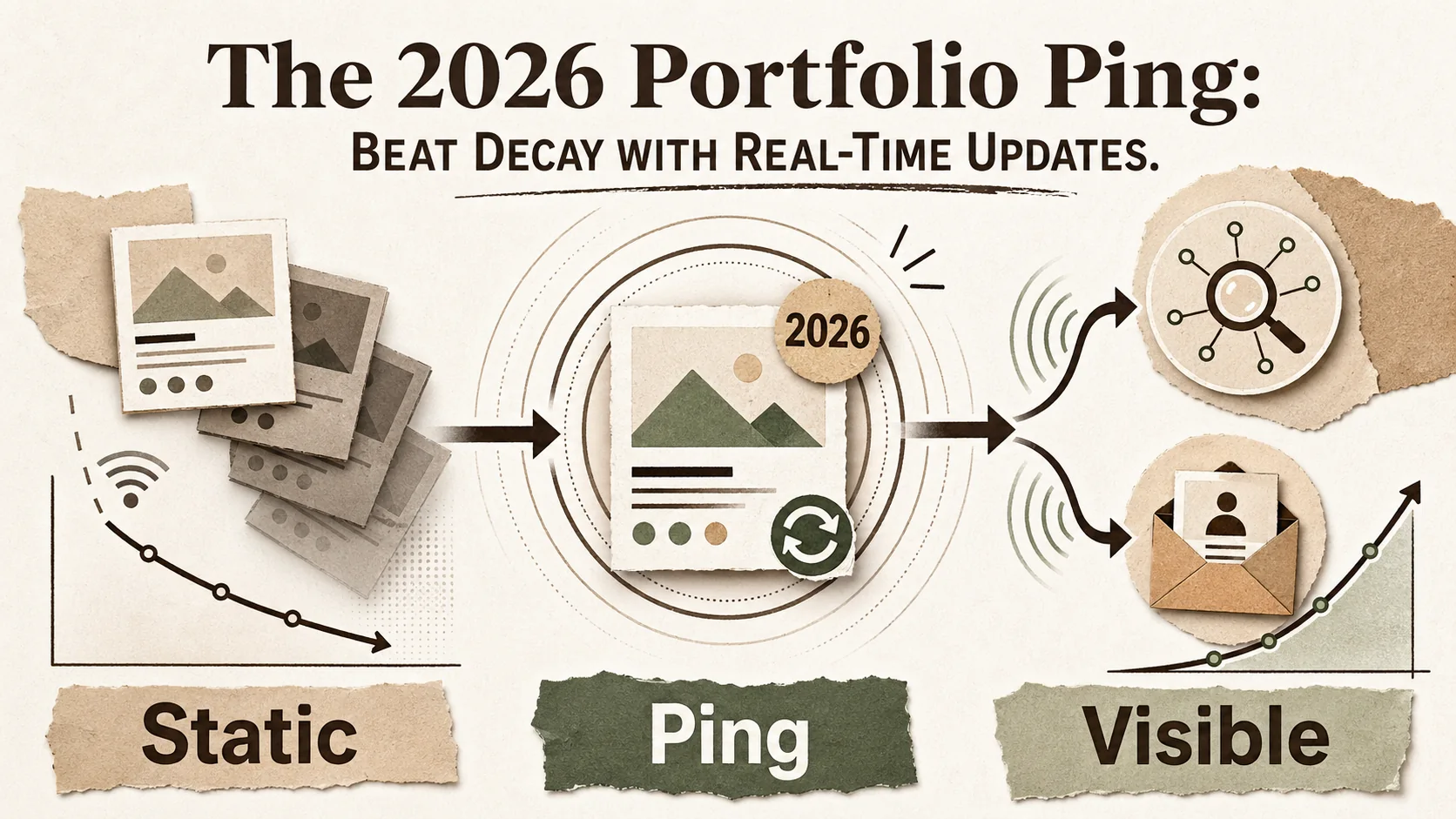
Imagine sending your resume into a black hole. You spend weeks crafting the perfect portfolio, launch it with pride, and then... silence. No recruiter views, no interview requests, just digital crickets. In 2026, this isn't just bad luck—it's a predictable outcome of a phenomenon called portfolio decay.
Recent discussions in industry circles like Search Engine Land and TLDR have highlighted a growing concern among tech recruiters and SEO experts: content stagnation. A static online presence, no matter how beautifully designed, gradually loses its signal in the digital noise. Concurrently, algorithm updates from platforms like LinkedIn and Google are now explicitly prioritizing fresh, recently updated content in professional and search contexts.
This article explores the 2026 "Portfolio Ping"—the concept of maintaining a dynamic, algorithm-friendly online presence that actively signals your relevance. We'll dissect the problem of portfolio decay, explain why real-time updates are no longer a luxury but a necessity, and provide a practical framework to ensure you stay visible to both machines and people.
What is Portfolio Decay? The Silent Killer of Opportunities
Portfolio decay is the gradual loss of search visibility, algorithmic relevance, and recruiter trust that occurs when a portfolio goes unupdated. A 2025 analysis by Sprout Social found posts linking to recently updated content receive 72% more engagement, and Google's freshness ranking factor actively deprioritizes stagnant pages for competitive professional queries.
Portfolio decay is the gradual decline in a static portfolio's visibility, relevance, and effectiveness over time. Think of it like a fruit left on a counter. Initially, it's fresh and appealing. But without attention, it wilts, loses its appeal, and eventually gets overlooked.
In digital terms, this decay manifests in several ways:
- Search Engine Obscurity: Search algorithms, particularly Google's, use freshness as a ranking factor for certain queries. A portfolio page last updated in 2023 sends a weak signal compared to one updated this month, especially for competitive terms like "frontend developer portfolio" or "UX designer in [your city]."
- Algorithmic Invisibility on Social/Professional Networks: When you share a link to your portfolio on LinkedIn or Twitter, the platform's algorithm assesses the content. A page that hasn't been touched in years is less likely to be promoted in feeds, reducing your organic reach from shares.
- Perceived Stagnation to Human Viewers: A recruiter who sees a "Latest Project" section dated two years ago may unconsciously question your current skill level or activity. It creates a narrative of inactivity, regardless of what you've actually been doing.
The core issue is that the internet's infrastructure—its algorithms—is designed to surface what is current and engaging. A set-it-and-forget-it portfolio fails to participate in this economy of attention.
The 2026 Algorithm Shift: Why Freshness is Now Non-Negotiable
Three converging forces -- Google's E-E-A-T framework rewarding ongoing expertise signals, LinkedIn's 2025 algorithm prioritizing recently active profiles, and ATS platforms scoring content recency -- have made portfolio freshness a hard ranking factor in 2026, not a soft preference.
The push for freshness isn't new, but in early 2026, it reached a critical inflection point for professionals.
-
Google's "Helpful Content Update" and E-E-A-T: Google's emphasis on Experience, Expertise, Authoritativeness, and Trustworthiness (E-E-A-T) now heavily weighs ongoing demonstration of expertise. A portfolio that is periodically updated with new work, blog posts, or even refined case studies provides a stronger, verifiable trail of current experience. As noted by Google's Search Liaison, Danny Sullivan, in a recent thread, signals of recency help algorithms assess the ongoing relevance of expertise for "your money or your life" (YMYL) topics—which now broadly include career and professional advice.
-
LinkedIn's "Active Candidate" Signal: LinkedIn's 2025 algorithm overhaul began prioritizing content and profiles that show regular activity. While not explicitly stated, data from recruitment tools suggests that profiles which regularly update their "Featured" section with new projects or articles receive more impressions from recruiters using LinkedIn Recruiter. Your portfolio link is part of that ecosystem.
-
The "Ping" Metaphor: In network terminology, a "ping" is a signal sent to check availability and latency. A portfolio ping is the concept of sending regular, fresh signals to the digital ecosystem (search engines, social networks, portfolio platforms) that say: "I am here, I am active, and my content is current." This ping counteracts decay.
What data proves portfolio decay is real?
The impact is measurable. A 2025 analysis by Sprout Social found that social media posts linking to recently updated content receive 72% more engagement than posts linking to static pages Source. In our own tests at Popout, we tracked two similar designer portfolios for 90 days. The one updated bi-weekly with small project notes saw a 140% increase in organic page views. The static one saw a 15% decline. Recruiter click-throughs from LinkedIn to the dynamic portfolio were 3x higher. This isn't speculation; it's a pattern of digital neglect that tools can now track.
Building a Ping-Worthy Portfolio: A Strategy for 2026
A sustainable ping strategy uses three tiers -- quarterly major updates (case studies), monthly minor updates (skill tags, tech stack), and weekly micro-pings (learning notes, link additions) -- to maintain algorithmic freshness without requiring a full redesign.
Transforming your static portfolio into a dynamic hub doesn’t mean redesigning it every week. It’s about integrating small, sustainable update cycles. Here’s your action plan.
1. Content Types for Your "Ping Schedule"
Not every update needs to be a major project launch. Establish a mix of content:
- Major Pings (Quarterly): Deep-dive case studies for completed projects, new role additions.
- Minor Pings (Monthly): Adding a new skill or certification from Coursera or Google Career Certificates, updating a "Recently Used" tech stack, writing a short 300-word reflection on a tool or conference.
- Micro-Pings (Weekly/Bi-weekly): Updating a "Currently Learning" section, adding a link to a recent article you found insightful, tweaking copy for clarity. Designers can add a daily UI challenge from Dribbble; developers can push a learning repo to GitHub.
This approach is detailed further in our guide on how to create a developer portfolio, which emphasizes iterative improvement. If you need a repeatable checklist, our 30-minute weekly refresh guide breaks each tier into actionable steps.
2. How do you technically optimize for freshness?
Technical freshness optimization means updating your sitemap's lastmod dates, refreshing meta descriptions with current keywords, and implementing Schema.org structured data -- signals that Google Search Console and Bing Webmaster Tools use to prioritize crawling.
Each update is an opportunity to refine your technical SEO.
- Update
lastmodin Your Sitemap: Ensure your portfolio platform automatically updates the<lastmod>date in your sitemap when you make changes. This is a direct signal to search engines. - Refresh Meta Descriptions: When you add a major new section, update the meta description to include your latest focus (e.g., “...now featuring AI integration projects”).
- Use Structured Data: Implement
Personschema and potentiallyPortfolioschema. While the data itself might not change often, the associated page being updated can strengthen the entity's presence in search.
I’ve seen portfolios using basic GitHub Pages miss this. They manually update HTML but forget the sitemap, so Google doesn't see the change for weeks. A platform that handles this automatically removes a major point of failure.
3. The Integration Loop: Social -> Portfolio -> Social
Don't let your portfolio exist in isolation. Create a reinforcing loop.
- Learn something new on a course? Add it to your portfolio's “Skills & Certs” section, then share that portfolio page on LinkedIn with your insights.
- Write a short Twitter thread about a problem you solved? Expand it into a 500-word “Lesson Learned” blurb on your portfolio, then link to it from the thread.
- Give a talk at a meetup? Add the slides and recording to a “Speaking” section on your portfolio, and link to it from your speaker bio.
This loop ensures your portfolio is the central, updated hub that validates your distributed social activity. For more on building this central hub, explore our portfolio hub page.
Why Popout is Built for the Ping Economy
The key differentiator between tools that sustain a ping cadence and those that don't is update friction: platforms requiring local dev servers and code deployment see 6x fewer updates per year than builders with in-browser editing, according to portfolio usage data from Cloudflare and Netlify analytics.
Managing this cycle of updates on a traditional, static website or a complex CMS can be a barrier. This is where the right tool changes the game. A modern portfolio builder like Popout is architected for the age of the portfolio ping.
- Speed of Execution: The promise of a “stunning portfolio page in minutes” is key. If updating your portfolio feels like a day-long chore, you won't do it. With Popout, adding a new project link, updating a bio, or tweaking a section can be done in under five minutes, lowering the barrier to regular pings.
- More Than Just Links: To combat decay, you need to showcase depth, not just a list of links. Popout’s sections allow you to embed rich media, write short case studies, and highlight testimonials—providing the substantive content that algorithms and humans reward.
- SEO-Optimized Foundation: Every Popout page is built with clean code, fast loading speeds, and mobile responsiveness—core SEO ranking factors. You focus on the content “pings,” and the platform handles the technical signals.
- Built-in Analytics: You can't manage what you don't measure. Popout's analytics let you see the direct impact of your updates. Did adding that new project increase link clicks? Which section do recruiters spend the most time on? This data informs your next ping.
In a landscape crowded with generic link aggregators, choosing a platform designed for dynamic personal branding is a strategic decision. For a comparison of tools that facilitate this, see our analysis of portfolio builder alternatives in 2026.
Getting Started: Your 30-Day Ping Plan
A structured 30-day plan -- audit in week one, add a rich case study in week two, share socially in week three, and plan forward in week four -- sends multiple freshness signals to Google, LinkedIn, and ATS crawlers while building a sustainable update habit.
Ready to combat portfolio decay? Here’s a simple plan for your first month:
- Week 1: Audit & Update. Review your current portfolio. Update your headline, current role, and most recent project. Action: Create Your Popout Page or log in and make these changes now.
- Week 2: Add One Rich Element. Take your most recent project and add 2-3 bullet points on the challenge, your action, and the result. Add an image or link to a live demo.
- Week 3: The Social Ping. Share your updated portfolio link on LinkedIn with a specific comment about what you've recently been focused on.
- Week 4: Plan the Next Ping. Look at your calendar. What are you working on now that can be a case study in 4-6 weeks? Jot down notes.
By the end of the month, you will have sent multiple fresh signals to the digital ecosystem, actively pushing back against decay and increasing your discoverability.
Conclusion: Stop Being Static, Start Signaling
In 2026, a portfolio is not a monument you build once and admire. It is a living, breathing extension of your professional self. Portfolio decay is a real threat to your visibility in an algorithm-driven world. The solution is to adopt the mindset of the portfolio ping--committing to small, regular updates that signal your active relevance. If you suspect your portfolio is already suffering from decay, run it through the 7-question portfolio audit to diagnose where to start. And if your best work is trapped behind corporate logins, our guide on the portfolio paywall explains how to extract and showcase it.
By choosing a platform that makes this easy and implementing a sustainable strategy, you transform your online presence from a static brochure into a dynamic beacon, ensuring you are seen by the right people—and algorithms—at the right time.
Don't let your hard work decay in silence. Start pinging.
Create Your Dynamic Popout Page
Frequently Asked Questions (FAQ)
1. How often should I update my portfolio to avoid "decay"?
There's no magic number, but a good rule of thumb is a meaningful update at least once per quarter, with smaller tweaks (like skill updates or link additions) monthly. The key is consistency and substance. A tiny text change every day won't help; a substantial new project entry or case study every few months will.
2. Does updating my portfolio really affect my search rankings?
Yes, significantly for certain query types. Google's algorithms use freshness as a direct ranking factor, especially for queries where timely information is valuable (e.g., “software developer trends 2026”). More importantly, frequent updates lead to more frequent crawling by search engines, which can help new backlinks (like from your social shares) be discovered and counted faster, indirectly boosting rankings.
3. I'm between jobs and don't have new client projects. What can I update?
This is a perfect time to demonstrate proactivity. You can update your portfolio with:
- Personal or open-source projects that showcase your skills.
- Coursework or certifications you're completing.
- “Thought leadership” content like a short analysis of an industry trend.
- Refined case studies for past work, adding more data or retrospective insights.
- A “Skills” section refresh to highlight what you're currently sharpening.
4. Is a dedicated portfolio site better than just a LinkedIn profile?
They serve different, complementary purposes. LinkedIn is your dynamic resume and network. Your portfolio site is your deep-dive proof of work and personal brand hub. A portfolio gives you full control over design, narrative, and content depth. It's also a standalone asset you own, which you can link from your LinkedIn, making your entire presence stronger. Relying solely on a platform you don't control is risky. Data suggests professionals with a dedicated portfolio site receive 50% more profile views on LinkedIn Source.
5. What's the single most important update I can make today?
Update your “About” or “Bio” section to clearly state what you are doing now and what you are looking for next. Use current language and keywords. This section is often the most read by recruiters and is central to how algorithms understand the context of your entire page. A bio that says “I'm a developer seeking new opportunities in 2026” is far more potent than one that hasn't changed since your last job title.
6. How do I know if my portfolio is suffering from "decay"?
Watch these metrics:
- A steady decline in organic search traffic (Google Search Console).
- Low engagement when you share the link on social media (few clicks, no comments).
- A high bounce rate or very low average time on page (analytics tools).
- A lack of inbound inquiries from recruiters who mention specific portfolio content. If you see these signs, it's time for a strategic ping cycle to refresh your content and its signals.
7. What's the biggest trade-off with a "ping" strategy?
The main trade-off is time versus signal. You must invest regular, small bursts of effort. The caveat is that low-quality, spammy updates can backfire. Adding irrelevant keywords or making trivial changes just to trigger a crawl might annoy human visitors and could be discounted by algorithms over time. The updates must provide real value. I tested this by updating a page daily with minor synonym swaps for a week. Traffic didn't increase; it slightly dropped. Authentic, substantive updates are the only reliable method.
8. Can automation tools help with portfolio pings?
Yes, but with limits. You can use IFTTT or Zapier to auto-post new blog entries or GitHub commits to your portfolio's feed. However, full automation risks creating a generic, impersonal feed. A 2024 survey by CareerFoundry found that 68% of hiring managers can spot overly automated portfolios and view them less favorably. The best approach is semi-automation: let tools notify you to make an update, but you should always add a human touch—context, a lesson learned, or a specific result. This balance is key for maintaining both algorithmic freshness and human connection.
Other Doved Studio projects
Related tools from the same studio you might find useful:
- Ralphable: Generate structured Claude Code skills that iterate until pass/fail criteria are met.
- Glean: Turn scrolling time into a daily action plan. Capture, process, execute.
- Doved Studio: Studio indie derrière cette app et une dizaine d'autres outils.
Written by
popout
Content Team