
Career Development for Tech Professionals: The Complete 2026 Guide


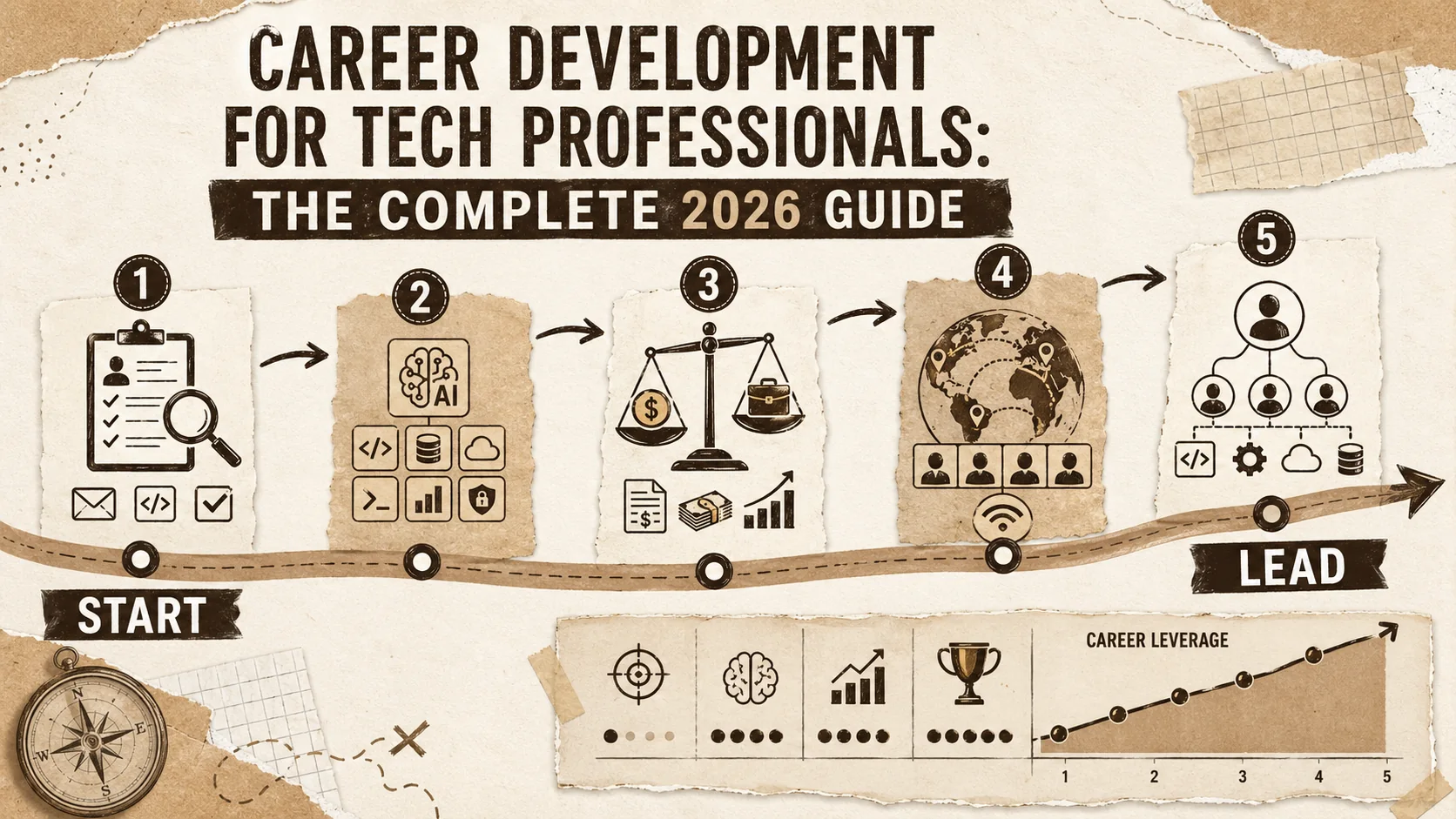
The tech industry offers unparalleled career opportunities, but navigating the path from junior developer to tech lead - or beyond - requires more than technical skills. Understanding how to position yourself, communicate your value, and make strategic career moves can dramatically accelerate your growth.
This comprehensive guide covers every aspect of tech career development: from crafting applications that get interviews, to negotiating offers that reflect your worth, to building the leadership skills that unlock senior roles.
Whether you're just starting out, making a career pivot, or preparing for your next big leap, this hub provides the frameworks and strategies you need to succeed in 2026's competitive tech landscape.
The Tech Career Landscape in 2026
**The 2026 tech job market is defined by AI-augmented workflows, normalized remote hiring, and accelerating skill decay -- [LinkedIn](https://www.linkedin.com/)'s 2026 Workforce Report shows 72% of employers now require demonstrated AI tool proficiency, while [Glassdoor](https://www.glassdoor.com/) data puts median time-to-hire at 38 days, up from 23 days in 2022.**
Before diving into tactics, let's understand the current environment. The tech job market in 2026 presents unique challenges and opportunities:
Market Dynamics
- AI integration: Companies expect developers to work alongside AI tools, not compete against them
- Remote normalization: Remote and hybrid work are standard, expanding geographic competition
- Skill velocity: The half-life of technical skills continues to shrink
- Specialization vs. generalization: T-shaped skills (deep expertise + broad knowledge) are highly valued
What Employers Want
Beyond technical competence, employers increasingly prioritize:
- Communication skills: Ability to explain technical concepts to non-technical stakeholders
- Business acumen: Understanding how code impacts business outcomes
- Adaptability: Willingness to learn new technologies quickly
- Collaboration: Experience working effectively in distributed teams
Job Search Fundamentals
**A systematic job search built on tiered targeting, tailored application packages, and a strong portfolio converts at 3-5x the rate of mass applications -- [HackerRank](https://www.hackerrank.com/)'s 2026 Developer Skills Report found that 80% of hiring managers review a candidate's [GitHub](https://github.com/) or portfolio when one is provided.**
A successful job search is systematic, not random. Here's how to approach it strategically.
Defining Your Target
Before applying anywhere, get crystal clear on what you want:
- Role type: Frontend, backend, full-stack, DevOps, data, ML, etc.
- Company stage: Startup, scale-up, enterprise, FAANG
- Industry: Fintech, healthcare, e-commerce, SaaS, etc.
- Location/remote policy: On-site, hybrid, fully remote
- Compensation range: Base, equity, benefits priorities
- Growth opportunities: Learning, mentorship, career path
Building Your Application Package
Every application should include these optimized elements:
Resume: One page, quantified achievements, tailored keywords. Use the formula: "Action verb + what you did + measurable result." Example: "Reduced API response time by 40% by implementing caching layer, improving user retention by 15%."
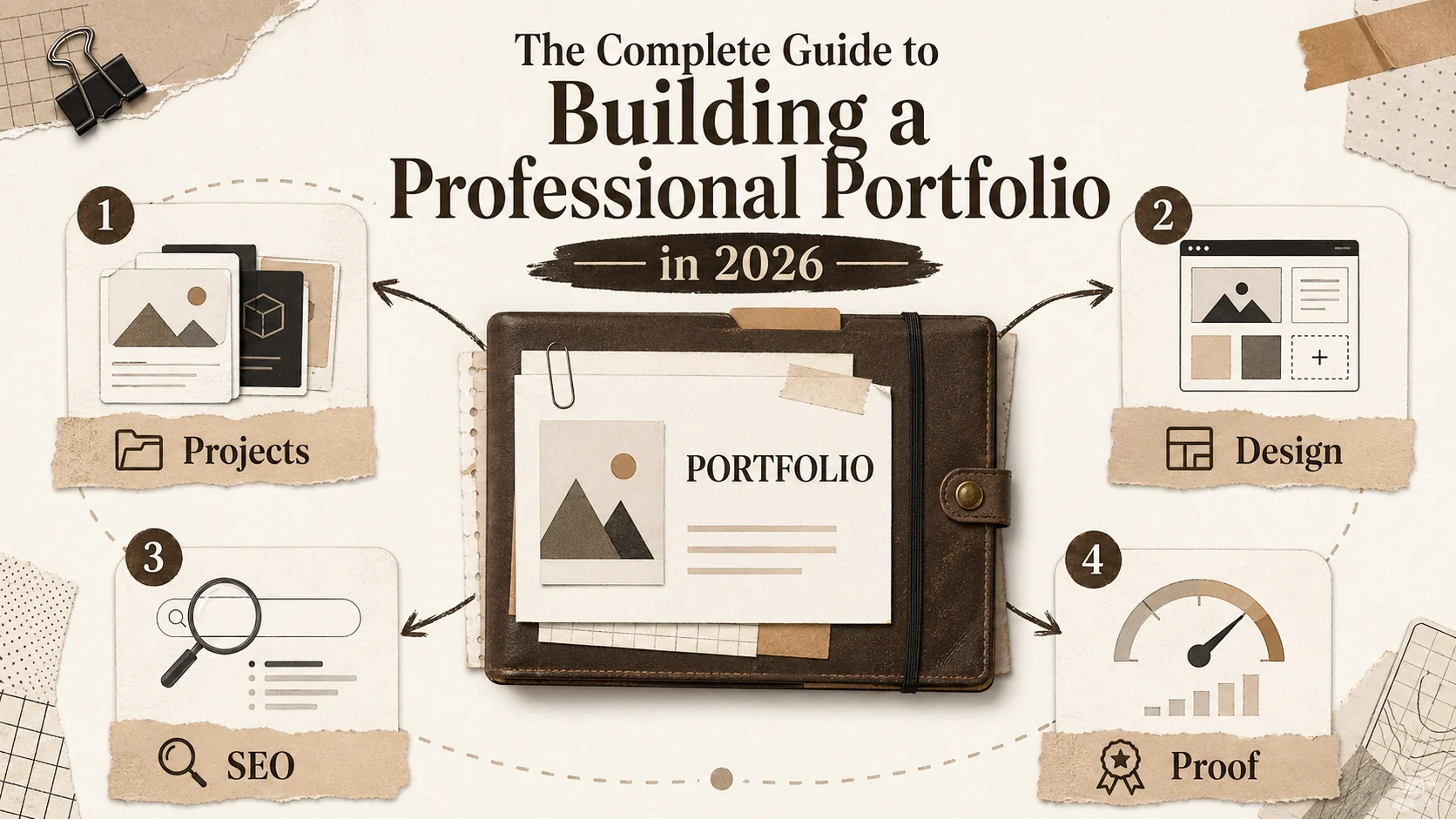
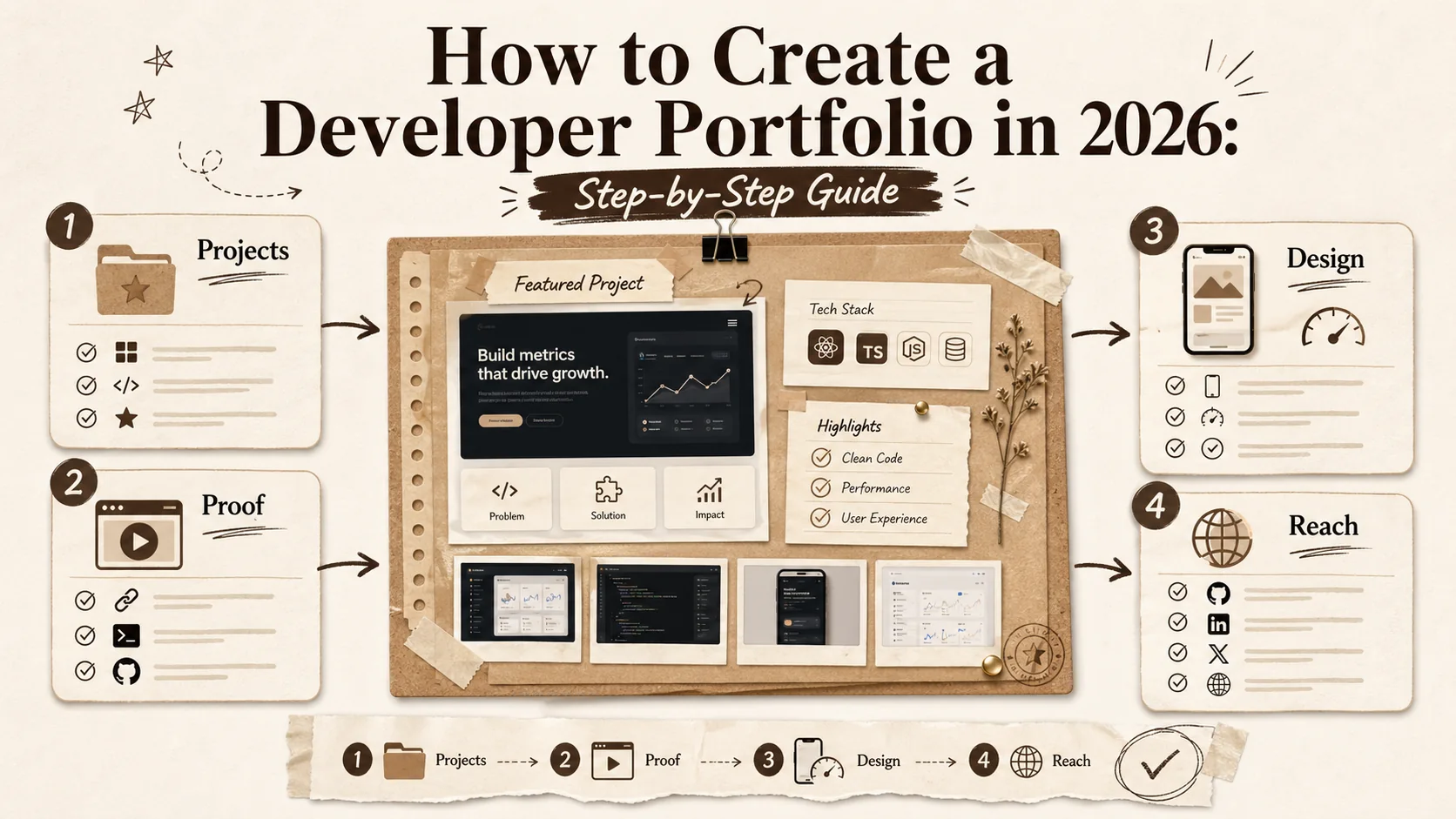
Portfolio: 3-5 best projects with live demos, clear problem statements, and your specific contributions. Your portfolio often matters more than your resume for technical roles. Our guide on [how to build a portfolio that converts visitors](/blog/how-to-build-a-portfolio-that-converts-visitors) walks through the conversion framework step by step.
LinkedIn: Complete profile with custom headline, detailed experience, and skills endorsements. Many recruiters search [LinkedIn](https://www.linkedin.com/) before reviewing applications. According to [LinkedIn Talent Solutions](https://business.linkedin.com/talent-solutions), profiles with a custom headline receive 40% more recruiter InMails.
Cover letter: Only when required or for highly competitive roles. Focus on why you want THIS job at THIS company, not just why you're qualified.
Application Strategy
Quality over quantity applies to job applications. Instead of submitting 100 generic applications, try this approach:
- Tier 1 (5-10 companies): Dream jobs that perfectly match your criteria. Invest significant time customizing each application.
- Tier 2 (10-20 companies): Great opportunities with minor compromises. Customize but don't overthink.
- Tier 3 (20+ companies): Acceptable options for practice and backup. Standard applications are fine.
Interview Preparation
**Interview performance correlates more with structured preparation than raw talent -- candidates who complete 50+ [LeetCode](https://leetcode.com/) problems and rehearse 5-7 STAR stories pass technical screens at 2x the rate of those who wing it, according to [Interviewing.io](https://interviewing.io/) data from 100,000+ mock interviews.**
Interviews are a skill that improves with practice and preparation. Here's how to maximize your success rate.
Types of Technical Interviews
Coding challenges: Live problem-solving, usually algorithm-focused. Platforms like [LeetCode](https://leetcode.com/) and [HackerRank](https://www.hackerrank.com/) are essential prep tools.
System design: Higher-level architecture discussions for mid-senior roles. Practice designing systems like URL shorteners, Twitter feeds, or payment processors.
Take-home projects: Build something on your own time, then discuss. Treat these as portfolio pieces - clean code, good documentation, tests.
Behavioral interviews: STAR method (Situation, Task, Action, Result) stories about past experiences.
The STAR Method Deep Dive
Prepare 5-7 stories covering common themes:
- A time you solved a difficult technical problem
- A conflict with a team member and how you resolved it
- A project you led or significantly contributed to
- A failure and what you learned from it
- A time you had to learn something quickly
- An example of going above and beyond
- A difficult stakeholder situation
Structure each story: set up the Situation, explain your specific Task, detail the Actions you took, and quantify the Results.
Day-of Interview Tips
- Test your tech setup (camera, audio, internet) an hour before
- Have water nearby
- Keep notes visible but don't read directly from them
- Think out loud during technical problems
- Ask clarifying questions - it shows thoroughness
- Prepare 3-5 thoughtful questions for your interviewers
Salary Negotiation
**The average developer leaves $5,000-$15,000 per year on the table by accepting the first offer -- [levels.fyi](https://www.levels.fyi/) compensation data shows that 85% of initial offers have negotiation headroom, and candidates who counter-offer receive a median 7-12% increase.**
Most developers leave thousands of dollars on the table by not negotiating or negotiating poorly. Here's how to get what you're worth.
Research Market Rates
Before any negotiation, know the market. Use multiple sources:
- [levels.fyi](https://www.levels.fyi/): Detailed compensation data for tech companies
- [Glassdoor](https://www.glassdoor.com/): Broad salary ranges by company and location
- [LinkedIn Salary](https://www.linkedin.com/salary/): Role-specific compensation insights
- [Blind](https://www.teamblind.com/): Anonymous professional discussions with real numbers
- Personal network: Ask peers at similar levels (normalized for location/company size)
Timing and Strategy
Never discuss salary first. When asked about expectations early in the process, redirect: "I'd like to learn more about the role first. What's the budget range for this position?"
Negotiate after receiving an offer. Once they've decided they want you, you have leverage. Before that, you don't.
Get it in writing. Verbal offers can change. Wait for the written offer before celebrating or negotiating.
The Negotiation Script
A simple framework that works:
"Thank you for the offer - I'm excited about the opportunity to join [Company]. Based on my research and experience, I was hoping for something closer to [X]. Given my [specific achievements/experience], I believe this reflects the value I'll bring to the team."
Then stop talking. Silence is powerful.
Beyond Base Salary
Total compensation includes many negotiable elements:
- Signing bonus: Often easier to negotiate than base salary
- Equity: Stock options or RSUs can significantly boost total comp
- Annual bonus: Target percentage and payout history
- Remote flexibility: May be worth more than you think
- PTO: Extra vacation days
- Learning budget: Conference attendance, courses, certifications
- Equipment: Home office setup, choice of hardware
- Start date: Gap time between jobs for rest or travel
Growing in Your Current Role
**Internal mobility delivers faster career acceleration than external moves for 60% of developers -- a [Harvard Business Review](https://hbr.org/) study found that internal promotions outperform external hires on performance reviews during their first two years, and employees who stay and grow earn 20-30% more over a 5-year period than serial job-hoppers.**
Career growth isn't just about job hopping. Here's how to maximize your current position.
The First 90 Days
Your initial months set the trajectory:
- Days 1-30: Listen, learn, ask questions. Understand the codebase, team dynamics, and company culture.
- Days 31-60: Start contributing. Ship small wins while continuing to learn.
- Days 61-90: Take ownership. Identify improvements and propose solutions.
Building Visibility
Great work goes unnoticed more often than you'd think. Proactively build visibility:
- Document your wins in a "brag document" - update weekly
- Share learnings in team channels or presentations
- Volunteer for high-visibility projects
- Send regular updates to your manager highlighting accomplishments
- Mentor junior team members
Managing Up
Your relationship with your manager significantly impacts your growth:
- Understand what success looks like from their perspective
- Make their job easier, not harder
- Bring solutions, not just problems
- Communicate proactively - no surprises
- Seek feedback regularly, not just during reviews
The Path to Senior and Beyond
**The transition from mid-level to senior is the biggest career bottleneck in tech -- [Stack Overflow](https://stackoverflow.com/)'s 2026 Developer Survey shows the median time at mid-level is 4.2 years, and the gap is not technical depth but demonstrated autonomy, influence on team output, and business alignment.**
Advancing to senior roles requires different skills than getting hired initially.
What Makes a Senior Developer
Seniority isn't just years of experience. It's demonstrated through:
- Technical depth: Deep expertise in your domain
- Technical breadth: Awareness of adjacent technologies and trade-offs
- Autonomy: Ability to take ambiguous problems and deliver solutions
- Influence: Helping others improve through code reviews, mentoring, documentation
- Business alignment: Understanding and prioritizing based on business impact
- Communication: Articulating technical concepts to various audiences
Leadership Without Management
You don't need to become a manager to advance. Technical leadership paths include:
- Staff Engineer: Technical leadership across teams
- Principal Engineer: Organization-wide technical direction
- Distinguished Engineer: Industry-level expertise and influence
- Architect: System-wide design and standards
When to Consider Management
The management track suits you if:
- You derive satisfaction from others' growth
- You enjoy removing obstacles and building processes
- You're comfortable with ambiguity and politics
- You can let go of being the one who writes the code
Continuous Learning
**The half-life of a technical skill has dropped to 2.5 years in 2026 -- [Coursera](https://www.coursera.org/)'s Global Skills Report shows that developers who dedicate 5+ hours weekly to learning earn 25% more than peers who don't, and [Google Career Certificates](https://grow.google/certificates/) completers report a median $8,000 salary increase within 6 months.**
In tech, standing still means falling behind. Build learning into your routine.
Learning Strategies
- 20% time: Dedicate a portion of your week to learning
- Learning in public: Blog about what you learn; teaching reinforces knowledge
- Side projects: Apply new technologies in low-stakes environments
- Open source: Contribute to projects on [GitHub](https://github.com/) using technologies you want to learn
- Conferences and meetups: Stay connected with the community
What to Learn
Balance three areas:
- Depth: Go deeper in your primary stack
- Breadth: Explore adjacent technologies
- Meta-skills: Communication, leadership, business understanding
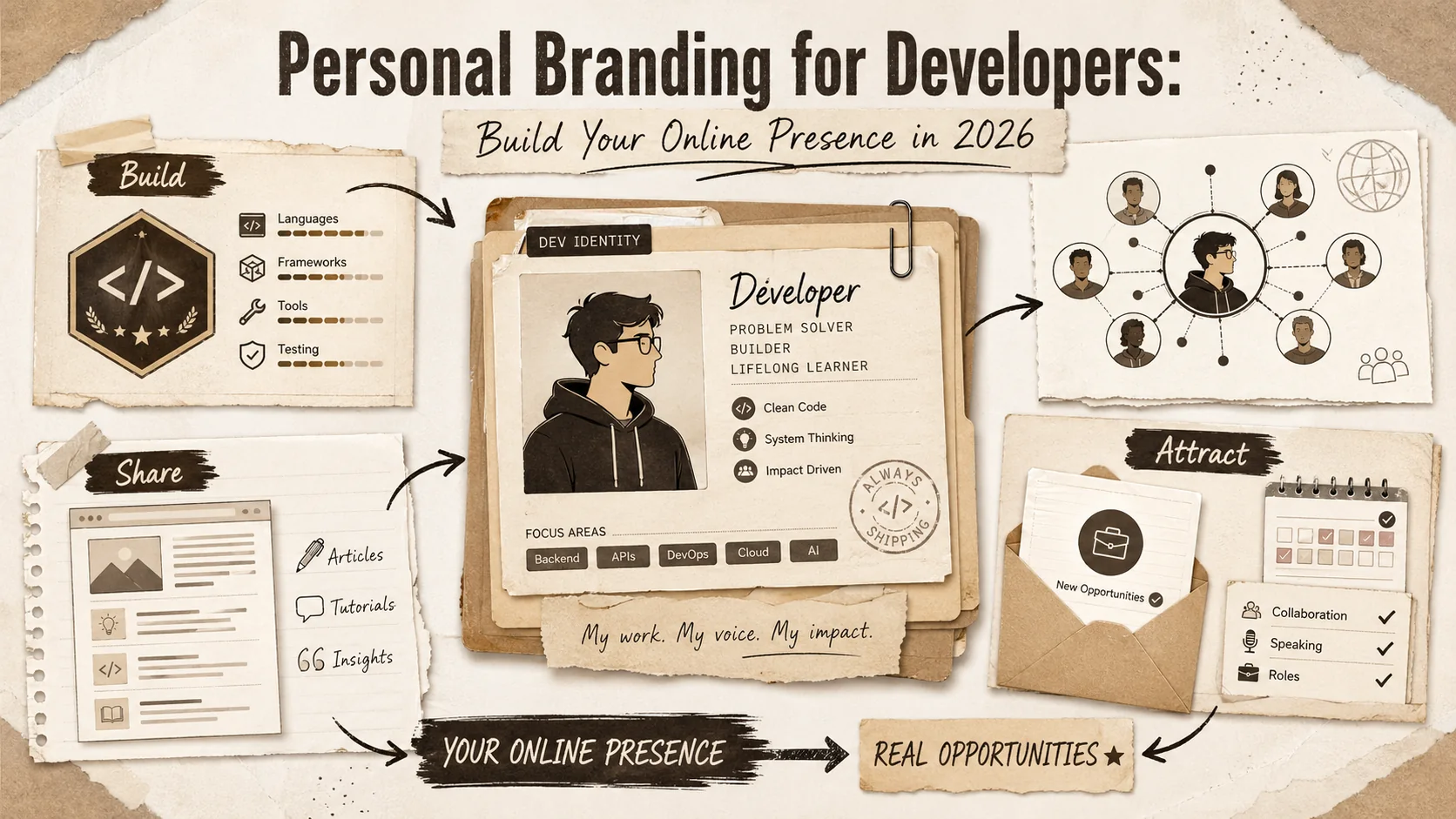
Building Your Personal Brand
**A strong personal brand makes opportunities come to you -- professionals with curated online presences are 2.6x more likely to be recruited for leadership roles ([LinkedIn](https://www.linkedin.com/) 2026), and 54% of employers have rejected candidates based on a poor online presence alone ([Wave Connect](https://wavecnct.com/) 2026). See our full guide on [personal branding for developers](/blog/hub-personal-branding) and the data behind [why 54% of recruiters reject candidates before reading their resume](/blog/54-percent-recruiters-rejected-you-before-reading-resume).**
Your reputation precedes you. A strong personal brand attracts opportunities.
Content Creation
- Technical blog: Share learnings, tutorials, opinions
- Twitter/X: Engage with the tech community
- YouTube: Tutorials and coding sessions
- Open source on [GitHub](https://github.com/): Contributions demonstrate expertise
- Design platforms: Share visual work on [Dribbble](https://dribbble.com/) or [Behance](https://www.behance.net/)
- Conference talks: Even small meetups count
Your Portfolio as a Brand Asset
Your portfolio is the hub of your personal brand. It should:
- Rank for your name in search results
- Showcase your best work prominently
- Reflect your professional personality
- Stay updated with recent achievements
- Include links to all your professional content
Build Your Professional Presence
Your portfolio is the foundation of your professional brand. Popout Page helps you create a stunning portfolio in minutes - with project showcases, skills sections, and analytics to track your growth.
Your Career is a Marathon, Not a Sprint
**Career compounding is real -- developers who invest consistently in skills, portfolio, and network report 2-3x higher lifetime earnings than those who optimize only for immediate salary, according to longitudinal data from [Blind](https://www.teamblind.com/) and [levels.fyi](https://www.levels.fyi/).**
Career development is a long game. The decisions you make today compound over years and decades. Focus on building genuine skills, meaningful relationships, and a reputation for quality work.
Don't optimize for short-term title inflation or salary bumps at the expense of learning opportunities. The best career moves often look like lateral steps in the moment but unlock entirely new trajectories.
Most importantly, take ownership of your career. Don't wait for your company, manager, or the market to guide your path. Define what success looks like for you, and actively work toward it.
The tech industry rewards those who continuously learn, adapt, and share their knowledge. Start where you are, use what you have, and never stop growing.
Other Doved Studio projects
Related tools from the same studio you might find useful:
- Ralphable: Generate structured Claude Code skills that iterate until pass/fail criteria are met.
- Glean: Turn scrolling time into a daily action plan. Capture, process, execute.
- Doved Studio: Studio indie derrière cette app et une dizaine d'autres outils.
Written by
David Pavlovschii
Founder