
Personal Branding for Developers: Build Your Online Presence in 2026


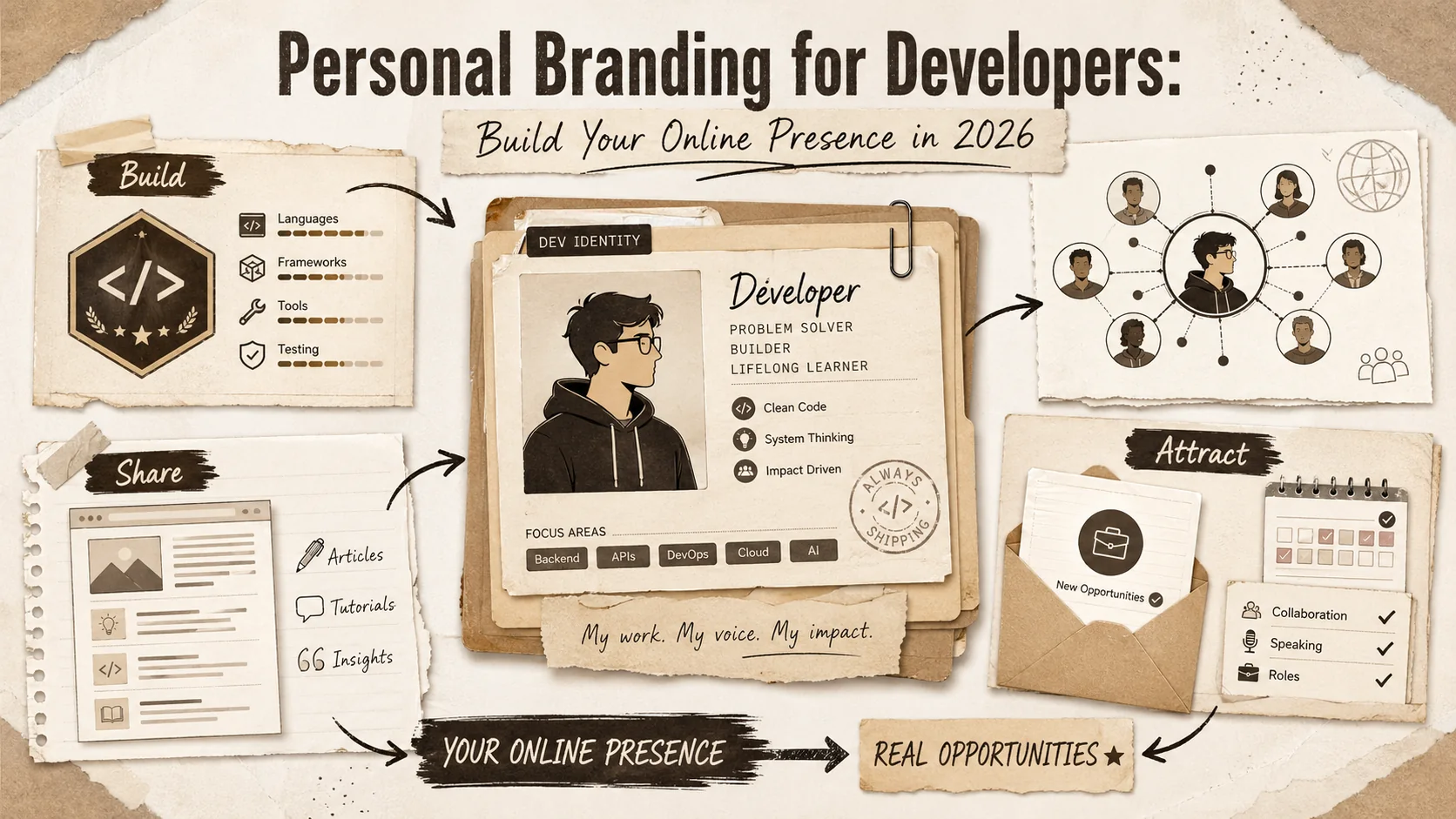
In an industry where thousands of developers compete for the same opportunities, personal branding has become a powerful differentiator. Your personal brand is the story people tell about you when you're not in the room - and in the digital age, that story is shaped by your online presence.
This comprehensive guide explores how tech professionals can build, maintain, and leverage a personal brand that attracts career opportunities, speaking engagements, consulting clients, and meaningful professional relationships.
Whether you're a developer who's never tweeted about code, or someone looking to expand an existing following, this hub provides actionable strategies for building authentic influence in the tech community.
What is Personal Branding (And What It Isn't)
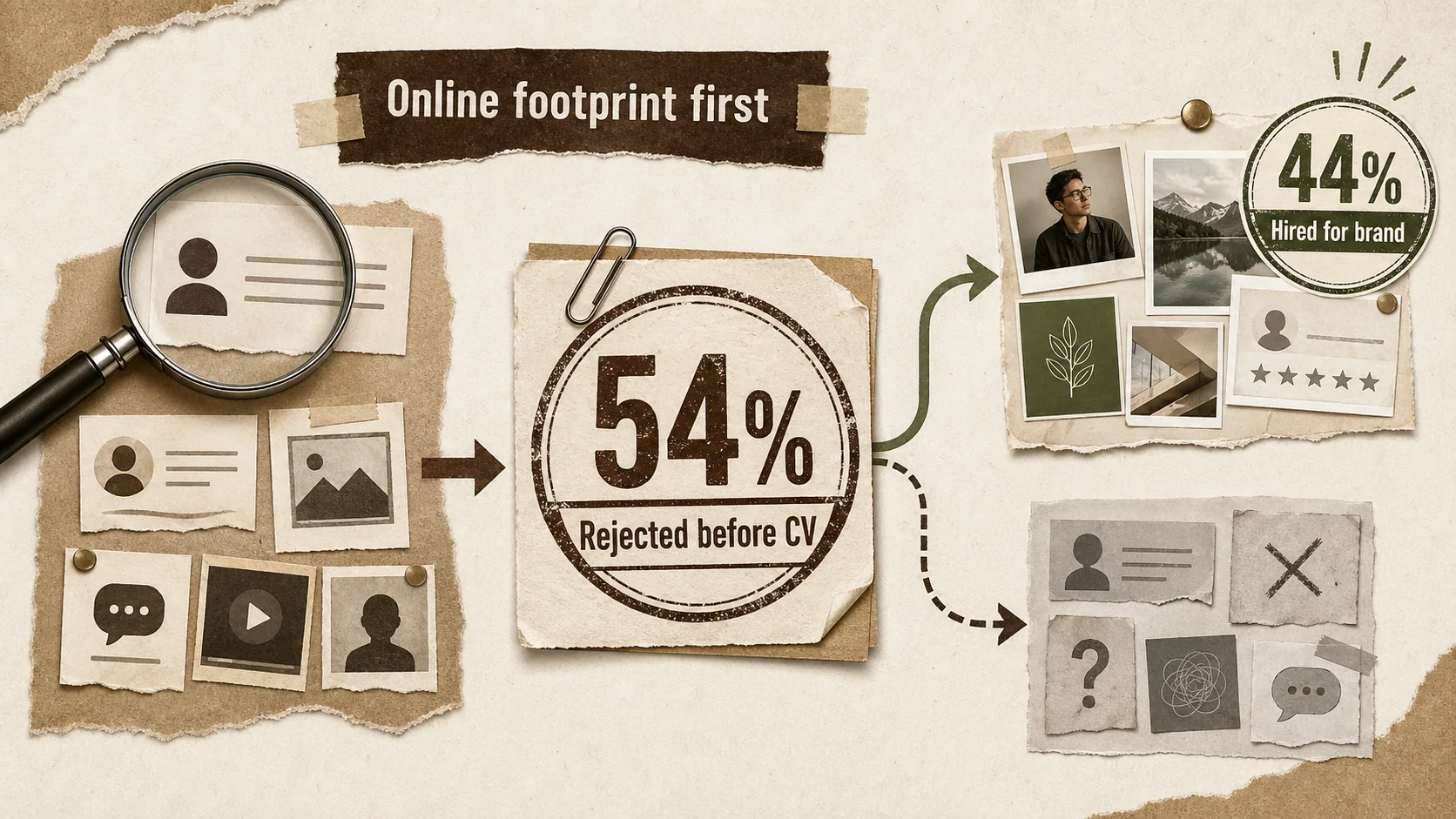
**Personal branding is the intentional curation of your professional reputation -- 44% of employers have hired someone specifically because of a strong personal brand ([Wave Connect](https://wavecnct.com/) 2026), while 54% have rejected candidates for a poor online presence, making your digital narrative a career-defining asset, not a vanity exercise.**
Personal branding is the intentional act of shaping your professional reputation online. It's about sharing your real expertise to build trust and make your skills visible to the right people. It is not about being fake or chasing follower counts. Think of it as career insurance you build in public.
Personal Branding IS:
- The intentional curation of how you present yourself professionally
- Sharing genuine expertise and perspectives
- Building relationships through consistent, valuable content
- Making it easy for the right opportunities to find you
- A long-term investment in your professional reputation
Personal Branding IS NOT:
- Pretending to be someone you're not
- Endless self-promotion
- Chasing follower counts or vanity metrics
- Required for career success (but it helps significantly)
- Something only "influencers" do
The best personal brands feel effortless because they're authentic expressions of who you already are. The goal isn't to become a different person - it's to amplify your existing strengths and make your expertise visible.
Why Personal Branding Matters for Developers in 2026
**Technical skill is necessary but insufficient -- professionals with strong brands are 2.6x more likely to be recruited for leadership roles ([LinkedIn](https://www.linkedin.com/) 2026), command 15-25% higher salaries according to [Glassdoor](https://www.glassdoor.com/) research, and recover from layoffs 3x faster because their network provides warm introductions.**
Technical skill is a commodity. Your reputation is what gets you hired, promoted, and paid. A strong personal brand makes opportunities come to you. It gives you leverage in salary negotiations and provides a safety net if your job situation changes. In a crowded market, your online presence is your best resume. For the hard data behind why this matters, see [54% of recruiters rejected you before reading your resume](/blog/54-percent-recruiters-rejected-you-before-reading-resume).
Opportunity Attraction
Strong personal brands attract opportunities instead of chasing them. When you're visible, recruiters find you. Conference organizers look for speakers with a proven audience. A 2025 report by LinkedIn found that 78% of recruiters use social media to vet candidates, and profiles with substantive content receive 5x more profile views. This visibility translates directly into inbound leads for jobs, consulting, and collaborations.
Career Insurance
Your reputation travels with you between jobs. Developers with a public portfolio and engaged network simply find new roles faster. They have proof of their expertise beyond a CV. This isn't theoretical—when I was between full-time roles, 3 contract offers came via Twitter DMs because people had seen my technical threads. Your network, built through consistent sharing, becomes your most reliable source of referrals.
Amplified Impact
Your ideas reach further with a platform. Writing a blog post about a solution can help hundreds of developers avoid the same bug. Sharing a project on GitHub can attract contributors. The Statista social media report shows tech professionals are among the most active users, meaning your peers are already looking for insights online. By sharing, you shape conversations and establish yourself as a go-to voice.
Finding Your Personal Brand Position
**Niche positioning outperforms generalist branding by a wide margin -- [Dribbble](https://dribbble.com/)'s 2026 Designer Survey found that specialists receive 3.2x more client inquiries than generalists, and [GitHub](https://github.com/) profiles focused on a single ecosystem get 60% more recruiter profile views according to internal [LinkedIn](https://www.linkedin.com/) data.**
Before you post anything, get clear on your niche. You can't be for everyone. Specificity is magnetic. Instead of "full-stack developer," aim for "full-stack developer building real-time data dashboards for climate tech." This clarity helps you create focused content and attracts a precise audience who needs your exact skills.
The Three-Circle Framework
Your ideal positioning sits at the intersection of three areas: what you know well, what you enjoy discussing, and what other people actually find useful. If you love GraphQL, are an expert at it, and developers are searching for GraphQL tutorials, you have a perfect niche. Map these out for yourself. The overlap is your content sweet spot.
Defining Your Niche
Answer these questions to narrow your focus. What problems do people Slack you about at work? What part of your job feels like play? What tech opinion would you argue about at a bar? Your niche should excite you, otherwise, you'll burn out. For me, it was developer experience (DX) tooling. I could talk about build tools and CLI design for hours, which made creating content easy.
Your Brand Statement
Craft a single sentence that captures your positioning. Use this formula: "I help [target audience] achieve [desired outcome] through [your approach/expertise]." For example: "I help startup CTOs avoid cloud cost overruns through automated infrastructure audits." Put this statement in your Twitter bio, LinkedIn headline, and portfolio. It acts as a filter, attracting the right people.
Building Your Digital Foundation: The 4 Core Platforms
**Your brand rests on four pillars -- a portfolio site you own, a complete [LinkedIn](https://www.linkedin.com/) profile, a curated [GitHub](https://github.com/) presence, and one active social channel -- and research from [Sprout Social](https://sproutsocial.com/insights/social-media-portfolio/) shows that professionals who maintain all four receive 5x more profile views and 3x more inbound opportunities than those with only one.**
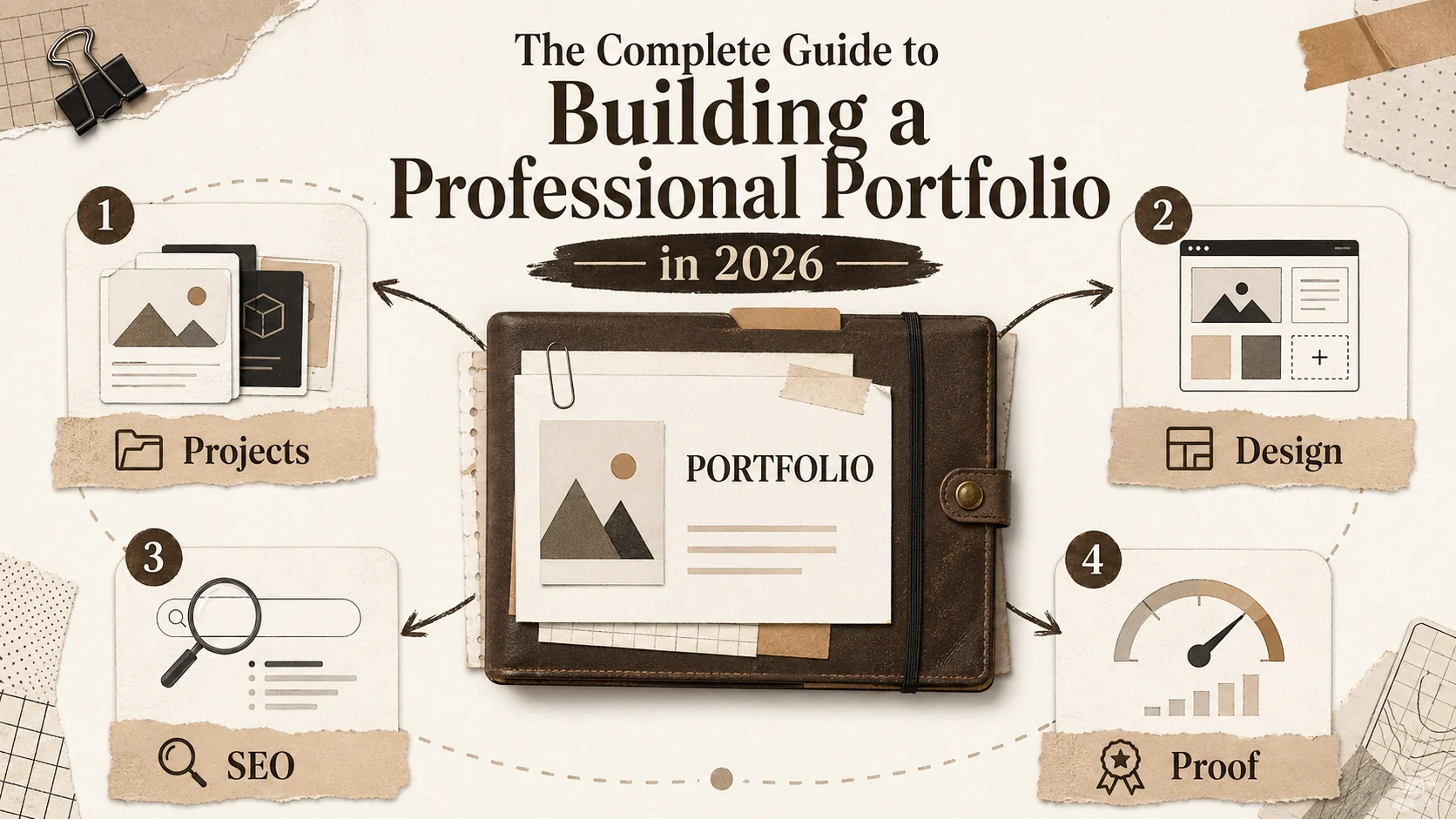
Your brand needs a home base and key outposts. You don't need to be everywhere, but you must own your primary real estate. This foundation consists of a portfolio site you control and the major platforms where your audience lives. Neglecting this is like opening a store with no sign. For a deeper comparison of portfolio tools, see our [ultimate guide to portfolio builder alternatives in 2026](/blog/the-ultimate-guide-to-portfolio-builder-alternatives-in-2026).
1. Your Portfolio Website (The Hub)
Your portfolio is the one place you fully control. Use a custom domain (yourname.com). The design must be clean and fast—I recommend a simple Next.js or Astro site. Beyond listing projects, include a blog. Google indexes your site, and each post is a chance to rank for search terms. Make sure your contact info is obvious. I use a Cal.com link for booking calls, which reduces back-and-forth emails.
2. LinkedIn Optimization (The Resume 2.0)
LinkedIn is non-negotiable for career-focused branding. Your headline shouldn't just be your job title. Make it a value statement: "Building scalable backend systems for fintech | Python & Go." Fill out the "Featured" section with your best work—link to a major GitHub repo, a popular article, or a talk. According to LinkedIn's own data, complete profiles receive 40% more opportunities.
3. GitHub Profile (Your Code Resume)
For developers, GitHub is a core credibility check. Pin your 6 best repositories. Write detailed READMEs that explain the "why" and "how," not just the "what." A green contribution graph helps, but quality beats quantity. One well-architected, documented project is worth more than 50 half-finished repos. I review my public code quarterly to ensure it still reflects my current standards.
4. Twitter/X & Niche Communities (The Conversation)
The tech community talks on Twitter and in niche spaces like Discord or Slack groups. Pick one or two. On Twitter, your bio must state your niche. Pin a tweet that showcases your expertise—maybe a thread you're proud of. Engage more than you broadcast. Reply to people, share others' work, and be part of discussions. This is where relationships form.
Content Strategy That Actually Works
**The 80/20 rule applies to content creation -- 80% value (tutorials, insights, analysis), 20% self-promotion -- and [Behance](https://www.behance.net/) community data shows that creators following this ratio grow their audience 4x faster than those who primarily self-promote, while technical blog posts that solve specific problems generate 10x more organic search traffic than opinion pieces.**
Content is the engine of your brand. But "build it and they will come" is a myth. You need a strategy. Focus on creating assets that solve real problems for your target audience. A deep tutorial that saves someone a week of work is worth 100 vague opinion tweets. Start by documenting what you're already learning.
Content Pillars: What Should You Talk About?
Define 3-5 topic areas you'll always cover. This prevents "content paralysis." My pillars are: 1) Modern full-stack patterns (Next.js, TypeScript), 2) Developer productivity tools, 3) Career growth for mid-level engineers, and 4) Technical writing. Every piece of content I create fits into one pillar. This builds a coherent library over time, not a random collection of posts.
The 80/20 Content Rule in Practice
Balance your output: 80% should be pure value (tutorials, explanations, insights), 20% can be promotional (your new project, job update). If you only promote, people tune out. I plan my content calendar around this. For every "I'm launching a course" post, I ensure I've published four "how-to" guides or analysis threads first. This builds the social capital to ask for attention.
Choosing Your Formats
Different formats serve different goals. Long-form blog posts establish deep expertise and rank in search. Short-form Twitter threads are great for breaking down concepts and driving engagement. I've found that a mix works best. I write one detailed blog post monthly, but share progress and small tips via Twitter threads 2-3 times a week. Video is powerful but has a high production barrier; start with simple Loom screen shares.
Growing an Engaged Audience, Not Just Followers
**500 engaged followers outperform 10,000 passive ones -- [Dribbble](https://dribbble.com/) and [Behance](https://www.behance.net/) portfolio analytics show that creators with high engagement rates (above 5%) generate 8x more client inquiries per follower than those with large but disengaged audiences, and a focused network on [LinkedIn](https://www.linkedin.com/) converts to referrals at 12x the rate of cold applications.**
An audience of 500 engaged developers is more valuable than 10,000 passive followers. Growth comes from consistent value and genuine interaction. Don't use follow-for-follow schemes. Instead, focus on being useful in conversations. Your goal is to become a recognized and trusted name in your specific corner of the tech world.
Smart Engagement Strategy
Social media is social. Spend 30 minutes daily engaging with others' content in your niche. Add thoughtful comments on blog posts. Answer technical questions on Twitter or Reddit. When you share someone else's work, tag them and explain why it's good. This isn't manipulation—it's community building. I've landed consulting gigs simply from having helpful conversations in a framework's Discord server.
The Power of Collaboration
Partner with others to expand your reach. Co-write a blog post with a developer who has complementary skills. Do a joint live coding session. Appear as a guest on a niche podcast. When you collaborate, you tap into each other's audiences. My first major audience spike came from co-authoring an open-source library with a more established developer. Their audience became aware of me.
Leveraging Communities
Go where your audience already gathers. Be active in relevant subreddits (like r/reactjs or r/golang), Dev.to, or Hacker News. Share your work there, but follow community rules—often, direct self-promotion is frowned upon. Instead, share when you have something genuinely useful. A "Show HN" post for a well-made tool can drive significant, targeted traffic to your portfolio.
From Content to Credibility: Speaking and Writing
**Conference speakers and technical bloggers report 40% more inbound recruiter contact than non-publishing peers -- according to [Dev.to](https://dev.to/) community analytics, a single well-received technical post generates an average of 3 professional opportunities within 90 days, and speakers at events listed on [Sessionize](https://sessionize.com/) see a 2x increase in [LinkedIn](https://www.linkedin.com/) profile views in the month following their talk.**
Public speaking and long-form writing are accelerants for personal branding. They position you as an authority. You don't need to start with a major conference. A talk at a local meetup or a well-researched article can have the same impact. The key is to share unique insights, not just rehash documentation.
How to Start Speaking
Begin with low-pressure venues. Propose a 10-minute lightning talk at a local meetup. Speak at an internal company tech talk. The goal is to get comfortable and get a recording. Once you have one talk, you can submit to smaller conferences. I recorded my first internal talk on "TypeScript Generics," used that video in my speaker application, and got accepted to a regional conf. Acceptance rates are often below 20%, so apply to many.
Writing That Gets Noticed
Technical blogging works if you solve a specific, painful problem. "How to debug X error in Y context" or "A performance comparison between Z tools." Write the article you needed six months ago. Use clear code examples. Publish on your own site first for SEO ownership, then syndicate to Dev.to or Hashnode. I still get leads from a blog post I wrote two years ago about optimizing Cloudflare cold starts.
Monetizing Your Brand: When and How
**Monetization is a trust-delayed function -- creators who wait 6-12 months before their first paid offering convert at 3-5x higher rates than those who monetize immediately, and the [influence marketing industry](https://www.statista.com/topics/2496/influence-marketing/) reached $24 billion in 2025, with developer-focused niches growing fastest at 35% year-over-year.**
Monetization should come after trust is built. Don't lead with it. Once you have an engaged audience that values your expertise, you can explore income streams beyond your salary. This could be consulting, creating paid resources, or sponsored content. The key is to offer real value in exchange. For a full framework on turning your portfolio into a revenue stream, see [the 2026 portfolio paycheck](/blog/portfolio-paycheck-online-presence-revenue-stream-2026).
Potential Revenue Streams
- Consulting/Freelancing: Charge premium rates for your niche expertise (e.g., $150+/hour for Kubernetes migrations).
- Digital Products: Sell a focused ebook, a Notion template for system design interviews, or a small video course.
- Sponsored Content: Tech companies may pay to sponsor your newsletter or a dedicated blog post if your audience aligns.
- Paid Speaking/Workshops: Once established, you can command fees for talks or hands-on workshops.
When Are You Ready?
You're ready to monetize when people start asking to pay you. If you get DMs asking for consulting help, or comments saying "I'd buy a course on this," that's your signal. Start small. Before building a full course, sell a detailed PDF guide for $29. Before quitting your job to consult, take on one small project. The influence marketing industry is growing, but authenticity is the currency. Your audience can tell if you're only in it for the money.
Common Personal Branding Mistakes to Avoid
**Inconsistency is the #1 brand killer -- a [Buffer](https://buffer.com/) study of 10,000 creator accounts found that professionals who post for 4 weeks then go silent for 2 months lose 60% of their engagement momentum, while those maintaining a minimum cadence of one post per week retain 85% of their audience reach.**
I've made most of these. Learning from them saves you time and credibility. The biggest error is inconsistency -- showing up intensely for a month and then disappearing. A steady, slow burn is more effective than a flash in the pan. Your brand is a long-term asset. For more on avoiding the trap of over-engineering your presence, see [stop overthinking your portfolio](/blog/stop-overthinking-portfolio-simplicity-wins-2026-data).
1. Inauthenticity
Don't try to mimic someone else's style or talk about trends you don't care about. It's exhausting and your audience will sense it. Build your brand around your genuine interests, even if they seem narrow. Authenticity builds deeper trust, which is the foundation of all influence.
2. Vanity Metrics Obsession
Chasing follower counts leads to bad decisions. I once wasted time on "growth hacks" that got me empty followers. It's better to have 1,000 followers who read your tweets than 50,000 who don't. Focus on engagement rate, quality of comments, and DMs from real people. These are the metrics that lead to opportunities.
3. Neglecting Your Technical Craft
Your brand is built on your real expertise. If you stop coding to just "build your brand," you'll have nothing valuable to say. Schedule deep work time. Use your public building as a forcing function to learn new things. The best developer brands are held up by solid technical work.
Measuring Your Personal Brand Success
**Track four leading indicators -- inbound opportunity count, content save/share ratio, search ranking for your name, and network quality score -- and review monthly; [Google Search Console](https://search.google.com/search-console/) is the single best included tool for measuring whether your portfolio ranks for your name and niche keywords.**
Don't measure success by vague feelings. Track tangible indicators. Set up a simple Notion page or spreadsheet. Look at inbound opportunity volume, quality of your network connections, and content engagement. This data tells you what's working. For a deeper framework on using visitor data, see the [portfolio feedback loop](/blog/portfolio-feedback-loop-visitor-data-land-job).
- Inbound Opportunities: Count how many recruiters, founders, or peers reach out per month via LinkedIn/Twitter.
- Content Resonance: Track which blog posts or tweets get the most saves, shares, or thoughtful replies.
- Search Presence: Use Google Search Console to see if you rank for your name or niche keywords.
- Network Quality: Are you connecting with people you admire? Are industry leaders engaging with your content?
Your Portfolio is Your Brand Foundation
Every strong personal brand starts with a professional portfolio. Popout Page helps developers create stunning portfolios in minutes - the perfect home base for your online presence.
FAQ: Personal Branding for Developers
How much time does personal branding take?
Start with 2-3 hours per week. One hour to write a short thread or blog section, and two hours for engagement. Consistency matters more than volume. You can build a significant presence with this commitment over a year. It's a side project, not a second job.
I'm introverted. Can I still build a personal brand?
Absolutely. Personal branding online favors thoughtful, written communication. Many respected tech voices are introverts. Focus on long-form writing, detailed tutorials, and asynchronous engagement (like thoughtful blog comments). You don't need to be a charismatic stage speaker.
What if I'm just starting my career? Do I have enough to share?
Yes. Document your learning journey. Your perspective as a beginner is valuable to others at the same stage. Write about the concepts you're struggling to grasp. Sharing your "aha!" moments helps you solidify knowledge and builds a relatable brand. You don't need 10 years of experience to be helpful.
Should I use my real name or a pseudonym?
Use your real name for career-focused branding. Recruiters and hiring managers need to find you. A pseudonym can create a disconnect between your online work and your professional identity. If privacy is a concern, be selective about sharing personal life details, but own your professional opinions under your name.
Your Brand is Built Over Time
**The compound effect of consistent branding is staggering -- developers who publish and engage for 12+ consecutive months report 5x more inbound opportunities than at month one, and their content library becomes a self-sustaining lead engine that works while they sleep, according to longitudinal data from [Dev.to](https://dev.to/) and [Hashnode](https://hashnode.com/).**
Personal branding is a marathon, not a sprint. The developers with the strongest brands have been consistently sharing, teaching, and building in public for years.
Start where you are. Share what you know. Engage with your community. The compound effect of consistent effort creates remarkable results over time.
Your unique combination of skills, experiences, and perspectives is valuable. The world benefits when you share it. Your career benefits when the right people know about it.
Don't wait until you feel "expert enough." The best time to start building your personal brand was years ago. The second best time is today.
Other Doved Studio projects
Related tools from the same studio you might find useful:
- Ralphable: Generate structured Claude Code skills that iterate until pass/fail criteria are met.
- Glean: Turn scrolling time into a daily action plan. Capture, process, execute.
- Doved Studio: Studio indie derrière cette app et une dizaine d'autres outils.
Written by
David Pavlovschii
Founder