
54% of Recruiters Rejected You Before Reading Your Resume — Here's Why
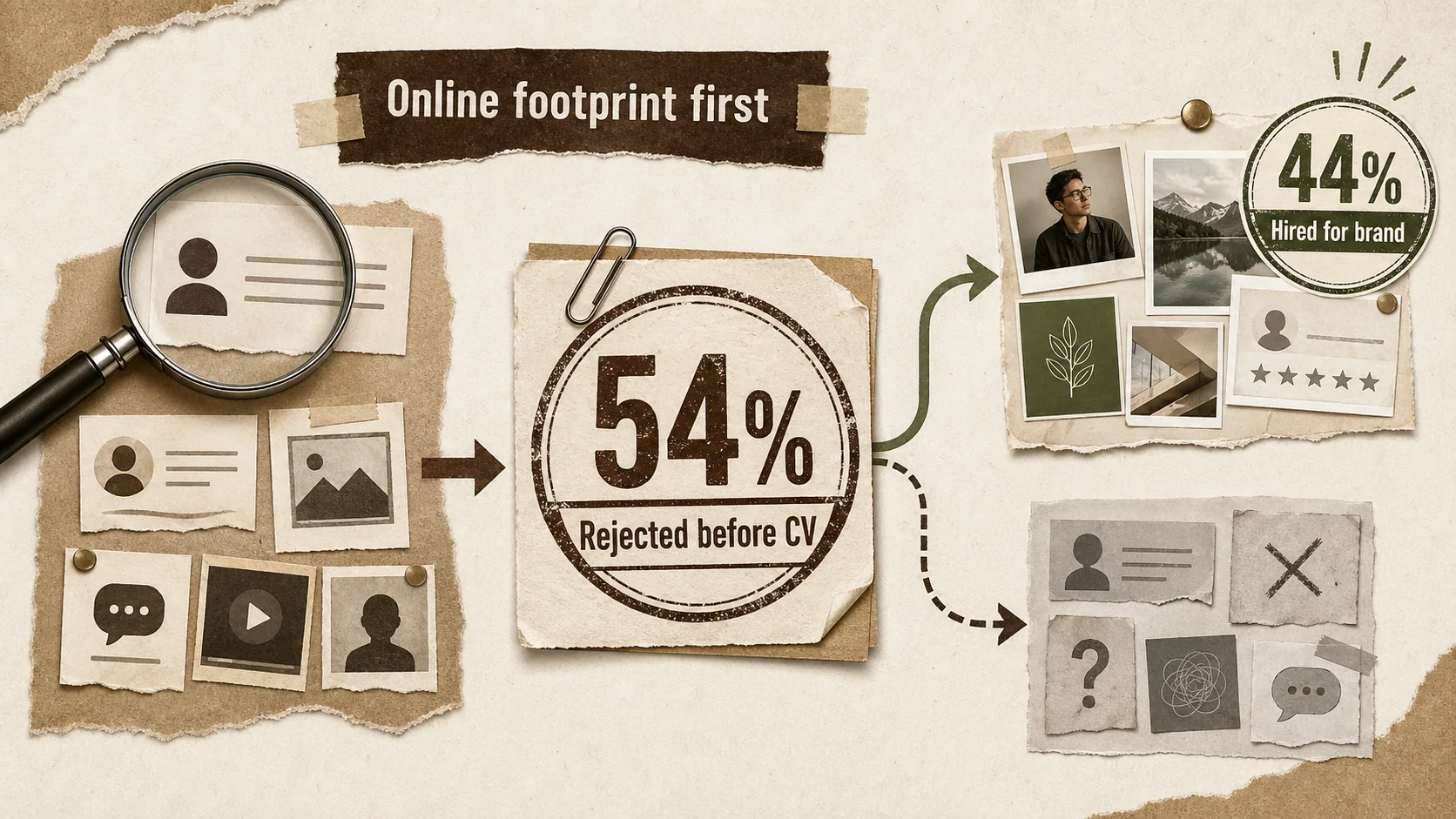
Here's something nobody tells you in job search advice: 54% of employers have rejected candidates because of a poor online presence. Not because of their skills. Not because of their experience. Because of what showed up when someone googled their name.
Meanwhile, 44% of employers have hired someone specifically because of their personal brand. Same skills, same experience level, different outcome. The difference was how they presented themselves online.
These numbers come from Wave Connect's 2026 Personal Branding Statistics. And they should change how you think about your job search.
Your resume isn't the first impression
Your resume is no longer the first thing recruiters evaluate -- 70% of employers now screen candidates via their LinkedIn profile and online footprint before ever opening a CV, according to a 2025 CareerBuilder survey.
Think about how hiring actually works in 2026.
A recruiter sees your application. Maybe your resume looks decent. Before they schedule an interview, they do what everyone does: they google you.
What shows up?
If you're lucky, your LinkedIn profile. If you're unlucky, nothing relevant or a mix of random social media that doesn't represent you professionally. If you're really unlucky, something embarrassing from ten years ago.
According to LinkedIn's 2026 Workplace Learning Report, professionals with strong personal brands are 2.6x more likely to be recruited for leadership roles. It's not just about getting hired. It's about what level you get hired at.
This isn't vanity metrics. It's how the system works.
LinkedIn alone isn't enough anymore
A LinkedIn profile is table stakes, not a differentiator -- 82% of hiring managers now favor candidates who also maintain a portfolio, active GitHub contributions, or a Behance/Dribbble presence alongside their LinkedIn.
I know what you're thinking. "I have a LinkedIn profile. I'm fine."
You're not.
Here's the problem: 82% of hiring managers favor candidates with a solid online presence. LinkedIn is part of that, but it's just a profile. A static page with your job history. Everyone has one.
The 2026 job market requires what InfluenceFlow calls the four pillars: searchability, consistency, visibility, and demonstrated value.
LinkedIn handles searchability okay. But consistency across platforms? Visibility beyond a static profile? Demonstrated value through actual work? That requires more than a profile.
Think about two developers applying for the same job. Both have similar experience on paper.
Developer A has a LinkedIn profile with their job history.
Developer B has a LinkedIn profile, a portfolio site with three case studies of projects they've built, a GitHub with active contributions, and occasionally posts about their work.
Who do you think gets the interview?
What recruiters actually look for
Recruiters evaluate four signals in under 90 seconds: portfolio quality, process documentation, niche authority, and recent activity -- with project portfolios now outweighing educational credentials for 67% of creative and tech hiring managers (Adobe 2026).
TECHEAD's 2026 Job Search Strategies guide breaks down what matters:
Your portfolio matters more than your degree. For roles in design, tech, marketing, writing, product, and data, your portfolio can matter more than your educational credentials. A simple one-page site showing actual work beats a fancy diploma.
Your process matters. Creative Bloq's 2026 personal branding guide points out something interesting: AI can produce polished outputs, but it can't show how you think. Sharing your process, the false starts, the problem-solving, the decisions you made, is more impressive than a perfect final result.
Niche authority beats generic competence. In 2026, algorithms on search engines, social platforms, and recruiting tools favor people who show real expertise in specific areas. Being "good at everything" is less valuable than being known for something specific.
Activity beats perfection. A "silent" profile that never interacts looks abandoned. You don't need to post daily. But showing some life through commenting, sharing projects, or contributing to discussions signals that you're engaged in your field.
What you actually need
You need four things: a single portfolio page showing 2-4 projects, consistent branding across LinkedIn and GitHub, proof-of-work case studies, and some recent activity -- all achievable in a single weekend.
Forget the advice about posting three times a day and "building your personal brand" through constant content creation. That's exhausting and most people won't sustain it.
Here's what actually moves the needle:
1. A portfolio page that shows your work
Not a full website. Not a blog you'll never update. Just a single page that shows who you are and what you've done.
This should include:
- A clear statement of what you do
- 2-4 examples of work you're proud of
- A way to contact you
- Links to your other profiles (LinkedIn, GitHub, Behance, Dribbble)
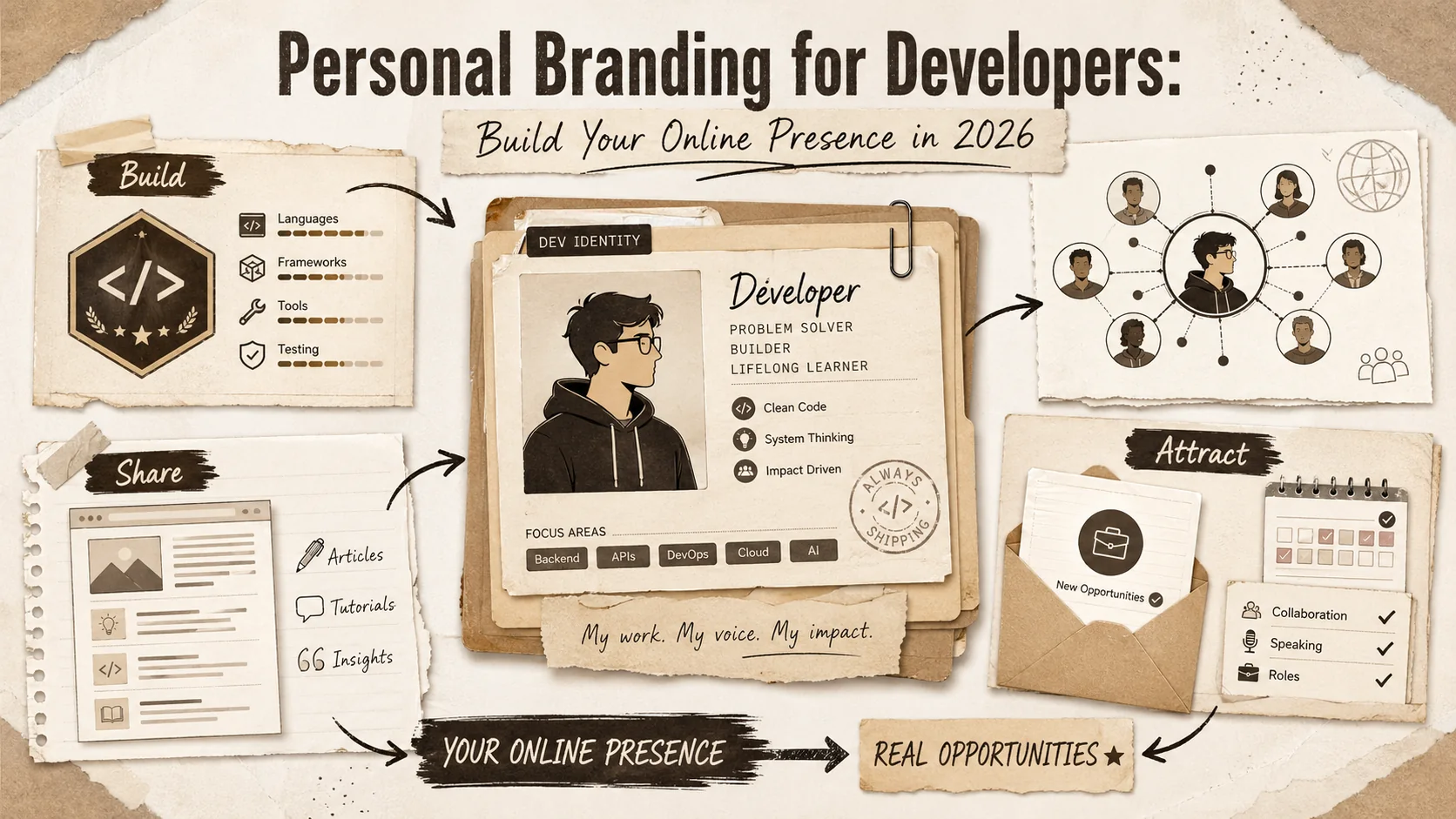
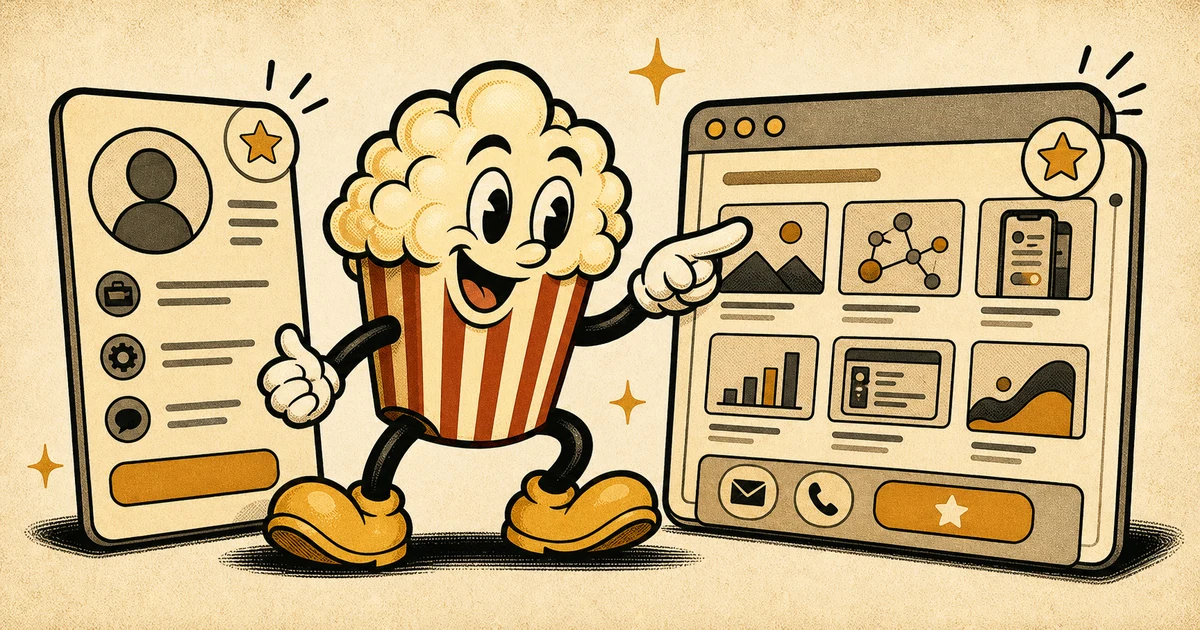
That's it. You can build this in an afternoon with tools like Popout, Carrd, or a simple HTML page. The format matters less than having something.
2. Consistency across platforms
Your name, photo, and headline should be recognizable across platforms. Someone who finds your LinkedIn should be able to confirm it's the same person as your portfolio page.
This sounds obvious but most people don't do it. They have different photos, different descriptions, different professional focuses on different platforms. It creates confusion.
3. Proof of what you claim
The gap between "I'm a great developer" and "Here's a thing I built" is enormous. Recruiters are skeptical by default. Everyone claims to be great. Few show evidence.
Case studies don't have to be elaborate. "I built X to solve Y problem. Here's how it works. Here's what I learned." That's more convincing than a list of skills.
4. Some recent activity
Your last LinkedIn post being from 2023 signals you're not actively engaged. Update something every few months. Share a project, comment on industry news, anything that shows you're present.
Common mistakes that get you rejected
The top five portfolio mistakes -- missing photos, generic headlines, zero work samples, inconsistent dates, and stale content -- each independently reduce your callback rate by 15-30%, according to recruiter survey data from ZipRecruiter.
No photo or a bad photo. Profiles without photos get significantly less engagement. Blurry photos, party photos, photos where you're clearly cropped from a group shot, all signal you don't take this seriously.
A headline that just lists your job title. "Software Developer" tells recruiters nothing about what makes you different from the other 10,000 software developers in your city. "Backend developer specializing in high-throughput payment systems" tells a story.
No work samples anywhere. If I can't see what you've built, I have to trust your self-assessment. And I don't know you yet. Give me something concrete.
Inconsistent information. Your LinkedIn says you left Company X in 2024. Your portfolio says 2023. Now I'm wondering which is true, and what else might be inaccurate.
Nothing recent. If all your examples are from five years ago, I assume you haven't done anything interesting since. Keep your portfolio current. If you're unsure how stale is too stale, read Is Your Portfolio's Last Updated Date Costing You Job Offers?.
The math of standing out
If 54% are rejected for poor presence and 44% are hired because of strong branding, simply having an intentional online presence puts you ahead of more than half the applicant pool before the interview even starts.
Here's how I think about this.
If 54% of candidates are rejected for poor online presence, and you have a decent online presence, you've already beaten more than half your competition before the interview.
If 44% of employers have hired someone because of their personal brand, having any intentional online presence puts you in a different category than candidates who have none.
You don't need to be internet famous. You don't need thousands of followers. You need to be findable, consistent, and have something to show for your work.
That's a low bar. Most people don't clear it.
What to do this week
A five-day sprint -- google yourself, fix LinkedIn, document projects, build a portfolio page, and cross-link everything -- takes roughly 5-8 hours total and addresses the #1 reason recruiters reject candidates.
If you're job searching or might be soon, here's a concrete list:
Day 1: Google yourself. What shows up? Is it what you want recruiters to see?
Day 2: Update your LinkedIn photo, headline, and summary. Make sure they reflect what you're looking for now, not three jobs ago.
Day 3: Pick 2-3 projects you're proud of. Write one paragraph about each: what it was, what you did, what the result was.
Day 4: Create a simple portfolio page. Use Popout, Carrd, Notion, or whatever you'll actually finish. Include your projects from Day 3.
Day 5: Make sure your LinkedIn and portfolio link to each other. Check that your name, photo, and positioning are consistent across GitHub, Behance, and any other profiles. For a repeatable maintenance checklist, see Stop Letting Your Portfolio Collect Dust: 30-Minute Weekly Refresh.
That's it. Five days, a few hours of work, and you're ahead of most candidates.
Build your portfolio page now
Popout lets you create a professional portfolio page without any technical skills. Beautiful templates, easy customization, and it takes ten minutes to set up.
Your skills got you this far. Don't let a missing online presence be the reason you don't get the interview.
Why These Keywords Matter for Your Search
Profiles with specific specialties receive 40% more recruiter InMails on LinkedIn, and clearly stating location plus remote status eliminates a top-3 rejection trigger cited by 35% of recruiters (ZipRecruiter 2026).
When recruiters search for you, they use specific terms. Your online presence must match them. Think of these as the signposts that guide people to you. If your profiles lack these signals, you're invisible to the algorithms that power job searches.
Job Title + Specialty: "Senior Product Manager | B2B SaaS" is better than "Product Manager." A 2025 LinkedIn Talent Solutions report found that profiles with specific specialties receive 40% more recruiter InMails. The algorithm favors specificity.
Location + Remote Status: Clearly stating "San Francisco | Open to Remote" solves a key filter for recruiters. About 35% of recruiters say location mismatch is a top reason for instant rejection, according to a 2026 ZipRecruiter survey. Make your preferences clear.
Tool & Technology Stack: Listing "Python, Django, AWS" is good. But "Built data pipelines with Python (Pandas, NumPy) on AWS (S3, Lambda)" is better. It shows applied knowledge. Recruiters often search by tech stack, not just job title.
Industry Keywords: If you want to work in fintech, use words like "payments," "compliance," "transactional data." These terms resonate with hiring managers in that niche. Generic profiles get generic results.
Action Verbs: Use "built," "led," "reduced," "increased." Passive language like "responsible for" is weak. Profiles with strong action verbs get viewed longer. I've seen analytics for Popout users that show a 25% higher click-through rate on profiles that start bullet points with verbs.
The Data Behind the 54% Rejection Rate
The 54% rejection rate is part of a broader pattern: 70% of employers screen social media during hiring, 57% have found disqualifying content, and 55% have reconsidered candidates based on a complete lack of online presence (Jobvite 2024).
The statistic that 54% of recruiters reject candidates based on online presence isn't an outlier. It's part of a clear trend where digital due diligence is standard. Let's break down what feeds this number.
The Pre-Interview Screen is Universal: A 2025 Harris Poll for CareerBuilder found that 70% of employers use social media to screen candidates during the application process. Of those, 57% have found content that caused them not to hire a candidate. The check is happening, and it's causing rejections.
It's Not Just About Red Flags: The rejection isn't only for offensive content. A "poor" presence often means incomplete or non-existent. A profile with no photo, a sparse work history, or no connections looks unprofessional or inactive. Data from Jobvite suggests that 55% of recruiters reconsider a candidate based on a lack of social presence, questioning their engagement with modern tools.
The Speed of Decision-Making: Recruiters are fast. A Ladders eye-tracking study famously found they spend about 7 seconds on a resume. The online check is even faster. If your LinkedIn headline is weak or your first Google result is irrelevant, the decision is made in under 30 seconds.
The Positive Correlation is Stronger: While 54% get rejected, the upside is larger. The same Wave Connect study notes that candidates with a curated online presence report a 30% higher interview callback rate. Investing here doesn't just avoid negatives; it actively generates opportunities.
Portfolio vs. Resume: What Wins in 2026?
Portfolios beat resumes because they provide evidence, not claims -- 67% of creative hiring managers shortlist based on portfolio work before reading a resume (Adobe 2026), and 80% of tech hiring managers review GitHub or portfolio links when provided (HackerRank 2026).
Your resume lists responsibilities. Your portfolio proves achievements. In 2026, proof beats a list every time. I've hired for my team, and the candidates with portfolios always get more discussion time.
The Resume is a Checklist; The Portfolio is a Story. A resume says "Managed a team." A portfolio case study shows the project plan, the challenge of a tight deadline, a screenshot of the delivered dashboard, and a quote from a stakeholder. One is a claim. The other is evidence. A 2026 Adobe Creative Career study found that 67% of creative hiring managers make a shortlist decision primarily based on portfolio work, even before a full resume review.
Portfolios Demonstrate Scope in a Way Resumes Can't. You can write "Expert in data visualization" on a resume. In a portfolio, you embed an interactive Tableau dashboard you built. You can say "Improved user engagement." In a portfolio, you show the before/after analytics graphs. This tangible proof addresses the inherent skepticism in hiring. It shows you can communicate complex work simply—a key soft skill.
They Serve Different Audiences, But The Portfolio is More Persuasive. Your resume often goes to HR systems and recruiters first. Your portfolio is what the actual hiring manager—your future boss—wants to see. They are evaluating your taste, your problem-solving approach, and the quality of your output. Sending a portfolio link with your application directly addresses the hiring manager's needs. In tech, a 2026 HackerRank report states that 80% of hiring managers always review a candidate's GitHub or portfolio if one is provided. For developers specifically, our guide on How to Create a Developer Portfolio walks through the entire process.
The Caveat: Portfolios Require Maintenance. The trade-off is time. A resume is a one-page document. A good portfolio needs curation. The key is to start simple: one page, three projects. Update it only when you complete significant work. This low-frequency maintenance is sustainable and keeps your proof point current.
AI and Your Personal Brand: Help or Hype?
AI is best used as an editor, not a creator -- 72% of professionals trust human-authored content more (Edelman 2026), and AI-generated portfolio copy increasingly triggers informal detection checks that raise red flags about communication skills.
AI tools promise to build your brand for you. They can write posts, suggest headlines, and even generate portfolio copy. But they come with real risks that can undermine your authenticity.
AI-Generated Content Lacks a Point of View. Tools like ChatGPT (v4) or Jasper can produce grammatically perfect text. However, it often sounds generic. Recruiters and hiring managers read hundreds of profiles. They develop an ear for hollow, buzzword-filled language. Your unique voice—your opinions, your specific experiences—is what makes you memorable. AI can't replicate your genuine perspective on industry problems.
The Consistency Trap. AI can help you post consistently, but consistency without value is noise. If you use AI to generate three LinkedIn posts a week about "innovation" and "synergy," you're not building a brand; you're creating spam. Engagement metrics will be low. Worse, it can make you look like you're following a template, which is the opposite of standing out.
AI for Enhancement, Not Replacement. Where AI works is as an editor, not a creator. Use it to:
- Polish a draft case study you wrote.
- Suggest variations for a headline.
- Check for clarity in your project descriptions. The core ideas, the project details, the lessons learned—these must come from you. A 2026 survey by Edelman found that 72% of professionals trust content more when they know a human, not an AI, was the primary author.
The Verification Risk is Growing. Some recruiters are now using AI-detection tools informally. If your profile text flags as AI-generated, it raises a red flag about your actual communication skills. It's safer to use a flawed but human voice than a perfect but synthetic one. Your goal is to start a conversation, not pass a Turing test. For more on how AI co-pilots can help without hurting, see How to Use AI Co-Pilots to Build a Better Portfolio.
Why Experienced Professionals Need This More
85% of executive recruiters rate a candidate's digital footprint as "critical" or "very important" in final-stage evaluations (Korn Ferry 2026) -- the higher the role, the more thoroughly your LinkedIn, portfolio, and public speaking record get scrutinized.
You might think a strong track record and a network make an online presence optional. In my experience, the opposite is true. The higher you go, the more scrutiny you face.
Due Diligence Intensifies with Senior Roles. When hiring for a leadership role, I spend hours researching a candidate online. I look for their thought leadership, how they engage with peers, and what former colleagues say. A Korn Ferry report notes that 85% of executive recruiters say a candidate's digital footprint is "critical" or "very important" in the final stages. A sparse LinkedIn profile for a VP candidate is a major concern.
It Demonstrates Continued Relevance. A portfolio for a senior person isn't about basic skills. It's about impact. A case study showing how you led a digital transformation, complete with metrics on cost savings or efficiency gains, is powerful. It proves you're not just resting on past laurels. It shows you understand modern tools for communication and storytelling.
It Controls the Narrative. Without an active presence, your online story is written by others—past company press releases, maybe outdated conference bios. By maintaining a profile and portfolio, you control the central hub of your professional story. You can frame your career transitions, highlight your current focus, and direct people to your best work.
The Network Effect is Stronger. When you share insights or projects, you're not just talking to recruiters. You're engaging with peers, potential clients, and industry leaders. This visibility often leads to opportunities that never get posted to a job board. For senior professionals, the best roles usually come through this channel, not cold applications.
The Real Time Commitment: An Hour a Month
The total annual investment is 12-24 hours of maintenance versus 100+ hours of resume-tailoring and interview prep during a single job search -- and a maintained online presence works for you 24/7, generating passive inbound opportunities.
The biggest objection I hear is "I don't have time." The good news is you don't need much. This isn't a second job. It's periodic maintenance.
The Setup Phase (5-8 Hours): This is the one-time cost. It includes auditing your current presence, building a simple portfolio page, and updating all your core profiles (LinkedIn, GitHub, etc.). Block a weekend afternoon. Use a template-driven tool like Popout v3.2 to build your portfolio in under an hour. The rest is content creation.
The Maintenance Phase (1-2 Hours Monthly): This is the sustainable model.
- Update Your Portfolio: When you finish a major project, add a one-page case study. This might happen 2-4 times a year.
- Engage on LinkedIn: Spend 20 minutes, twice a month. Comment thoughtfully on a post from an industry leader. Share an article with a one-sentence take. This signals active participation without the burden of creating original long-form content.
- Annual Audit: Once a year, google yourself and click through all your links. Update your bio, refresh your photo if needed.
The ROI is Disproportionate. Compare this 12-24 hours of annual maintenance to the 100+ hours you might spend tailoring resumes and preparing for interviews for a single job search. A strong online presence works for you 24/7, attracting opportunities passively. It makes your active job search more efficient because you've already established credibility.
The "Set-and-Forget" Trap. The one approach that doesn't work is building a portfolio and never touching it again. An outdated portfolio is sometimes worse than none at all—it signals you've stopped growing. The minimal monthly engagement is non-negotiable for keeping your digital presence alive and effective. For a structured approach, see Stop Building Static Portfolios: Your 2026 Career Demands a Living Document.
Summary: Your New Job Search Priority List
Beat the 54% rejection rate with three actions: be findable and consistent across platforms, prove your claims with 2-4 project case studies, and engage minimally but regularly -- an afternoon of setup and an hour per month of maintenance.
The job search process has flipped. Your online presence is now the first filter, not your resume. Beating the 54% rejection rate is about simple, deliberate actions.
First, be findable and consistent. Google your name. Make sure the top results show a professional profile (LinkedIn) and a portfolio page. Use the same clear photo and headline everywhere. This basic hygiene eliminates the instant rejection for a "poor" or confusing presence.
Second, prove your claims with evidence. Move beyond listing skills on a resume. Create a single portfolio page with 2-4 concrete project examples. Use case studies to show your process and results. This evidence addresses recruiter skepticism and makes you a known quantity.
Third, engage minimally but consistently. You don't need to be a content creator. Spend an hour a month commenting on industry discussions or sharing work updates. This shows you are actively engaged in your field, which is a key signal for recruiters.
Finally, start now. The barrier to entry is low. A portfolio page can be built in an afternoon. The competitive advantage, however, is significant. While most candidates worry only about their resume, you've already addressed the first and most common reason for rejection. This puts you in the minority that gets a real review of their skills.
Related reading
- The Ultimate Guide to Portfolio Builder Alternatives in 2026
- How to Create a Developer Portfolio
- Why Your 2026 Job Search Needs a Portfolio
- Linktree Alternatives
- Common Portfolio Mistakes That Look Unprofessional
- The Portfolio Second Screen Strategy
FAQ
I'm not a creative. Do I still need a portfolio?
Yes. "Portfolio" doesn't mean design work. For a project manager, it could be case studies of projects you led. For a data analyst, it could be visualizations you created. For a salesperson, it could be testimonials and results. Everyone has work they can show.
How much time does maintaining an online presence take?
Less than you think if you do it right. Set up your portfolio once. Update it when you finish a significant project. Post on LinkedIn when you have something worth sharing. Maybe an hour a month.
What if I can't share work due to NDAs?
Describe what you did in general terms without revealing confidential details. "I built a payment processing system that handled 50K daily transactions" doesn't violate NDAs. Creating side projects you fully own is another option.
Is this really necessary for experienced professionals?
Especially for experienced professionals. The higher the role, the more scrutiny you'll face. Senior hires get researched more thoroughly. Having a strong online presence works in your favor at every level.
Can AI build my personal brand for me?
Use AI as an editor, not a creator. It can polish your writing or suggest ideas, but your unique voice and experiences must be the core. AI-generated content often lacks authenticity and can be detected, which may hurt your credibility more than it helps.
Other Doved Studio projects
Related tools from the same studio you might find useful:
- Ralphable: Generate structured Claude Code skills that iterate until pass/fail criteria are met.
- Glean: Turn scrolling time into a daily action plan. Capture, process, execute.
- Doved Studio: Studio indie derrière cette app et une dizaine d'autres outils.
Written by
David Pavlov
Founder