

The Rise of the 'Portfolio-First' Job Search: Why 2026 Recruiters Are Skipping Resumes


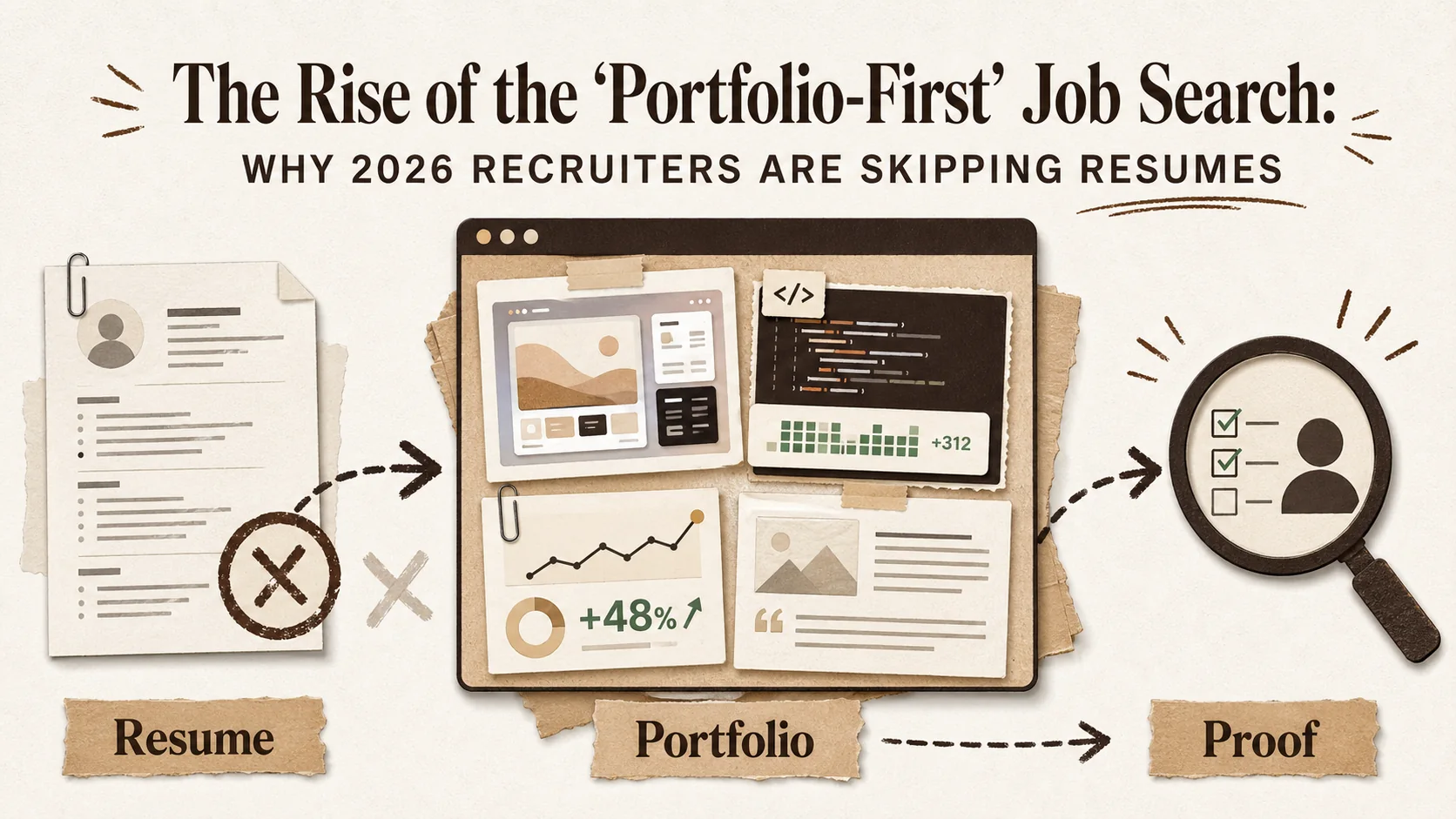
Imagine this: a recruiter for a top tech firm has 200 applications for a single role. The traditional process would start with a resume screen, a tedious scan for keywords and past titles. But in 2026, a growing number of recruiters are flipping the script. They’re opening a browser first, not a PDF. They’re searching for your name, looking for a dynamic, living hub that showcases not just where you’ve worked, but what you can actually do. This is the portfolio-first job search, and it’s rapidly becoming the new standard for initial candidate screening in creative, tech, and knowledge-economy roles.
The static, one-page resume—a relic of a pre-digital age—is struggling to capture the complexity of modern work. How do you succinctly show a stunning UI design, a complex data analysis, a viral content series, or a successful open-source contribution on a piece of paper? You can’t. This fundamental mismatch is why forward-thinking hiring managers are bypassing the resume in favor of a more holistic, visual, and verifiable first impression: your online portfolio.
This article explores this seismic shift in hiring. We’ll delve into the data driving the change, outline what a modern, recruiter-friendly portfolio looks like, and provide a strategic blueprint for job seekers to adapt and thrive in this new, portfolio-first landscape.
The Data Behind the Shift: Why Resumes Are No Longer Enough
LinkedIn's 2025 Economic Graph report found that skills-first hiring increased over 40% in three years, while CareerBuilder data shows 75% of HR managers have caught resume lies -- making verifiable portfolio evidence the new screening standard.
The move towards portfolio-first screening isn't just a hunch; it's a response to clear signals from the market and evolving hiring philosophies.
-
The Rise of Skills-Based Hiring: Companies like Google, IBM, and Apple have publicly de-emphasized traditional degree requirements in favor of demonstrable skills. A 2025 report from LinkedIn's Economic Graph highlighted that "skills-first" hiring practices have increased by over 40% in the last three years. A portfolio is the ultimate proof of skill. It answers "Can you do this?" far more effectively than a bullet point that says "Proficient in Figma."
-
The Credibility Gap of Resumes: A well-cited study from CareerBuilder found that 75% of HR managers have caught a lie on a resume. From inflated titles to exaggerated responsibilities, the resume has a trust problem. A portfolio, especially one linking to live projects, GitHub repositories, or published articles, provides immediate, tangible verification of your claims.
-
The Need for Context and Narrative: Modern roles are interdisciplinary. A developer might need design sensibility; a marketer might need basic data analytics. A resume lists these skills in silos. A portfolio can weave them into a cohesive story. For example, a project case study can show how you used research, copywriting, design, and data analysis to achieve a specific business goal—something impossible to convey on a single-page resume.
-
Recruiter Efficiency: Scanning 200 nearly identical resumes is a cognitive drain. A well-organized portfolio page acts as a curated, interactive dossier. Recruiters can quickly click to see your best work, understand your personal brand, and assess cultural fit through your writing and presentation style. It’s a richer, faster qualifier.
As discussed in our analysis of why your portfolio will get you hired in 2026 and your resume won't, this trend is particularly pronounced in fields where output is visual, technical, or publicly accessible.
What Does a "Recruiter-Ready" Portfolio Look Like in 2026?
A recruiter-ready portfolio in 2026 is a clean, single-page hub with a compelling headline, 3-5 deep case studies using the STAR method, embedded links to GitHub, LinkedIn, Behance, and Dribbble profiles, and a single clear call-to-action.
Forget the cluttered, hard-to-navigate personal websites of the past. A modern, portfolio-first hub is clean, strategic, and user-centric (with the primary user being a time-pressed recruiter or hiring manager). It's more than a gallery; it's your central command station for professional discovery.
Core Components of a Winning Portfolio Hub:
- A Compelling Headline & Bio: Within 5 seconds, a visitor should know who you are, what you do, and what value you offer. Replace "Jane Doe - Graphic Designer" with "Jane Doe - Brand Designer who helps SaaS startups connect with users through visual storytelling."
- Strategic Project Showcases: Feature 3-5 deep-dive case studies, not just every project you've ever done. Use the STAR method (Situation, Task, Action, Result) or a similar framework to provide context, show your process, and quantify your impact (e.g., "Increased user engagement by 30%").
- A Centralized Link Hub: This is your digital business card. Instead of a messy LinkedIn bio or an unprofessional Linktree page with distracting ads, use a clean, branded link-in-bio tool to direct visitors to everything else: your LinkedIn, your GitHub, your writing on Medium, your speaking engagements, and your downloadable resume. This creates a seamless journey. (This is where a tool like Popout excels, allowing you to create your Popout page in minutes—a beautiful, centralized hub that makes a powerful first impression.)
- Proof of Thought Leadership: Include links to articles you've written, talks you've given, or significant contributions to industry discussions. This demonstrates expertise, communication skills, and passion.
- Clear Contact & Call-to-Action (CTA): Make it stupidly easy for opportunities to find you. A simple "Let's Work Together" button that links to your calendaring tool or email is essential.
The Technical & SEO Advantage
A public portfolio is also a powerful SEO asset. When a recruiter Googles your name, your portfolio hub should be the first result, controlling the narrative. By optimizing this page with relevant keywords (like "frontend developer portfolio" or "content marketing strategist"), you attract passive opportunities. Your portfolio works for you 24/7, long after you've submitted an application.
For developers, this is especially critical. A dedicated, well-built portfolio site is often the first checkpoint. We've detailed the steps in our ultimate guide to creating a developer portfolio that stands out in a crowded field.
Your Action Plan: Adapting to the Portfolio-First Era
Audit your artifacts, choose a platform (Popout, Webflow, or a custom build), write 3-5 STAR-method case studies, then restructure your LinkedIn and GitHub profiles to funnel traffic to your portfolio hub.
Transitioning to a portfolio-first mindset requires a shift in strategy. Here’s your step-by-step plan.
Phase 1: Audit and Build Your Core Assets
- Gather Your Artifacts: Collect everything: final designs, code snippets, project decks, campaign reports, published articles, video presentations.
- Choose Your Primary Platform: Will your central hub be a custom-built website (great for developers), a site from a website builder (like Webflow or Squarespace), or a specialized portfolio-bio link builder focused on personal branding? Evaluate the ultimate guide to portfolio builder alternatives in 2026 to find the right tool for your skills and time.
- Craft Your Narrative: For each key project, write a 300-500 word case study. Focus on the problem, your unique approach, and the measurable outcome. Use visuals liberally.
Phase 2: Structure for the Recruiter Journey
- Prioritize Scannability: Use clear headers, bold text, and bullet points. Assume the recruiter will spend 60-90 seconds on their first visit.
- The "Above the Fold" Rule: The most critical information—who you are and your top 1-2 projects—must be visible without scrolling.
- Integrate Your Links Strategically: Your LinkedIn should be prominent, but also consider a dedicated "Writing" section linking to your blog or a "Code" section linking to GitHub. A unified link hub makes this clean and professional.
Phase 3: Integrate Into Your Job Search Workflow
- Make Your Portfolio Your Primary Application Tool: In your email applications and LinkedIn messages, lead with a link to your portfolio, not an attached resume. If you're unsure whether your current page passes the initial scan, run through our portfolio first-click test to benchmark against recruiter expectations. Write: "I've applied for the [Role] position. My portfolio, which details my relevant experience with [Specific Skill], is available here: [Link]. My resume is attached for your records."
- Optimize Your LinkedIn Profile: Your LinkedIn headline and "Featured" section should prominently link to your portfolio hub. Treat LinkedIn as a funnel to your deeper, more controlled portfolio experience.
- Network with Your Portfolio: When connecting with industry professionals, your portfolio link is your value proposition. It gives them an immediate reason to engage.
This new approach is a core part of building a modern hub for your career, a persistent asset that grows with you beyond any single job search.
The Future is Dynamic
Dynamic portfolios with embedded GitHub activity graphs, Dribbble shots, and real-time project metrics are replacing static PDF resumes as the primary hiring artifact in creative, technical, and knowledge-economy roles.
The portfolio-first trend signals a broader move towards dynamic, evidence-based hiring. In the future, we may see the rise of micro-portfolios for specific projects, integrated with verified skill badges and real-time collaboration references. According to Harvard Business Review's 2025 analysis of skills-based hiring, companies using portfolio-first screening report 23% faster time-to-hire and 31% better retention at the 12-month mark. Platforms like Greenhouse and Lever are already integrating portfolio-scan modules into their ATS workflows, and open-source tools on GitHub are making it easier than ever to build structured, machine-readable portfolio sites. For professionals navigating this shift, understanding your portfolio's AI readability score is becoming as important as the content itself. The core principle will remain: the ability to show your work will always trump the ability to list your responsibilities.
Your online professional presence is no longer a supplement to your resume; for millions of recruiters in 2026, it is the resume. It’s the first impression, the primary source of truth, and the most compelling argument for your candidacy. By investing in a powerful, centralized portfolio hub today, you’re not just adapting to a trend—you’re future-proofing your career.
Ready to build the hub that gets you seen first? Start by creating your Popout page—a stunning, professional home for your links and work that takes just minutes to set up.
Frequently Asked Questions (FAQ)
Q1: I'm in a non-creative field (e.g., finance, operations). Does the portfolio-first trend apply to me?
A: Absolutely, but the format changes. Your "portfolio" becomes a "professional hub." Instead of design mockups, showcase:
- Project Summaries: Detailed one-pagers on a process you optimized, a new strategy you implemented, or a cross-functional team you led.
- Data & Analysis: Anonymized samples of reports, dashboards, or models you've built (e.g., "Financial model that identified 15% cost-saving opportunity").
- Writing & Thought Leadership: Articles on industry trends, internal newsletters you crafted, or complex documentation you wrote.
- Testimonials & Recognition: Quotes from colleagues or managers about your impact. The goal is the same: to move beyond title-and-duty listings and provide concrete proof of your problem-solving abilities and impact.
Q2: How do I handle confidential work from my current employer in my portfolio?
A: This is a critical concern. Never share proprietary data, code, or internal documents. Instead, focus on:
- Generalizing the Context: "Redesigned the internal procurement workflow for a Fortune 500 tech company."
- Describing Your Process: Detail the how—the research methods, stakeholder interviews, framework used (e.g., Agile), and tools, without revealing the specific outcome metrics.
- Creating "Redacted" Mockups: For design or strategy work, recreate the concept with dummy data and altered branding to demonstrate your approach.
- Getting Written Permission: If in doubt, consult your employee handbook or ask your manager/legal team for guidelines on showcasing work. Many companies allow generalized case studies for portfolio use.
Q3: Is a LinkedIn profile enough, or do I need a separate portfolio site?
A: LinkedIn is a necessary directory, but it is not sufficient as a portfolio. It's a crowded, templated platform where you compete for attention in a feed. A dedicated portfolio site or hub:
- Gives You Full Control: Over design, narrative, layout, and SEO.
- Provides a Deeper Experience: LinkedIn's "Featured" section is limited. A portfolio allows for rich case studies and better organization.
- Projects a Stronger Personal Brand: A custom hub looks more professional and committed. Think of LinkedIn as the networking event and your portfolio as your personal office where you give the detailed presentation.
Q4: How often should I update my portfolio?
A: Treat it as a living document.
- Quarterly: Do a quick audit. Are links working? Is your bio current?
- Per Major Project: After concluding a significant piece of work, add it as a case study within a month.
- During Job Search: Undertake a full refresh: update all text, ensure the most relevant projects are featured most prominently, and tailor your headline/bio for the roles you're targeting.
- Annually: Even if not job-hunting, do a comprehensive review. Remove outdated or weaker projects to keep your showcase sharp.
Q5: What's the single biggest mistake people make with their portfolios?
A: Focusing only on the 'what' and not the 'why' and 'how.' Simply posting images of a final website or a screenshot of an app is ineffective. Recruiters want to understand your thinking. The most compelling portfolios dedicate most of their space to your process: the initial problem, the research, the iterations, the challenges overcome, and the final results measured in business outcomes (traffic, revenue, efficiency gains). This narrative is what truly differentiates you.
Q6: Can I use a included portfolio builder, or should I invest in a paid one?
A: Included tiers are great for starting, but be aware of limitations that can hurt your professional image:
- Branded Domains: A URL like
yourname.freebuilder.comlooks less professional thanyourname.comor a cleanpopout.page/yourname. - Ads and Branding: Included platforms often place their own ads or branding on your page, distracting from your content.
- Limited Features: You may lack analytics (to see who's visiting), custom styling, or sufficient project slots. Recommendation: Start included to build your content. As you begin a serious job search, invest in a paid plan (often as low as a few dollars a month) to remove limitations, use a custom domain, and access analytics. View it as a non-negotiable career development expense, similar to professional attire for an interview.
Other Doved Studio projects
Related tools from the same studio you might find useful:
- Ralphable: Generate structured Claude Code skills that iterate until pass/fail criteria are met.
- Glean: Turn scrolling time into a daily action plan. Capture, process, execute.
- Doved Studio: Studio indie derrière cette app et une dizaine d'autres outils.
Written by
popout
Content Team