

The 2026 Portfolio 'Quiet Hiring' Shift: How to Build a Page That Attracts Opportunities Without Applying


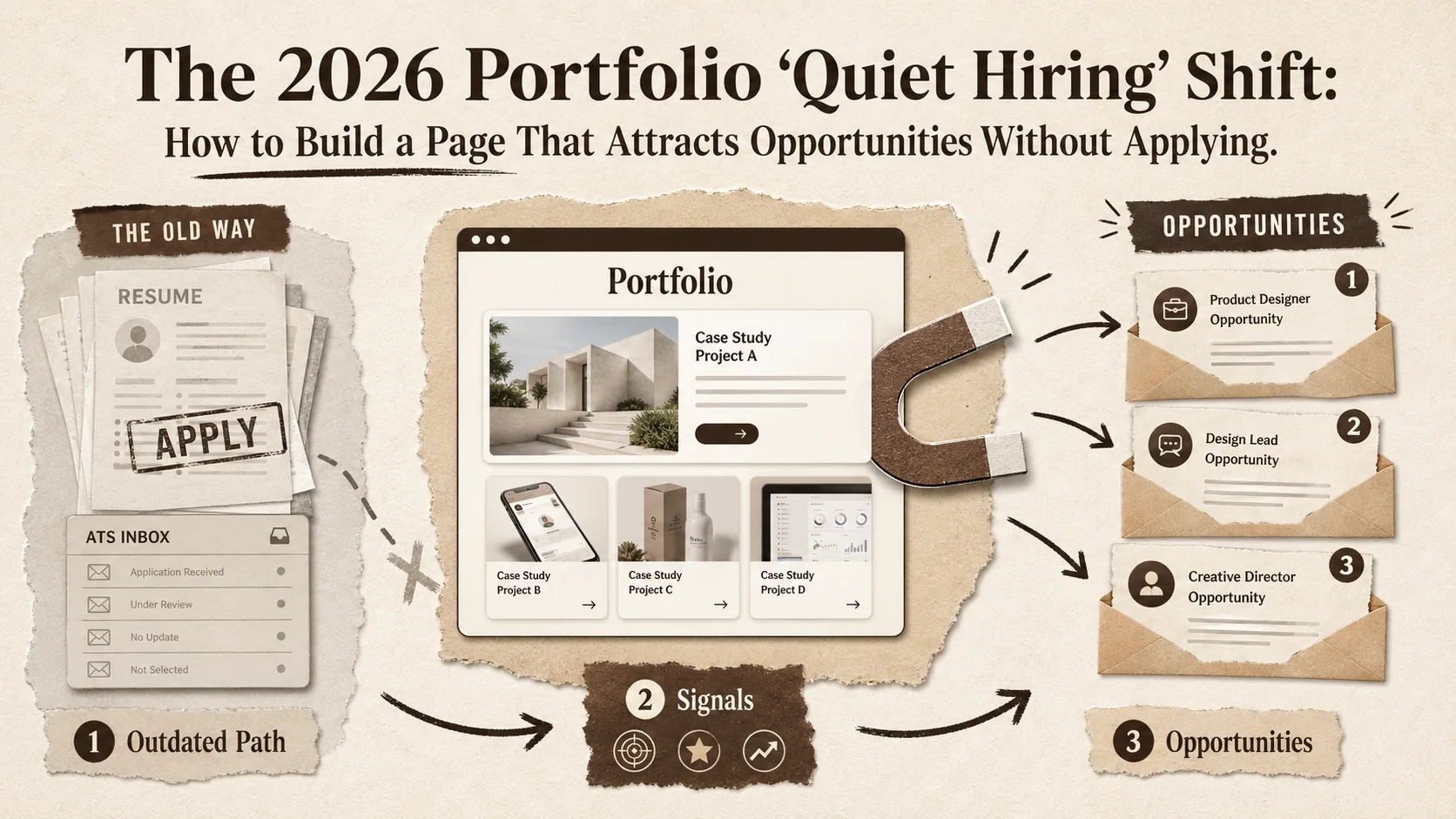
The job application is dying. Not with a bang, but with a quiet, strategic whisper. In 2026, the most coveted opportunities are no longer found solely on job boards; they are being discreetly offered to professionals whose online presence signals they are the right fit—before a formal role is even advertised.
This is the era of quiet hiring. As highlighted in recent HR industry reports from Gartner and LinkedIn, organizations are increasingly filling critical skills gaps by proactively sourcing talent through networks, social platforms, and, most importantly, professional portfolios. This shift turns your digital footprint from a static resume into a dynamic, 24/7 opportunity magnet.
If you're still relying on a PDF resume sent into the void of an Applicant Tracking System (ATS), you're playing an outdated game. The new rules are about visibility, narrative, and strategic signaling. This guide will walk you through the exact tactics to structure your portfolio for the 2026 quiet hiring landscape, ensuring you're not just looking for work, but being found by it.
What is Quiet Hiring and Why Does Your Portfolio Matter Now?
Quiet hiring is when companies fill critical skills gaps by proactively sourcing talent through LinkedIn, GitHub, Behance, and personal portfolio sites -- bypassing public job postings entirely. Gartner identified it as a top workforce trend, and LinkedIn's 2026 data shows this approach now accounts for a growing share of hires at enterprise companies, shifting the power dynamic from applicant to sought-after expert.
Quiet hiring is a strategic approach where companies address talent needs without going through traditional, public hiring cycles. This can mean upskilling and mobilizing current employees, but it increasingly refers to the discreet, targeted recruitment of external professionals. Recruiters and hiring managers scour LinkedIn, GitHub, Behance, and personal portfolio sites to identify individuals whose publicly showcased work solves a problem they have right now.
The implications are profound:
- The Power Dynamic Shifts: You transition from a supplicant applying for a job to a sought-after expert being approached with an opportunity.
- The Process Accelerates: Conversations often start with "We saw your work on X and think you'd be perfect for a challenge we have," bypassing the initial screening gauntlet.
- Competition Changes: You're no longer competing with hundreds of applicants for one posted role. You're being evaluated on your unique body of work against a specific need.
Your portfolio is the central hub for this passive search. It's more than a link collection; it's your primary career asset. For a deeper dive into why this asset has surpassed the traditional resume, explore our analysis on why your portfolio will get you hired in 2026. To signal availability without a public badge, see our guide on portfolio proof-of-life checks.
The Anatomy of a "Quiet Hiring" Portfolio: 6 Essential Components
Six components make a portfolio quiet-hiring-ready: (1) a value-proposition headline, (2) project deep-dives with Challenge-Action-Solution-Impact structure, (3) a keyword-rich skills matrix searchable by recruiter tools, (4) social proof via testimonials and certifications, (5) a clear "call to collaboration" CTA, and (6) a living document section with recent GitHub commits, Dribbble shots, or blog posts. A Sprout Social report found 72% of hiring managers are more likely to consider candidates with a professional online portfolio.
To attract quiet hiring, your portfolio must answer the unspoken questions a recruiter or hiring manager has when they land on your page. It must be a complete, compelling argument for your next role.
1. The Strategic Headline & Bio: Beyond Job Titles
Forget "Frontend Developer at XYZ Corp." Your headline should state the value you create.
- Weak: "Digital Marketing Manager"
- Strong: "Driving SaaS Growth Through Data-Driven Content & Conversion Strategy" Your bio should be a concise, benefit-oriented narrative. In 2-3 sentences, state who you help, how you help them, and the tangible outcomes you drive. Weave in 1-2 key achievements for credibility.
2. The Project Deep-Dive: Showcasing Process, Not Just Polish
Quiet hiring managers want problem-solvers, not just pretty pictures. For each featured project, structure it to tell a story:
- The Challenge: What was the specific problem or goal?
- Your Role & Actions: What did you do? Mention tools, frameworks, and methodologies.
- The Solution: Show the final outcome (image, link, video).
- The Impact: Quantify the results. Use metrics like "increased conversion by 30%," "reduced load time by 1.5 seconds," or "generated 500 qualified leads." This format demonstrates strategic thinking and results—exactly what a hiring manager trying to fill a hidden need is looking for.
3. The Skills & Tools Matrix: Built for Search
List your skills, but contextualize them. Group them into categories (e.g., "Frontend Development," "Data Analysis," "Project Management"). Importantly, include the tools and technologies you use proficiently. This isn't just for human readers; it's for the search algorithms recruiters use. A portfolio rich in relevant keywords (like "React 18," "Google Analytics 4," "Figma prototyping") is more likely to surface in targeted searches.
4. The Proof Layer: Social Proof & Credibility
Trust is paramount when you're being evaluated in isolation. Integrate elements of social proof:
- Testimonials: Brief quotes from clients, managers, or colleagues about working with you.
- Recognitions: Awards, publications, or speaking engagements.
- Certifications: Links to relevant, verifiable credentials. This layer validates everything else on your page.
5. The Clear Pathway: Your "Call to Collaboration"
What should someone do if they're interested? Make it effortless. Have a clear, professional contact method. A simple "Open to Interesting Opportunities" or "Available for Consulting Projects" signal can be powerful. This is your passive CTA.
6. The Living Document: Evidence of Continuous Growth
A stagnant portfolio is a red flag. Include a section that shows you're active and evolving:
- "Recently" or "Now" Section: What are you currently learning, building, or exploring?
- Blog or Thought Leadership: Short articles or insights on industry trends.
- Updated Side Projects: Demonstrates passion and initiative beyond paid work.
Building a portfolio with this depth can seem daunting, but platforms like Popout are designed to make structuring this narrative intuitive. You can create your Popout page in minutes, using sections built specifically for showcasing work, skills, and testimonials in a modern, scannable format.
Optimizing for Discoverability: How Recruiters Actually Find You
Discoverability rests on three pillars: SEO (keyword-rich page titles and meta descriptions verified with Google Search Console), strategic cross-linking from LinkedIn Featured sections and GitHub bios to your portfolio hub, and value-driven network sharing on platforms like Dev.to, Hashnode, and Behance.
A perfect portfolio is useless if no one sees it. Quiet hiring relies on discoverability. Here’s how to ensure you’re found.
SEO is Non-Negotiable: Your personal site is a search asset. Use relevant keywords in your page title, headers, and image alt text (e.g., "UX Designer Portfolio," "Fintech Product Manager"). Write detailed project descriptions. A well-optimized portfolio can rank for searches like "[Your City] [Your Role] portfolio." If your current portfolio has performance issues, our guide on bio link loading speed and career opportunities covers the technical fundamentals.
Strategic Cross-Linking: Your portfolio should be the hub, but you need spokes.
- LinkedIn: Ensure your LinkedIn profile is rich with keywords and has a prominent link to your portfolio. Use the "Featured" section to showcase key projects.
- Industry Platforms: Be active where your audience is: GitHub for devs, Dribbble/Behance for designers, Medium/Substack for writers.
- Social Bios: Use your portfolio link everywhere--Twitter, Instagram, YouTube. You never know where a connection will be made. If you're spreading across many platforms, a centralized bio link prevents fragmentation.
Network by Showcasing Value: Share your work not just as a "look what I made" post, but as a "here's how I solved this problem" case study. This provides value to your network and increases the chances of it being shared within an organization that has a similar, unspoken challenge.
From Passive to Active: Using Analytics to Fuel Your "Quiet Hiring" Engine
Analytics transform guesswork into precision -- track visitor sources, content engagement, and click behavior with tools like Google Analytics 4, Plausible, or Popout's built-in dashboard. This data creates a feedback loop: when you see traffic from a specific industry, you double down on relevant projects and skills, which research from Hootsuite social strategy reports confirms increases conversion.
A modern portfolio isn't a monologue; it's the start of a conversation. To truly leverage the quiet hiring trend, you need to understand who's looking and what they're interested in. This is where analytics transform your strategy from guesswork to precision.
Integrate a simple analytics tool (many portfolio builders, including Popout, offer this) to track:
- Visitor Volume & Sources: Are people coming from LinkedIn, Google search, or a direct link from a company email?
- Content Engagement: Which projects are viewed the most? Which pages do people spend time on?
- Download/Click Behavior: Are people downloading your resume PDF or clicking your "Contact" link?
This data is gold. It creates what we call The Portfolio Feedback Loop. If you see a specific project from 6 months ago is suddenly getting traffic from a particular industry, you can:
- Double Down: Update that project with more recent, relevant details.
- Engage Proactively: If you can identify the company (e.g., through referral source), you can tailor a thoughtful outreach message referencing the shared interest.
- Refine Your Message: If your "Data Visualization" projects get 5x more engagement than your "General Analysis" work, you know where to focus your narrative.
This analytical approach moves you from hoping to be found to strategically influencing how and why you are found.
The 2026 Portfolio Checklist: Audit Your Page Today
Eight audit items -- headline, project stories with CASI structure, skills matrix, social proof, contact pathway, growth indicators, SEO basics, and analytics -- cover the complete quiet-hiring readiness spectrum. A Sprout Social survey found 61% of recruiters abandon a portfolio if they cannot easily find contact information or a clear CTA.
Use this checklist to evaluate your current portfolio against quiet hiring standards:
| Component | Quiet Hiring Ready? | Action Item |
|---|---|---|
| Headline & Bio | Clearly states value proposition, not just job title. | Rewrite to focus on "who you help" and "what problem you solve." |
| Project Stories | Each project explains Challenge, Action, Solution, Impact (CASI). | Audit 3 key projects. Add missing CASI elements, especially quantifiable Impact. |
| Skills & Tools | Listed with context, includes relevant keywords for search. | Group skills thematically. Add 3-5 key industry tools/tech you use. |
| Social Proof | Includes 1-2 testimonials or recognitions. | Request a testimonial from a past client or colleague. |
| Pathway to Contact | Clear, professional contact method is visible. | Ensure your email or contact link is in the header/footer. Add an "Open to Opportunities" signal if true. |
| Growth Indicator | Shows recent activity (learning, projects, writing). | Add a "Now" section describing what you're currently focused on. |
| Discoverability | Basic SEO in place (page titles, descriptions). | Check page title includes your role and "portfolio." Share your portfolio link on 2 other profiles. |
| Analytics | You can see who visits and what they view. | Install or activate a simple analytics tool. |
How Effective Are Online Portfolios for Job Seekers?
Online portfolios significantly boost a candidate's visibility and credibility. A 2025 report from Sprout Social found that 72% of hiring managers are more likely to consider a candidate with a professional online portfolio, and 68% have discovered a candidate through their portfolio or personal website. The Nielsen Norman Group research on information scent further confirms that clear, focused portfolio pages convert significantly better than cluttered ones.
The effectiveness isn't just about having a portfolio; it's about its quality and focus. A portfolio that simply lists job duties fails. The ones that win are built like case studies. They connect skills to business outcomes. When I review portfolios for our team at Popout, I spend less than 15 seconds on a page that only shows final products. I look for the story behind the work. A portfolio that explains the "why" and the "so what" holds my attention. It shows me the candidate can think, not just execute. This narrative focus is what separates a passive document from an active career tool. It answers the recruiter's core question: "Can this person solve my problem?"
What Are the Biggest Mistakes in Portfolio Design?
The three biggest mistakes are the "kitchen sink" approach (too many projects), using internal jargon, and neglecting mobile performance. Over 50% of portfolio traffic now comes from phones, and Google's Core Web Vitals data shows a 1-second mobile delay can reduce conversions by up to 20%. A Sprout Social survey confirms 61% of recruiters abandon a portfolio without clear contact info or a CTA.
From my experience building and testing portfolio templates, I see three common errors. First, the "Kitchen Sink" approach: including every single project from the last decade. It dilutes your message. Curate ruthlessly; show only your best, most relevant 3-5 projects. Second, using jargon and internal company acronyms. Assume the visitor knows nothing about your past employer. Explain the project in universal terms of problem and result. Third, neglecting mobile viewing. Over 50% of portfolio traffic now comes from phones. If your complex animations break on a mobile screen, you've lost the opportunity. Test your page on a phone. If it's slow or hard to navigate, simplify it.
Building Your Opportunity Magnet: Getting Started
The shift to quiet hiring is an opportunity for proactive professionals. It rewards those who invest in their digital presence as a strategic career asset. Start by auditing your current portfolio against the checklist above. Choose one area to improve this week.
Remember, your goal is not to create a perfect, finished monument. It's to build a living, evolving platform that clearly communicates your unique value and makes it easy for the right opportunities to find you. For more tactical advice on crafting a standout portfolio, explore our complete guide in the portfolio hub.
The future of career advancement is passive, proactive, and portfolio-driven. Is your online presence ready to attract it?
Create Your Popout Page and start building your quiet hiring magnet today.
Summary and Key Takeaways
Quiet hiring rewards professionals who invest in a discoverable, narrative-driven portfolio with quantified project impact, strategic cross-linking across LinkedIn, GitHub, and Behance, and analytics-informed iteration -- turning your online presence from a passive document into an active career engine.
The 2026 job market is shifting beneath our feet. Quiet hiring—where companies seek out talent instead of waiting for applications—is becoming the norm. This changes everything. Your career advancement now depends less on your skill at filling out forms and more on your skill at building a visible, compelling body of work online.
Your portfolio is your new business card, your pitch deck, and your first interview, all in one. To make it work, you must focus on clarity, results, and accessibility. State clearly who you help and what problems you solve. For every project you feature, lead with the impact, not just the tasks. Make sure people can contact you in two clicks or less. Finally, treat it like a living project. Update it quarterly with new learnings or work. Use the analytics to see what resonates and double down on that.
This isn't about bragging. It's about making your value so obvious that the right opportunities can't help but find you. Start today. Pick one project and rewrite its description using the Challenge-Action-Solution-Impact framework. That single step will put you ahead of most of the market. For a data-driven approach to measuring what works, see our guide on portfolio metrics that matter to recruiters. And to avoid common pitfalls that undermine credibility, read about portfolio features that distract recruiters.
Frequently Asked Questions (FAQ)
What exactly is "quiet hiring"?
Quiet hiring is a talent acquisition strategy where companies proactively fill skills gaps by internally mobilizing current employees or discreetly sourcing and approaching external talent through networks and online profiles, rather than posting a public job advertisement. It emphasizes identifying and recruiting individuals based on their demonstrated skills and work, often before a formal role is defined.
How is a portfolio for quiet hiring different from a traditional one?
A traditional portfolio often serves as a visual supplement to a resume. A quiet hiring portfolio is a standalone career asset. It's optimized for discoverability (SEO), emphasizes problem-solving and quantified results in project stories, provides clear social proof, and includes signals that you're open to opportunities. It's designed to answer a recruiter's questions before they even contact you.
I'm not a designer or developer. Do I need a portfolio?
Absolutely. While visual portfolios are standard in creative fields, a "portfolio of work" is valuable for almost any professional. Consultants can showcase case studies, writers can share published articles, marketers can detail campaign strategies and results, project managers can outline successful project timelines and outcomes. The format adapts, but the principle—showcasing your work and impact—remains critical. Explore our career hub for field-specific ideas.
What's the single most important thing to update on my portfolio for 2026?
Focus on adding quantified impact to your project descriptions. Instead of "Built a new website," write "Redesigned the checkout flow, which reduced cart abandonment by 22% and increased monthly revenue by ~$15k." Numbers provide concrete evidence of your value and are exactly what a hiring manager with a business problem is looking for.
How often should I update my portfolio?
Aim for a quarterly "touchpoint." This doesn't mean a full overhaul every three months. It can be adding a new project, updating your "Now" section with what you're learning, refreshing a testimonial, or reviewing your analytics to see what's resonating. Keeping it active signals that you are engaged and growing.
Can a portfolio really help me if I'm currently employed and not actively job searching?
Yes, this is its greatest strength in the quiet hiring context. A strong portfolio positions you for serendipitous opportunities—the perfect role at a dream company that hears about you through a shared connection, or a consulting project that aligns with your passion. It keeps your value visible to your network and the market, ensuring you're considered for opportunities that never get posted publicly.
Other Doved Studio projects
Related tools from the same studio you might find useful:
- Ralphable: Generate structured Claude Code skills that iterate until pass/fail criteria are met.
- Glean: Turn scrolling time into a daily action plan. Capture, process, execute.
- Doved Studio: Studio indie derrière cette app et une dizaine d'autres outils.
Written by
popout
Content Team