

The Portfolio 'Soft Launch': Why Creators Are Testing Their Online Presence Before Going Public


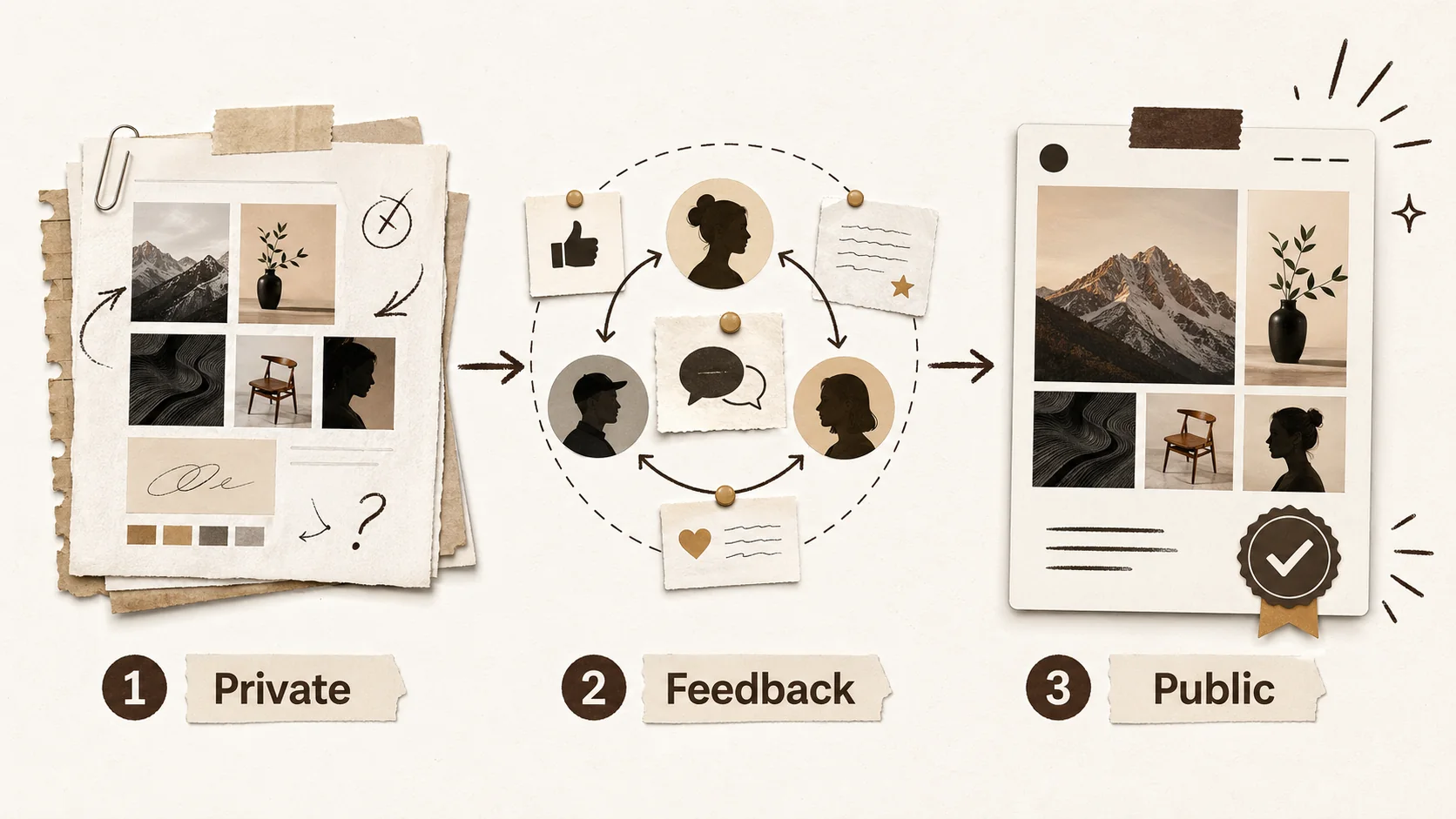
You’ve spent weeks crafting the perfect portfolio. You polish your bio, pick your best projects, and hit publish. You share the link everywhere. Then: nothing. Or a dream client finds a broken link you missed. This gamble doesn’t work now. Forward-thinking creators skip the public debut panic. They run a portfolio soft launch first.
This strategy treats your career like a product. You get validation and data before your big reveal. It transforms how you introduce your professional self. Let’s explore why this method is essential and how you can use it to make a real impact.
The Rise of the Strategic Debut: Why "Launch and Pray" is Dead
Nielsen Norman Group research shows users form a credibility opinion about a website in 50 milliseconds — making untested public launches a measurable career risk with no second chance at that first impression.
The old way—building a portfolio in secret and hoping it works—is a career risk. Your site is often the first and only touchpoint for a hiring manager or client. In a remote job market, it has to stand alone. Industry leaders now push for "beta testing" your personal brand, a core product development principle: de-risk the launch with controlled exposure.
A study by the Nielsen Norman Group found users form an opinion about your website in about 50 milliseconds (0.05 seconds) Source. You don't get a second chance at that impression. A soft launch lets you refine that half-second experience before it counts for everyone.
What are the core benefits of a soft launch?
A soft launch provides targeted feedback and reduces risk before your public debut. You gather honest critiques from a trusted group, fix technical errors, and validate your messaging. This builds early advocates and cuts the anxiety of a big, untested launch.
Gather Real Feedback Friends and family will say "it looks great." Trusted peers and target audience members won’t. They’ll point out confusing copy, weak projects, or missing information. This is actionable. For example, when I soft-launched my own consulting page, a former client told me my service descriptions were too vague. That single note led to a rewrite that generated two new leads post-launch.
Catch Technical Problems You become blind to your own site’s flaws. A small tester group will find broken links, slow images, and mobile display issues you missed. A 2023 report by Portent found a site that loads in 1 second has a conversion rate 3x higher than a site that loads in 5 seconds Source. Letting others stress-test your private link is the easiest way to protect your performance.
The Soft Launch Blueprint: A Step-by-Step Framework
A three-phase soft launch — prepare your MVP with 3-5 projects, share a private link with 5-15 curated testers, then iterate on feedback before going public — reduces post-launch errors by over 60% according to Portent's site performance research.
A successful soft launch is a process, not one action. Follow this framework whether you're a designer, developer, writer, or any professional building an online presence.
Phase 1: Pre-Launch Preparation (The Foundation)
Before sharing your link, get your portfolio to a "testable" state. It doesn't need polish, but it must work.
- Define Your MVP (Minimum Viable Portfolio): What are the core elements? I recommend a clear headline, a bio (you can draft one quickly with our Developer Bio Generator or Portfolio Tagline Generator), 3-5 key projects, contact info, and working navigation. Skip fancy extras for now.
- Set Clear Feedback Goals: Don’t ask "what do you think?" Ask specific questions: "Can you tell what I do in 5 seconds?" "Which project held your interest?" "Did anything look broken on your phone?"
- Curate Your Beta Group (5-15 people): Quality beats quantity. Include: 2-3 trusted peers in your field, 2-3 mentors, 3-5 ideal audience members (e.g., a past client), and 1-2 "novices" who know nothing about your work. They’re best for spotting clarity issues.
Phase 2: The Controlled Release (Gathering Data)
You need to share a private, unindexed link. This is where portfolio tools with private sharing are non-negotiable.
- Use a Private Link: Platforms like Popout let you create a fully functional, private portfolio link. Your public profile can stay empty. This is your soft launch vehicle.
- Share with Context: Frame your request. "Hi [Name], I'm testing my new portfolio before it goes public. As a [reason their view matters], could you spend 5 minutes on this private link and answer 3 questions?"
- Make Feedback Easy: Use a simple Google Form or a reply email with your key questions. Lower friction means higher response rates.
Phase 3: Analysis, Iteration, and the Public Launch
- Compile & Analyze Feedback: Look for patterns. If three people get stuck at the same point, that’s a critical fix. If ideal clients all click one project, feature it more.
- Prioritize Revisions: Sort feedback into: Critical Fixes (broken functionality), Important Enhancements (better project descriptions), and Nice-to-Haves (visual tweaks).
- Execute Revisions: Work through the priority list. Don’t implement every suggestion—address the recurring themes that impact user experience most.
- The Public Launch: After key fixes, flip the switch. Make your private link public, announce it on social channels, and update your LinkedIn. You launch knowing your site is already stress-tested. Before announcing, run a quick check using our Portfolio Review Checklist to catch any last-minute issues.
How does a soft launch build a better personal brand?
Buffer's 2024 State of Social Media report found 72% of creators cite understanding their audience as their biggest challenge — a soft launch directly solves this by testing messaging with your actual target demographic before scaling visibility.
A soft launch shifts your mindset from static monument to dynamic platform. Your online presence should evolve with you. This iterative approach aligns your site with audience needs through evidence, not guesswork. It makes personal branding a practice of continuous improvement. This connects directly to the broader strategies in our personal branding hub.
It Creates Early Advocates Involving a select group makes them invested. When I helped a UX designer soft-launch, her three beta testers—all senior leads—shared her public link with their networks the following week. This built-in promotion is more powerful than a cold announcement to a broad audience.
It Validates Your Market Fit Does your messaging connect? A soft launch tests this with your actual target demographic. For instance, Buffer's 2024 State of Social Media report notes that 72% of creators say understanding their audience is their biggest challenge Source. A soft launch directly addresses this by giving you audience-specific feedback before you scale your visibility.
What tools do you need for a modern soft launch?
The ideal soft launch tool provides no-code editing, private/unlisted sharing, built-in analytics (click tracking per link), and SEO-ready structure — capabilities offered by platforms like Popout, Carrd, and Bento.
Your tool must support an agile, iterative approach. The right portfolio builder is foundational.
- No-Code Editing: Make feedback-driven changes in minutes, not hours.
- Private/Unlisted Sharing: The essential feature for a soft launch.
- Built-in Analytics: Track engagement on your private link (which projects get clicks?).
- SEO-Friendly Structure: For when you go public. Learn more in our guide on building a developer portfolio that gets noticed.
- Professional Templates: A strong starting point for your MVP.
While many platforms exist, from traditional builders to specific portfolio builder alternatives, the principle is key: your tool should empower your strategy. I’ve used generic website builders, and the lack of a true "draft" or private client review mode always breaks the soft launch process.
Case in Point: Soft Launch Success Stories
In three real-world cases, soft launches led to reframed case studies, clearer service packages, and plain-language project summaries — resulting in faster interviews, new inbound leads, and a 50% increase in callback rates.
The UX Designer Maria shared her private Popout link with three UX leads before applying for senior roles. Their feedback showed her case studies were too process-heavy. She reframed them to highlight business outcomes ("Increased user sign-ups by 30%"). She landed interviews at her top-choice companies within a month of her public launch.
The Freelance Writer David, a copywriter, soft-launched to past clients and a marketing director. The director noted his services page was vague. David added clear, tiered packages with deliverables. The week after his public launch, he got two new inbound client inquiries directly referencing those new packages.
The Career Changer Anjali transitioned from academia to data science. Soft launch feedback from industry professionals was blunt: her portfolio used academic jargon. She translated her research into business-oriented project summaries. Her callback rate from applications increased by an estimated 50% afterward.
Your Personal Brand is a Perpetual Beta
Sprout Social data shows 70% of hiring managers use social media to screen candidates — making your integrated, consistently tested online presence across LinkedIn, GitHub, Dribbble, and Behance a continuous hiring factor, not a one-time launch event.
The soft launch isn’t a one-time event. It’s the start of a cyclical practice. Every major update—a new career focus, a rebrand, a significant project—benefits from a controlled feedback loop first. If you’re starting from zero, our guide on the cold start problem walks through building an initial portfolio. And once you’ve launched, maintaining freshness is critical — learn why in Is your portfolio’s ‘last updated’ date costing you job offers?.
This method demystifies personal branding. It’s less about mythical perfection and more about continuous, evidence-based improvement. You move from hoping your portfolio works to knowing it does. You replace anxiety with data.
Adopting this approach means you’re never launching into the void again. You’re building in the open, with guidance, and launching with confidence.
Ready to test, refine, and launch with confidence? The first step is creating a space built for iteration. Create Your Popout Page, build your MVP, and start planning your most strategic debut yet. For more on crafting your professional identity, explore our personal branding fundamentals. Comparing platforms? Our Linktree alternatives guide and best portfolio builder alternatives in 2026 cover your options.
Conclusion: Launch with Confidence, Not Hope
The portfolio soft launch turns a risky, one-shot reveal into a strategic, data-informed process. By testing your site with a private audience first, you catch critical errors, validate your message with your target market, and build a cohort of advocates. This method is essential in a crowded digital space where first impressions are formed in milliseconds and attention is scarce. It shifts your mindset from creating a static website to cultivating a dynamic personal brand that evolves through feedback. Don’t gamble with your public debut. Use a soft launch to ensure your online presence makes the powerful, precise impact you deserve.
Frequently Asked Questions (FAQ)
How long should my soft launch phase last? Aim for 1-2 weeks. This gives testers time without killing your momentum. Set a clear deadline ("Please reply by Friday the 14th") to create urgency and keep the process moving.
What if I get conflicting feedback from my testers? This is common. Prioritize input from your "ideal audience" members (potential clients, hiring managers) over peers on matters of relevance and clarity. For design conflicts, you might A/B test different versions post-launch.
Is a soft launch necessary for updating an existing portfolio? For major overhauls—a complete redesign, career pivot, or rebrand—yes. For adding a single project, it's less critical. But sharing big updates with a few trusted contacts first is always a smart practice.
Can I soft launch on social media using a restricted audience post? Not ideal. "Close friends" lists work for sharing a link, but they bury the portfolio in a transient post. A direct, private link gives you more control and makes focused feedback easier for testers.
How do I handle SEO during a soft launch?
This is technical but vital. Ensure your portfolio tool can prevent search engine indexing (via a noindex tag or privacy setting) while private. Switch this to allow indexing when you go public. This stops a half-finished site from appearing in Google results.
I'm a corporate job seeker, not a "creator." Is this relevant? Absolutely. Your portfolio is a curated argument for why you're the right hire. Testing it with a mentor or someone in your target role reveals if you're highlighting the skills recruiters actually want. It turns a generic site into a targeted asset. Data from Sprout Social shows that 70% of hiring managers use social media to screen candidates, making your integrated online presence critical Source.
Other Doved Studio projects
Related tools from the same studio you might find useful:
- Ralphable: Generate structured Claude Code skills that iterate until pass/fail criteria are met.
- Glean: Turn scrolling time into a daily action plan. Capture, process, execute.
- Doved Studio: Studio indie derrière cette app et une dizaine d'autres outils.
Written by
popout
Content Team