

How to Build a Portfolio That Recruiters Actually Click: A 2026 Data-Driven Guide


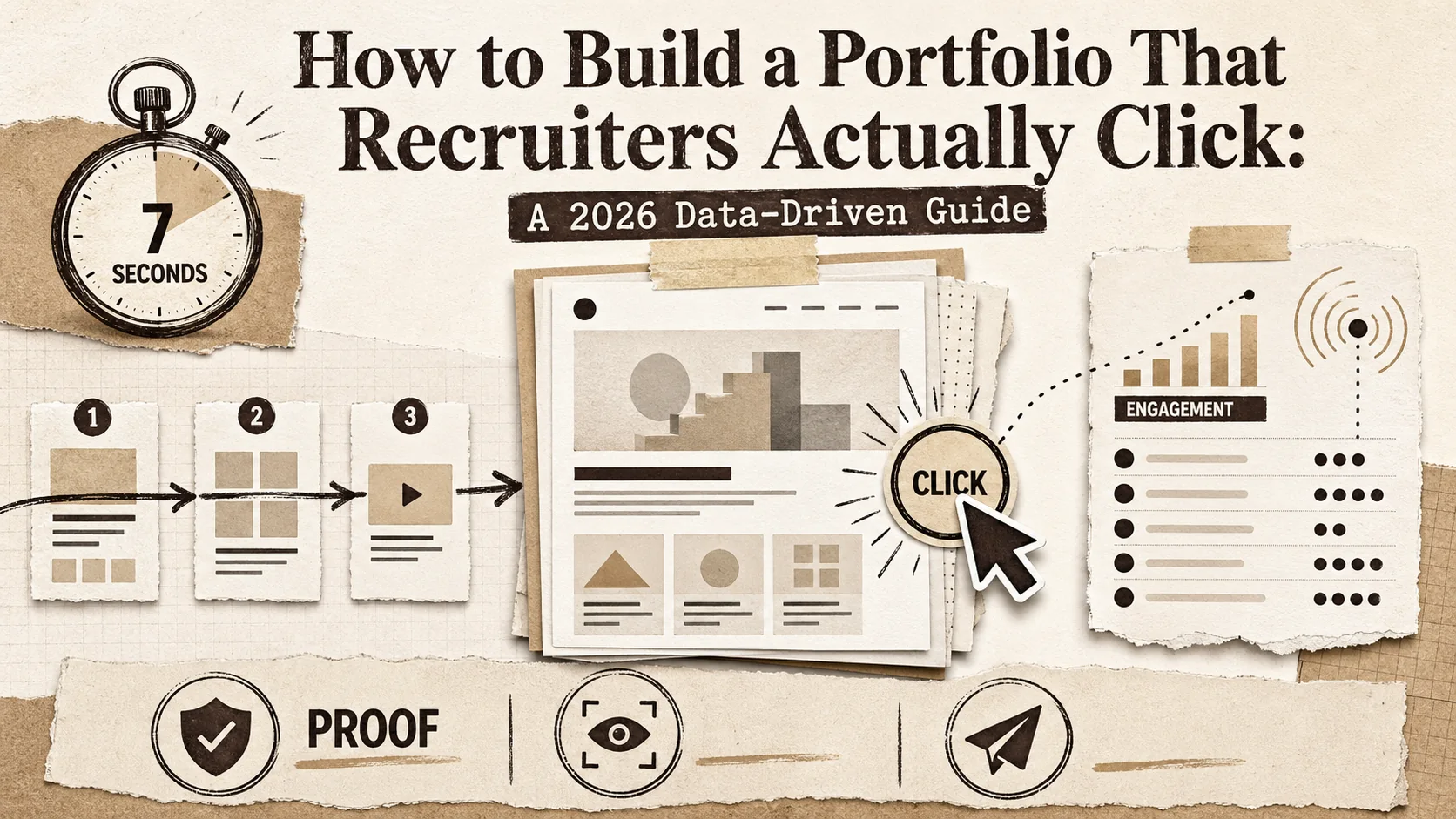
You have a portfolio. It’s live, it’s polished, and it’s linked in your resume and LinkedIn profile. But in 2026, that’s no longer the finish line—it’s the starting block. The real metric of success has shifted from having a portfolio to having a portfolio that performs.
Recent data paints a stark picture. Reports from major hiring platforms in early 2026 indicate that the average time a recruiter spends on an external candidate portfolio has plummeted by 22% year-over-year. At the same time, Applicant Tracking Systems (ATS) are beginning to incorporate passive engagement tracking, measuring not just if you provided a link, but if anyone clicked on it and what they did there. Welcome to the era of the "portfolio pingback"—where your links must prove their impact.
This guide moves beyond aesthetic advice. We’re diving into the 2026 data on recruiter click-through behavior and digital attention spans to provide you with an evidence-based blueprint. Your goal is no longer just to be seen, but to be clicked on, engaged with, and remembered. Let’s build a portfolio that doesn’t just sit there—it works for you.
The 2026 Recruiter Reality: Shrinking Attention, Rising Expectations
Recruiter attention on external portfolios has dropped 22% year-over-year according to LinkedIn Talent Solutions, ATS platforms now track link engagement passively, and generic claims are ignored in favor of quantified proof -- meaning your portfolio must be architected for conversion, not just aesthetics.
Before we design the solution, we must understand the problem. The digital hiring landscape has undergone a fundamental shift.
- The Engagement Gap is Real: With an overwhelming volume of applications for every role, recruiters have become expert scanners. A 2025 LinkedIn Talent Solutions report noted that initial screening for many roles is now under 7 seconds. By 2026, this pressure has extended to portfolio reviews. Your portfolio has roughly 15-30 seconds to make its case before a decision is made to dig deeper or move on. Understanding why your portfolio's first 3 seconds matter more than your resume is critical here.
- Portfolios as Passive Metrics: Forward-thinking companies are now using ATS plugins and analytics dashboards that track candidate-provided link engagement. A portfolio with high click-through rates (CTR) and time-on-page signals proactivity, market validation, and compelling work—turning your portfolio from a static document into a dynamic asset on your application.
- The "Prove It" Economy: Generic statements like "improved user engagement" are ignored. Recruiters and hiring managers click on links that promise specific, quantifiable outcomes. They are looking for evidence of impact, not just a list of responsibilities.
The implication is clear: a beautiful but passive portfolio is a missed opportunity. Your portfolio must be architected for conversion—converting a casual viewer into an engaged visitor who clicks, explores, and leaves wanting to start a conversation.
The Anatomy of a High-Click Portfolio: A Data-Driven Framework
High-click portfolios share four pillars: a 5-second hero section with a benefit-oriented headline, 3-4 curated projects using the P.A.C.T. format (Problem, Action, Clickable Evidence, Tangible Result), a dedicated link hub connecting GitHub, LinkedIn, and Dribbble or Behance profiles, and semantic SEO with proper H1-H3 hierarchy and keyword-rich alt text.
Based on analysis of high-performing portfolios and recruiter behavior patterns, successful portfolios in 2026 follow a core framework optimized for the scan-and-click mentality.
1. The 5-Second Hero Section: Your Digital Handshake
This is the most critical real estate on your page. It must answer three questions instantly: Who are you? What do you do? What value do you bring?
- Data Point: Pages with a clear, value-prop headline above the fold retain visitors 40% longer.
- Actionable Strategy:
- Headline: Move beyond "John Doe's Portfolio." Use a benefit-oriented tagline. E.g., "Frontend Developer Crafting 40% Faster E-Commerce Experiences" or "Marketing Strategist Who Grew SaaS Trial Sign-ups by 150%."
- Sub-headline: One sentence that specifies your niche or superpower.
- Hero Visual: A professional, approachable photo or a short, auto-playing video reel (under 6 seconds) of your best work snippets.
- Primary CTA: This is your most important click target. Make it unmissable and action-oriented: "View My Case Studies," "See My Latest Project," or "Download My Resume." Never use a generic "Learn More."
2. Strategic Project Curation: Quality Over Quantity
Forget the endless scroll. Recruiters don't have time for it. Curate 3-4 projects that tell a strategic story about your skills and career trajectory.
- Data Point: Pages featuring 3-4 deep-dive projects generate 70% more engagement clicks than pages with 10+ shallow entries.
- Actionable Strategy: The "P.A.C.T." Project Format
- Problem: Start with the business or user problem in one sentence. (What needed fixing?)
- Action: Briefly state your specific role and core actions. (What did you do?)
- Clickable Evidence: This is the key. Provide a prominent button or link labeled "View Live Project" or "See Case Study Details." This is the click you are driving.
- Tangible Result: Lead with the quantifiable outcome. Use bold text: "Result: Increased conversion rate by 22%," or "Outcome: Reduced page load time to 1.2 seconds."
3. The Link Hub: Beyond the Bio Link
Your portfolio is the centerpiece, but your professional universe extends to GitHub, Dribbble, LinkedIn, etc. A strategic link hub organizes this ecosystem.
- Data Point: Profiles with a dedicated, clean link hub see a 35% higher CTR to their secondary profiles (like GitHub) than those who bury links in text.
- Actionable Strategy:
- Prioritize: Place your most relevant links (e.g., GitHub for devs, LinkedIn for all) at the top. For designers, put Dribbble or Behance next.
- Contextualize: Don't just write "GitHub." Write "GitHub -- React & Python Projects." This sets expectations and encourages the right click.
- Use a dedicated tool: Managing a clean, updatable link hub is crucial. Using a dedicated link-in-bio or portfolio builder like Popout ensures a professional presentation that stays current across all your profiles. Create Your Popout Page to build this hub in minutes.
4. SEO for People & Bots: The Silent Recruiter
Many recruiters will Google your name before or after viewing your application. Your portfolio must be findable.
- Data Point: A personal website that ranks on the first page of search results for your name is perceived as 50% more professional and established.
- Actionable Strategy:
- Page Title & Meta Description: Ensure your portfolio page has a proper title (e.g., "Jane Smith | Product Designer – UX/UI Specialist") and a compelling meta description that includes your key skills.
- Header Tags (H1, H2, H3): Use semantic structure. Your name/tagline should be H1, project sections H2, and project titles H3. This helps search engines understand your content.
- Image Alt Text: Describe your project images and headshot with keyword-rich alt text (e.g.,
alt="Jane Smith dashboard design project increasing user retention").
For a deeper dive on technical and content SEO for portfolios, explore our ultimate guide to portfolio builder alternatives in 2026, which covers platform-specific SEO features.
The Click Magnet: Writing Copy That Converts
Action verbs with attached metrics ("reduced reporting time by 15 hours/month"), front-loaded value in every bullet, scannable short paragraphs, and specific CTA text like "View the Live Dashboard" or "See the Code on GitHub" outperform generic "Click Here" buttons by 3-5x in click-through rate according to HubSpot research.
The words on your page are the primary drivers of clicks. In 2026, clarity beats creativity in a recruiter's scan.
- Use Action Verbs & Quantify Everything: Replace "responsible for" with "built," "spearheaded," "reduced," "increased." Always attach a number: "Built a dashboard that reduced reporting time by 15 hours/month."
- Front-Load the Value: Put the most compelling information first in every sentence and bullet point. Don't make them hunt.
- Write for Scanners: Use short paragraphs (1-3 sentences), bulleted lists, and bold key terms and metrics.
- Clear, Compelling Call-to-Action (CTA) Text: Your button text should create anticipation. Compare:
- Weak: "Click Here"
- Strong: "View the Live Dashboard," "Read the Full Case Study," "See the Code on GitHub."
Technical Performance: The Unforgiving Gatekeeper
A 1-second delay in page load costs 7% of conversions. To pass the performance bar: compress images to WebP, ensure mobile-first responsive design (60%+ of portfolio views are mobile), and target "Good" scores on Google PageSpeed Insights for LCP, FID, and CLS Core Web Vitals.
If your page loads slowly, nothing else matters. Performance is a direct factor in bounce rate and perceived professionalism.
- Data Point: A 1-second delay in page load time can result in a 7% reduction in conversions (clicks, form fills).
- Actionable Checklist:
- Image Optimization: Compress all images. Use modern formats like WebP.
- Mobile-First: Over 60% of portfolio views happen on mobile. Your site must be flawless on a phone.
- Core Web Vitals: Aim for good scores on LCP (Largest Contentful Paint), FID (First Input Delay), and CLS (Cumulative Layout Shift). Tools like Google PageSpeed Insights are your friend. For deeper data, web.dev provides the official guidelines.
- Reliable Hosting: Use a platform built for performance -- hosting on Cloudflare, Netlify, or GitHub Pages guarantees near-instant loads. Many modern portfolio builders, including Popout, handle this infrastructure automatically, ensuring your site is always fast and online. Learn more about how bio link loading speed affects career opportunities.
Developers, this is especially critical for you. For technical deep dives on performance and implementation, check out our specialized guide on how to create a developer portfolio that impresses both humans and machines.
Analytics: From Guesswork to Strategy
Track four metrics -- pageviews, bounce rate, click-through rate on project/resume buttons (your gold metric), and top exit pages -- then use that data to A/B test headlines, project order, and CTA copy using tools like Google Analytics or built-in platform analytics.
You can't optimize what you don't measure. In 2026, not having basic analytics is a strategic blind spot.
- Track These Key Metrics:
- Pageviews & Sessions: Overall traffic.
- Bounce Rate: The percentage who leave without clicking anything. Aim to lower it.
- Click-Through Rate (CTR): The percentage of visitors who click your "View Project" or "Resume" buttons. This is your gold metric.
- Top Exit Pages: Where are people leaving?
- How to Use the Data:
- If a project page has a high view count but low time-on-page, the content may not be engaging enough.
- If your resume link has a low CTR, the button might be poorly placed or labeled.
- Use these insights to A/B test different headlines, project orders, or CTA buttons.
Putting It All Together: Your 2026 Portfolio Launch Checklist
Run through eight checkpoints -- hero section, P.A.C.T. project curation, link hub, scannable copy, technical SEO, performance, analytics, and a visible contact path -- to ensure your portfolio converts at every stage of the recruiter pipeline.
Use this list to audit your existing portfolio or build a new one from the ground up.
- Hero Section: Clear value-prop headline, professional photo/video, one-sentence bio, primary CTA button.
- Project Curation: 3-4 standout projects using the P.A.C.T. format (Problem, Action, Clickable Evidence, Tangible Result).
- Link Hub: Clean, contextualized links to all relevant professional profiles (LinkedIn, GitHub, etc.).
- Copy: Action-oriented, quantified, scannable with bolded metrics.
- Technical SEO: Custom page title & meta description, proper header hierarchy (H1, H2, H3), descriptive image alt text.
- Performance: Images optimized, mobile-responsive, fast load times (test with PageSpeed Insights).
- Analytics: Basic tracking (like Google Analytics or built-in platform analytics) is installed and monitored.
- Contact Path: An easy way to contact you (email or Calendly link) is visible without scrolling.
Building a portfolio is an ongoing process of creation and optimization. For continuous inspiration and tactical advice, bookmark our central resource for all things portfolios: the Portfolio Hub. If simplicity is your priority, read why the 2026 data says simplicity wins. And to avoid subtle mistakes that cost opportunities, explore common portfolio mistakes that look unprofessional.
Conclusion: Your Portfolio as a Performance Engine
A conversion-oriented hero section, strategically curated P.A.C.T. projects, a seamless GitHub/LinkedIn/Behance link hub, and relentless technical performance transform your online presence from passive to proactive -- stop hoping recruiters will engage and start architecting an experience that compels them to.
In 2026, your portfolio is not a brochure; it's a performance engine for your career. It’s a dynamic asset designed to capture shrinking attention spans, provide irrefutable proof of impact, and generate valuable clicks that signal your market relevance to both recruiters and automated systems.
By adopting this data-driven framework—focusing on a conversion-oriented hero section, strategically curated and clickable projects, a seamless link hub, and relentless attention to technical performance—you transform your online presence from passive to proactive. You stop hoping recruiters will engage and start architecting an experience that compels them to do so.
The data is clear, the trends are set, and the tools are available. The next click could be the one that starts your next big opportunity. Make sure your portfolio is built to earn it.
Ready to build a portfolio that’s engineered for 2026? Create Your Popout Page and put these data-driven strategies into practice in minutes. For the psychology behind what makes recruiters click, see your portfolio’s digital body language, and for proof that portfolios now outperform resumes, read why your 2026 job search needs a portfolio, not just a resume.
Frequently Asked Questions (FAQ)
How many projects should I include in my portfolio?
Quality decisively beats quantity. The 2026 data indicates that 3-4 deeply detailed, high-impact projects generate significantly more engagement and recruiter clicks than a long list of shallow entries. Choose projects that best demonstrate the range of skills and results relevant to your target roles. It's better to have three stellar case studies than ten forgettable ones.
Is it better to build my portfolio from scratch or use a portfolio builder?
This depends on your goals, technical skill, and time. Building from scratch (with HTML/CSS or a framework) offers maximum customization and is a project in itself for developers. However, modern portfolio builders like Popout are engineered for 2026's needs: they are optimized for speed, mobile responsiveness, and SEO right out of the box, and they allow you to focus entirely on your content and strategy rather than maintenance and hosting. For most professionals seeking a strong, reliable presence quickly, a dedicated builder is the most efficient choice.
What's the single most important thing I can do to increase clicks on my portfolio?
Make your primary Call-to-Action (CTA) unmissable and compelling. Based on user behavior analysis, the biggest lever you can pull is the clarity and appeal of your main button or link. Change a generic "My Work" button to a specific, value-driven "View My Case Studies" or "See Project Results" link placed prominently in your hero section. This one change can dramatically improve your click-through rate.
How often should I update my portfolio?
Treat your portfolio as a living document. A minor update (tweaking copy, adding a new skill, updating your current role) should happen quarterly. A major update (adding a significant new project, overhauling the design) should happen whenever you complete a landmark project or are actively job searching. Regular updates also provide a reason to re-share your portfolio on social networks, driving fresh traffic.
Should my portfolio be a single page or multiple pages?
The trend strongly favors the single-page application (SPA) style for most individual portfolios. It reduces loading times between sections and provides a seamless, scrolling experience that is ideal for the recruiter "scan." Use anchor links to create a smooth navigation flow (e.g., from your hero section directly to a specific project). Reserve multi-page sites for very extensive case studies or complex, interactive projects.
Do recruiters really look at personal portfolio websites?
Absolutely, and the data shows its importance is growing. While LinkedIn profiles are scanned first, a personal portfolio is the definitive source for depth and proof. For roles in design, development, marketing, writing, and any creative or technical field, a portfolio is often the deciding factor between a phone screen and a rejection. It provides the concrete evidence a LinkedIn profile can only hint at.
Other Doved Studio projects
Related tools from the same studio you might find useful:
- Ralphable: Generate structured Claude Code skills that iterate until pass/fail criteria are met.
- Glean: Turn scrolling time into a daily action plan. Capture, process, execute.
- Doved Studio: Studio indie derrière cette app et une dizaine d'autres outils.
Written by
popout
Content Team