
The 2026 'Portfolio Velocity' Gap: Why Fast Updates Are Now a Core Career Skill


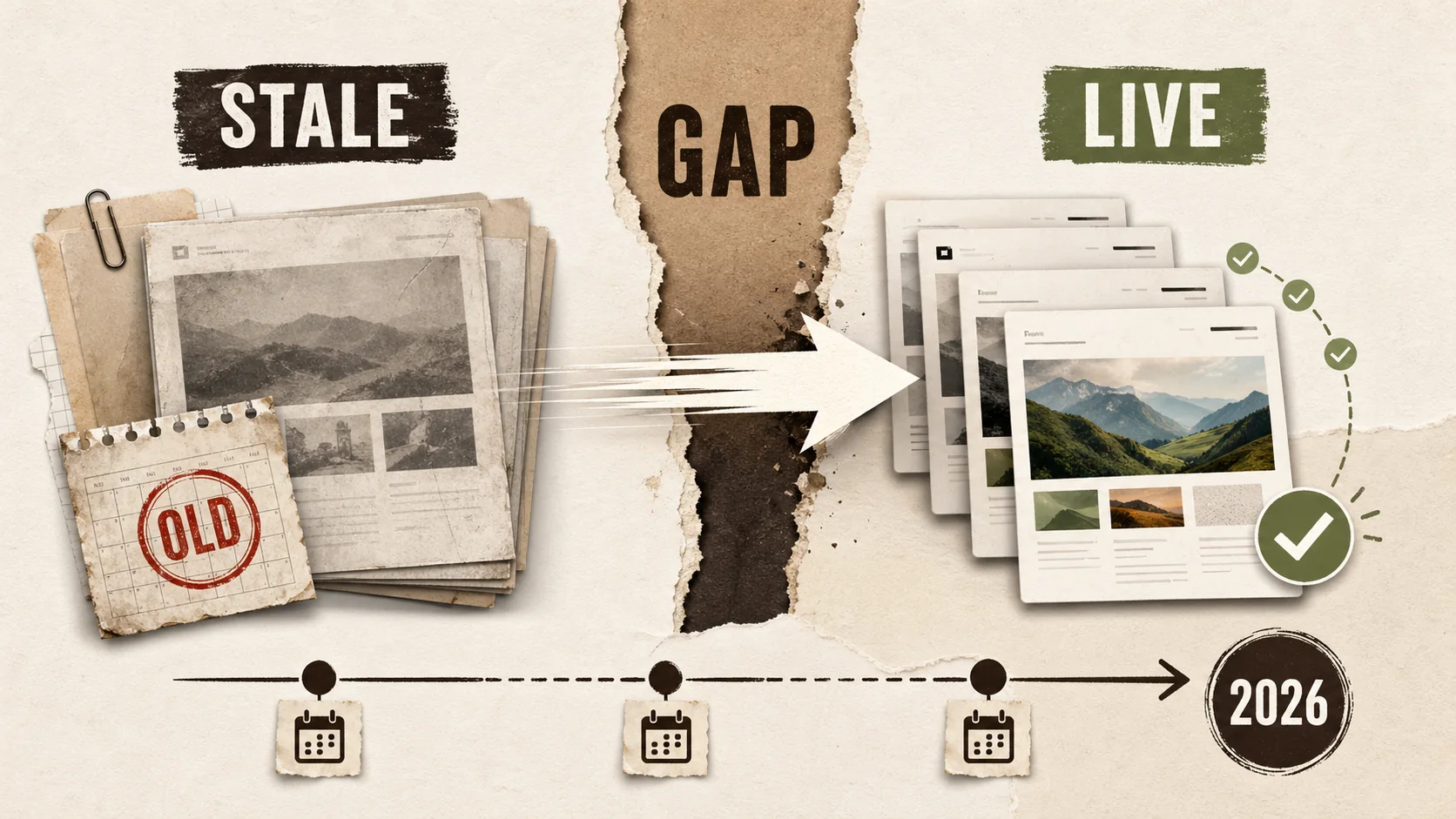
If you’ve spent more than 15 minutes on LinkedIn or professional forums like Blind in the last month, you’ve likely seen the term "portfolio velocity" buzzing around. It’s not just another piece of HR jargon. As we move deeper into 2026, it has crystallized into a critical, measurable metric for career success. The premise is simple yet profound: the speed at which you can update and showcase your latest work, skills, and achievements is now a direct indicator of your professional agility and relevance.
Gone are the days when a meticulously crafted, static portfolio website, updated once a year during performance review season, was sufficient. In today’s hyper-competitive and fast-evolving job market—especially in tech, creative fields, and knowledge work—recruiters and hiring managers are actively prioritizing candidates whose online presence feels alive. They’re looking for evidence of continuous learning, rapid contribution, and the ability to ship value quickly. A polished but outdated portfolio now signals the opposite: stagnation.
This article explores the emerging "Portfolio Velocity Gap"—the growing divide between professionals who treat their online presence as a dynamic, real-time asset and those who view it as a static digital resume. We’ll break down why this shift is happening, how it’s impacting hiring decisions, and, most importantly, provide a practical framework for boosting your own portfolio velocity to stay ahead.
What is Portfolio Velocity? Beyond the Buzzword
Portfolio velocity is the rate at which you integrate new accomplishments into your public professional narrative -- the "deployment frequency" for your personal brand, borrowed from the DORA metrics that Google Cloud's DevOps Research and Assessment team uses to measure elite engineering teams. Professionals with high velocity maintain a near-real-time portfolio, while low-velocity professionals treat theirs as a static annual artifact.
At its core, portfolio velocity is the rate at which you can integrate new accomplishments, projects, and skills into your public professional narrative. Think of it as the "deployment frequency" for your personal brand.
It’s a concept borrowed from agile software development, where teams measure how quickly they can deliver working software to users. Applied to your career, it measures how quickly you can "ship" evidence of your growing capabilities to your network, potential employers, and clients.
A professional with high portfolio velocity doesn't just have a portfolio; they maintain it as a living document. Their profile is a near-real-time feed of their professional growth.
The Signals a "Live" Portfolio Sends
Why are recruiters so drawn to this? A frequently updated portfolio sends several powerful, non-verbal signals:
- Proactive Learning & Adaptability: It shows you’re actively engaging with new tools, methodologies, and challenges. You’re not waiting for a job description to tell you what to learn.
- Consistent Output & Impact: Regular updates demonstrate a pattern of contribution and results. It’s proof you can consistently deliver value, not just talk about past glories.
- Professional Awareness: It indicates you understand the modern dynamics of visibility and personal branding. You’re savvy about how opportunities are found in 2026.
- Low Friction to Onboarding: For a hiring manager, a candidate who already documents their work in a clear, updated format suggests they will integrate quickly, require less hand-holding, and contribute from day one.
As discussed in recent editions of industry newsletters like 'The Pragmatic Engineer,' this shift is part of a broader move towards "agile personal branding," where the ability to iterate on your public profile is as important as the profile itself.
The Drivers of the 2026 Portfolio Velocity Imperative
Four structural forces drive the velocity imperative: shrinking skill half-lives (IBM estimates technical skills now decay in 2.5 years), the rise of project-based gig work on platforms like Upwork and Toptal, ATS recency-biased ranking algorithms, and the trust economy where consistent output on GitHub and LinkedIn builds credibility faster than static credentials.
This isn't a fleeting trend. Several structural changes in the world of work have converged to make portfolio velocity a core career skill.
1. The Acceleration of Skill Half-Lives
The useful lifespan of technical and professional skills is shrinking. A framework or tool that was cutting-edge 18 months ago might now be legacy. In this environment, a portfolio showcasing work from two years ago answers the question, "What could you do?" A portfolio updated last month answers, "What are you doing now?"
2. The Rise of Project-Based & Gig Work
More professionals are navigating portfolio careers built on contracts, freelance gigs, and short-term projects. For them, a portfolio isn't a supplement to a resume; it is the primary credential. The speed of securing the next project is directly tied to how quickly you can showcase the last one.
3. Recruiter Behavior & ATS Evolution
Applicant Tracking Systems (ATS) and recruiters are increasingly programmed to look for recency. Keywords alone aren’t enough; the context and timeliness of those keywords matter. A profile mentioning "AI integration" in a project dated 2024 carries less weight than one dated Q4 2025. Recruiters on platforms like LinkedIn often sort search results by "most recent activity" for a reason.
4. The Trust Economy
In a digital-first world, trust is built through consistent, transparent output. A regularly updated portfolio acts as a public ledger of your work, building credibility with potential clients, collaborators, and employers far more effectively than a static list of job titles.
The High Cost of Low Velocity: What You Lose in the Gap
Low velocity costs you in four measurable ways: missed opportunities while updating a clunky CMS, perceived obsolescence among recruiters who filter by recency on LinkedIn and Greenhouse, weakened negotiating power from invisible recent work, and the "museum curator" problem where your portfolio becomes a relic you have to explain rather than a showroom that sells itself.
The Portfolio Velocity Gap creates tangible disadvantages for those who fall behind.
- Missed Opportunities: That perfect role gets filled while you’re spending a weekend wrestling with WordPress updates to post your latest project.
- Perceived Obsolescence: Regardless of your actual skills, a stale portfolio creates an aura of being "out of the loop" or disengaged.
- Weakened Negotiating Power: When your most impressive work isn't visible, you can't use it as leverage for promotions, raises, or better contract rates.
- The "Museum Curator" Problem: Your portfolio becomes a museum of past achievements you have to carefully explain, rather than a showroom of current capabilities that speak for themselves.
For a deeper dive into crafting a portfolio that avoids these pitfalls, explore our comprehensive guide on portfolio fundamentals.
The Framework: How to Achieve High Portfolio Velocity
The four-part framework -- (1) "ship then document" with a 10-minute post-milestone note, (2) architect for low-friction updates using no-code platforms, (3) define update triggers (project completion, certifications, metrics milestones), and (4) frame every update with the STAR method (Situation, Task, Action, Result) -- turns portfolio maintenance from a dreaded chore into a 5-minute habit.
Boosting your portfolio velocity isn’t about frantic, daily updates. It’s about building a low-friction system. Here’s a practical, four-part framework.
1. Adopt a "Ship, Then Document" Mindset
The biggest hurdle is psychological: we treat portfolio updates as a separate, burdensome "marketing" task. Integrate documentation into your workflow.
- The 10-Minute Rule: Immediately after closing a project milestone or learning a new skill, spend 10 minutes jotting down the context, your role, the tools used, and the outcome. This raw material is gold for future updates.
- Treat Your Portfolio as a Log: Think of it less as a polished brochure and more as a professional logbook. Authenticity and recency often trump over-produced perfection.
2. Architect for Low-Friction Updates
Your portfolio's technical foundation is critical. If updating requires coding, logging into a complex CMS, or dealing with FTP, your velocity will be zero.
- Prioritize Simplicity: Choose tools built for ease and speed. The platform should allow you to add a new project, link, or piece of content in under 5 minutes, from any device.
- Centralize Your Assets: Use a cloud drive (Google Drive, Dropbox) to store screenshots, videos, PDFs, and code snippets. Easy access means faster publishing.
3. Define Your Update Cadence & Triggers
Consistency beats occasional bursts of effort. Establish clear triggers for updates.
- Project Completion: Every finished project, big or small, gets a summary added.
- Skill Acquisition: Completed a new certification or built a demo with a new tool? Add it.
- Quantifiable Achievement: Surpassed a KPI, received public praise, or grew a metric? Document it.
- Regular "Portfolio Tune-Ups": Schedule a 20-minute monthly review to add any minor wins or reflections.
4. Focus on Impact, Not Just Activity
Velocity without direction is just noise. Each update should answer a simple question for the viewer: "So what?"
- Use the STAR method (Situation, Task, Action, Result) briefly to frame updates.
- Always include the technology/tools used and the quantifiable outcome (e.g., "improved load time by 40%," "generated 500 leads").
This systematic approach to your professional presence is a key component of modern career development strategy. For the tactical mechanics of what recruiters scan for in those first moments, our first 5 seconds rule guide maps the exact cognitive sequence your updates need to satisfy.
The Tooling Divide: Static Sites vs. Dynamic Builders
The platform you choose determines your velocity ceiling. Traditional CMS tools like WordPress or custom-coded sites on Cloudflare/Netlify offer design control but impose high update friction, while modern portfolio builders prioritize sub-5-minute publishing from any device -- a critical advantage when time-to-publish directly correlates with career momentum.
Your choice of platform is the single biggest factor enabling or hindering your portfolio velocity. Let's compare the two main camps.
| Feature | Traditional Static Site/CMS (e.g., WordPress, custom-coded) | Modern Portfolio/Link Builder (e.g., Popout) |
|---|---|---|
| Update Speed | Slow. Often requires dev environment, coding, or complex backend. | Very Fast. Intuitive editor, changes live in seconds. |
| Update Barrier | High. Technical knowledge often required. | Low. No-code, drag-and-drop simplicity. |
| Focus | Design flexibility, full website control. | Speed, simplicity, and core portfolio presentation. |
| Best For | Those who prioritize complete design ownership and have ongoing technical support. | Professionals who prioritize agility, ease, and maintaining a live presence. |
For many professionals in 2026, the overhead of maintaining a static site is the primary bottleneck to high portfolio velocity. The time spent on maintenance, security, and complex updates is time not spent on showcasing new work. Modern portfolio builders eliminate this friction by design, making the tool an enabler of velocity, not an obstacle.
If you're evaluating your options, our detailed analysis of portfolio builder alternatives in 2026 can help you make an informed choice. And if your current site is a WordPress or Wix build that's become a maintenance burden, see why your Wix site may be failing your career.
Case in Point: Velocity in Action
A side-by-side comparison of two candidates with similar skills reveals how velocity creates a decisive hiring edge: the candidate whose GitHub contributions, Behance case studies, and portfolio updates are dated within the last 30 days consistently outranks the one whose last visible activity is 14 months old, even when raw skill levels are equivalent.
Consider two hypothetical candidates for a Senior Developer role focused on modern web apps:
- Alex has a beautifully designed custom portfolio site. The most recent project in the "Work" section is from 14 months ago. The blog has three excellent posts, all from 2024.
- Sam has a clean, well-organized Popout page. Their "Projects" section includes a major launch from 6 months ago, a contribution to an open-source tool 3 months ago, and a small but innovative internal tool they built and documented just 3 weeks ago. Their "Now" section mentions the new framework they're currently exploring.
Despite potentially similar skill levels, Sam demonstrates current relevance, continuous learning, and a habit of shipping—all thanks to high portfolio velocity. In a competitive 2026 hiring process, Sam’s live portfolio provides a decisive edge.
Building Your Velocity Flywheel
High velocity creates a compounding flywheel: fresh updates attract more views, more views generate feedback and opportunities, new opportunities produce material for the next update. This mirrors the growth loops described in Reforge's product growth frameworks, applied to your personal career engine.
High portfolio velocity creates a self-reinforcing positive cycle, or a "flywheel":
- Quick Update -> Your portfolio stays fresh.
- Fresh Portfolio -> Attracts more views and engagement from your network.
- Increased Engagement -> Generates feedback, opportunities, and motivation.
- New Opportunities & Motivation -> Lead to new projects and skills.
- New Projects & Skills -> Provide material for your next quick update.
The cycle repeats, accelerating your career growth. The initial effort to set up a low-friction system pays compounding returns.
Getting Started: Your 30-Day Velocity Boost Plan
The 30-day plan breaks inertia into four weekly sprints: audit and choose a platform (Week 1), batch-upload your 2-3 most recent projects (Week 2), commit to one update trigger (Week 3), and analyze visitor data using built-in analytics or Google Analytics to iterate (Week 4).
Ready to close your personal Portfolio Velocity Gap? Here’s an actionable plan:
- Week 1: Audit & Choose. Review your current online presence. Is it easy to update? If not, explore tools designed for speed. Create Your Popout Page as a fast 1€ trial starting point to break the inertia.
- Week 2: The "Big Batch" Update. Dedicate one hour to adding your 2-3 most recent significant projects or achievements. Don't aim for perfection; aim for completeness.
- Week 3: Establish a Trigger. Pick one trigger from the framework above (e.g., "project completion") and commit to adding the next one that happens within 24 hours.
- Week 4: Analyze & Iterate. Check your page analytics (a feature built into many modern tools). See what visitors are clicking on. Use that insight to refine your next update.
The goal isn't to build the perfect portfolio in a day. It's to build a habit of continuous, low-effort updates that compound over time.
Conclusion: Velocity as Career Agility
In the professional landscape of 2026, your ability to learn and adapt is your greatest asset. Portfolio velocity is the public metric of that ability. It’s no longer enough to be skilled; you must be demonstrably and visibly becoming more skilled, in real-time.
Closing the Portfolio Velocity Gap isn't about adding more work to your plate. It's about removing the friction between doing great work and showcasing it. By adopting a live portfolio mindset and leveraging tools that prioritize speed, you transform your online presence from a static record of the past into a dynamic engine for future opportunity.
If you've been neglecting updates, check whether your portfolio's last updated date is already costing you offers. And for professionals juggling multiple skill areas, our skills stack framework shows how to present cross-functional expertise without looking scattered.
Stop maintaining a museum. Start curating a showroom.
Frequently Asked Questions (FAQ)
What if my work is confidential? How can I update my portfolio?
This is a common challenge, especially in corporate roles. The key is to focus on sanitized outcomes and generalized skills.
- Describe the Problem & Solution: Instead of naming the client or specific product, describe the type of challenge (e.g., "Scaled a backend API to handle a 300% surge in user traffic").
- Highlight Tools & Technologies: You can freely list the technologies, frameworks, and methodologies you used (Kubernetes, React, Agile/Scrum).
- Use Percentages & Metrics: Quantify your impact in a way that protects details ("Improved system efficiency by 25%" or "Reduced customer service tickets related to feature X by 40%").
- Create "Demo Projects": If possible, build small, public-facing projects or contribute to open source using the same skills to demonstrate current proficiency.
How often is "often enough" for portfolio updates?
There's no magic number, but a good rule of thumb is meaningful updates at least once per quarter. The focus should be on significant additions: a completed project, a new major skill, a published article, or a quantifiable achievement. For those in fast-paced fields (like freelance developers or content creators), monthly or even bi-weekly minor updates can be beneficial. Consistency is more important than frequency.
Does portfolio velocity only matter for tech and creative jobs?
While the term originated in tech, the underlying principle is universal. In any field, demonstrating continuous improvement and recent, relevant achievements is powerful.
- Marketing: Share recent campaign results (sanitized), a new certification in SEO/analytics, or a case study.
- Sales: Document exceeding quarterly targets, mastering a new CRM, or developing a successful outreach strategy.
- Management: Showcase a process you improved, a team initiative you led, or a professional development course you completed. The format may differ (case studies vs. code repos), but the need for a current, evidence-based professional narrative is the same.
I have a LinkedIn profile. Isn't that enough for a "live" presence?
LinkedIn is a crucial component, but it's not a complete substitute for a dedicated portfolio. LinkedIn is a social network with a standardized format. A portfolio gives you:
- Ownership & Control: You own the domain and presentation, included from platform algorithm changes.
- Deep Dive Capability: It's the best place to host full case studies, detailed project write-ups, design galleries, or links to live demos.
- Customized Narrative: You can structure the story of your career exactly as you want, emphasizing what matters most for your goals. Use LinkedIn for daily activity and networking, but use your portfolio as the definitive, curated destination for your work. They should link to and complement each other.
What's the single biggest mistake people make that kills their portfolio velocity?
Over-engineering the platform. The most common trap is spending weeks or months building a custom, complex website with every possible feature. By the time it launches, you're already exhausted, the first project is outdated, and the thought of updating the complex system is daunting. Start simple. Choose a tool that lets you publish today and iterate easily. It's better to have a simple, up-to-date page than a perfect, outdated one.
Can high portfolio velocity ever backfire? (e.g., looking unfocused)
Yes, if not guided by strategy. Velocity must be paired with curation. Constantly adding every minor task or hopping between unrelated technologies without context can look scattered. The solution is to have a clear "Professional Narrative" or "About" section that frames your updates. Use categories or tags to group similar work. Ask yourself with each potential update: "Does this reinforce the core story of my skills and career direction?" If it's a genuine pivot, use your portfolio to explain the why behind the new direction.
Other Doved Studio projects
Related tools from the same studio you might find useful:
- Ralphable: Generate structured Claude Code skills that iterate until pass/fail criteria are met.
- Glean: Turn scrolling time into a daily action plan. Capture, process, execute.
- Doved Studio: Studio indie derrière cette app et une dizaine d'autres outils.
Written by
popout
Content Team